

Table of Contents
- Why Fabric Technology Matters When You Buy High Performance Athletic Apparel
- Synthetic Fibers vs. Natural Materials: What Actually Performs
- Moisture-Wicking Workout Clothes: How Sweat Management Changes Your Training
- How to Choose Athletic Wear for Training by Activity
- The Benefits of Sustainable Performance Gear for Mindful Athletes
- Premium vs. Budget Activewear: What Your Money Actually Buys
- How to Care for High Performance Athletic Apparel So It Lasts
- Frequently Asked Questions
Last Updated: September 16, 2026
Why Fabric Technology Matters When You Buy High Performance Athletic Apparel
Walk into any gym and you'll spot the difference: one person is drenched in a soaked cotton tee, another finishes a hard session in gear that still moves and breathes. That gap is fabric engineering, the biggest factor separating apparel that supports your training from apparel that fights it.
Synthetic Fibers vs. Natural Materials: What Actually Performs
Synthetic fibers win for sweaty, high-output training. Polyester, nylon, and spandex blends pull moisture away from skin, dry quickly, and hold their shape through repeated washing. Cotton absorbs sweat and stays wet, a poor base layer for anything intense.
Construction Details: Flatlock Seams, Four-Way Stretch, and Ergonomic Design
Flatlock seams lie flat against the skin, cutting chafing during repetitive motion. Four-way stretch lets fabric move in every direction, so a squat or overhead press doesn't pull the garment out of place. Ergonomic design means panels follow your body's movement patterns rather than a flat rectangle.
Moisture-Wicking Workout Clothes: How Sweat Management Changes Your Training
Moisture-wicking workout clothes move sweat from your skin to the fabric surface, where it evaporates faster. That keeps you drier, reduces chafing, and helps your body regulate temperature instead of overheating under a wet layer.
Quick-Dry and Anti-Odor Finishes Worth Paying For
Anti-odor treatments matter more than most shoppers realize. Synthetic fibers trap odor-causing bacteria, and a finish that inhibits bacterial growth keeps gear wearable between washes. Quick-dry construction is the companion feature, shortening the window where fabric stays damp.
How to Choose Athletic Wear for Training by Activity
Matching gear to your activity is the fastest way to get value from your purchase. Running and HIIT demand different features than yoga or recovery wear, and buying one type for everything means compromising on all of it.
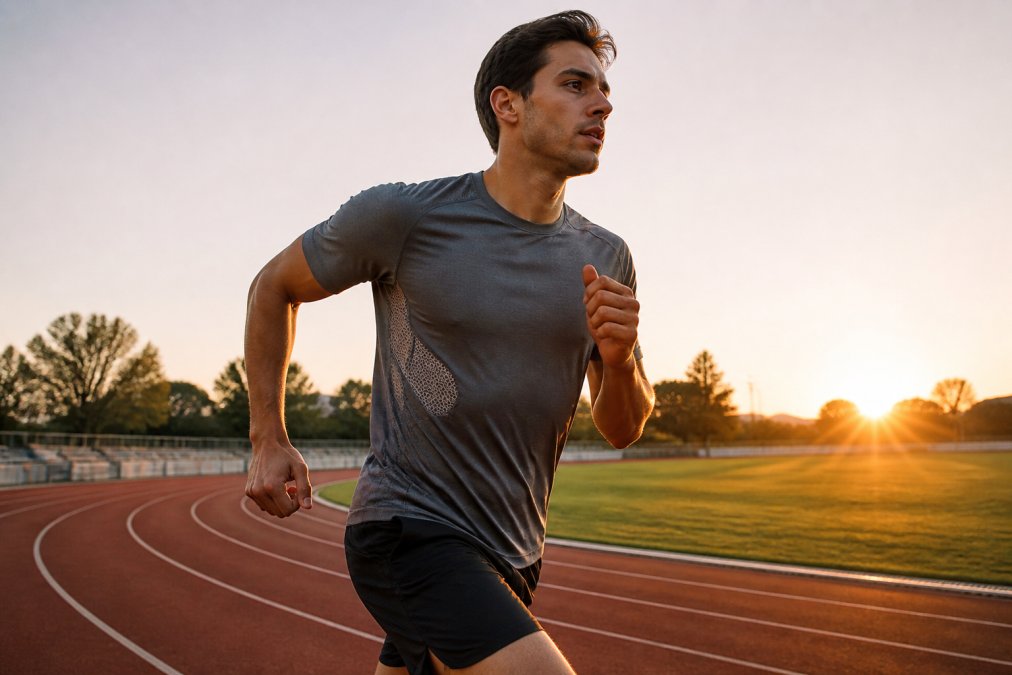
Running and High-Intensity Interval Training
For running and HIIT, prioritize lightweight fabric, breathability, and a fit that stays put. Look for mesh ventilation zones, sweat-wicking base layers, and compression where you want muscle support. Range of motion matters most in the shoulders and hips.
Yoga, Low-Impact Movement, and Recovery Wear
Yoga and low-impact training reward stretch and softness over compression. Recovery wear leans toward looser, breathable pieces that support thermal regulation without restricting circulation. Seamless construction eliminates pressure points during floor work.
| Activity | Priority Fabric Features | Fit Profile | What to Avoid |
|---|---|---|---|
| Running / HIIT | Sweat-wicking, mesh ventilation, quick-dry | Snug, ergonomic fit | Loose hems, cotton blends |
| Yoga / low-impact | Four-way stretch, seamless construction | Close but unrestricted | Heavy compression panels |
| Recovery wear | Breathability, thermal regulation, soft hand-feel | Relaxed | Tight elastic waistbands |
| Cold-weather training | Base layer plus mid-layer, thermal regulation | Layered | Single heavy layer |
The Benefits of Sustainable Performance Gear for Mindful Athletes
Sustainable performance gear isn't a marketing tier, it's a set of material and manufacturing choices you can verify on a label or a brand's public disclosures. The functional promise is the same: manage moisture, regulate temperature, move with you. What changes is where the fiber comes from, how it was processed, and how long the garment lasts.
What "Sustainable" Actually Means on a Performance Label
Most sustainability claims in activewear fall into four buckets. Knowing which one a brand uses tells you how much substance is behind the claim.
- Recycled content. Recycled polyester (often labeled rPET) is made from post-consumer plastic bottles or reclaimed textile waste. It performs nearly identically to virgin polyester for moisture wicking and durability, and it diverts material from landfill. The trade-off: recycled polyester still sheds microfibers in the wash, so it is a materials improvement, not a closed loop.
- Bio-based and natural performance fibers. Tencel lyocell, Modal, and merino wool blends offer breathability and odor resistance with lower processing intensity than conventional synthetics. Lyocell is produced in a closed-loop solvent system that recaptures most of the chemicals used, which is why it shows up in premium base layers.
- Lower-impact dyeing and finishing. Solution dyeing adds pigment to the fiber before it is spun, which uses substantially less water than conventional piece dyeing and locks color in so it fades more slowly. If a brand advertises colorfastness and lower water use together, solution dyeing is usually the mechanism.
- Durability as a sustainability strategy. The most credible sustainability claim in activewear is simply that the garment lasts. A piece worn 200 times has a far lower per-use footprint than a piece worn 20 times, regardless of what it is made from.
Certifications Worth Looking For
Third-party certifications are the fastest way to separate verified claims from vague ones. Common ones on performance apparel include:
- bluesign, screens chemicals and processes across the supply chain.
- OEKO-TEX Standard 100, tests finished textiles for harmful substances.
- Global Recycled Standard (GRS), verifies recycled content and traces it through production.
- Fair Trade Certified, addresses labor conditions at the factory level, not just materials.
- B Corp, a broader governance and impact certification, not a fabric-specific one.
Supply Chain Transparency: The Question Most Guides Skip
Labor practices in activewear supply chains are the gap most buying guides ignore. To evaluate a brand, look for three disclosures:
- A published factory list. Brands that name their suppliers are accountable to public scrutiny; brands that do not are not.
- A named auditing standard. SA8000 and Fair Trade Certified both involve independent inspection of working conditions, wages, and hours.
- A grievance or remediation process. The strongest programs describe what happens when an audit finds a problem, not just that audits occur.
Premium vs. Budget Activewear: What Your Money Actually Buys
Price is a poor proxy for performance. Two garments can cost the same and differ enormously in how they're built. The useful question isn't "premium or budget" but "which construction details justify the price difference on this item." Here's what separates tiers, and how to check each in under a minute.
The Five Specs That Drive the Price Gap
1. Fabric weight and knit density. Performance knits are measured in grams per square meter (GSM). Lightweight training tops sit around 120-150 GSM; heavier compression and cold-weather pieces run 200-300 GSM and up. Budget gear often hits a lower GSM at the same claimed category, which is why it feels thin and loses shape faster. Hold the fabric to light: if you can read text through it easily, it's on the light end.
Where Budget Gear Genuinely Works
Budget activewear isn't automatically a bad buy. It performs acceptably when:
- The activity is low-impact and low-sweat (walking, light yoga, casual athleisure).
- The garment is a layering piece rather than a next-to-skin base layer.
- You are testing a new activity and do not yet know your preferences.
A Quick In-Store Checklist
- Read the fiber content tag, note spandex percentage and any recycled content.
- Turn the garment inside out, check for flatlock seams at friction points.
- Stretch the fabric in both directions, it should snap back, not stay stretched.
- Hold it to light, gauge relative weight and density.
- Flex the waistband, it should not roll or twist.
- Check the care tag, if it demands hot water or high heat drying, the finish will not last.
How to Care for High Performance Athletic Apparel So It Lasts
Washing performance gear correctly is the difference between two seasons and five. Use cold water, skip fabric softener, and air-dry whenever possible. Heat breaks down elastic fibers and accelerates the breakdown of wicking finishes.
A simple routine:
- Wash in cold water on a gentle cycle
- Use a small amount of mild detergent, no softener
- Turn garments inside out to protect prints and seams
- Air-dry flat or hang; avoid the dryer when you can
- Wash technical pieces separately from rough fabrics like denim
Frequently Asked Questions
What features should I look for in high performance athletic apparel?
Focus on four things: moisture-wicking fabric that pulls sweat away from skin, four-way stretch for full range of motion, flatlock seams that reduce chafing, and breathability panels in high-sweat zones. Anti-odor treatments and quick-dry finishes add value for daily training. Check the fit profile too, since a compression fit works for high-intensity interval training while a relaxed athletic fit suits athleisure and recovery wear.
Is expensive athletic apparel worth the investment?
It depends on how often you train and what you need. Higher-priced gear typically uses more durable technical fabric, abrasion-resistant construction, and better seam engineering, so it holds shape and wicking performance through repeated washes. Budget options can work for low-impact activity or occasional gym use. If you train four or more days a week, the cost per wear of quality gear often comes out lower than replacing cheap pieces every few months.
What is the difference between athleisure and high performance athletic wear?
Athleisure prioritizes style and everyday comfort, often using softer cotton blends with less stretch recovery. High performance athletic apparel is built for movement: moisture-wicking synthetic fibers, four-way stretch, thermal regulation, and ergonomic seams designed for specific activities. Many people own both, wearing performance pieces for training and athleisure for errands. When you buy high performance athletic apparel, check the fabric label and construction rather than the look alone.
How should high performance workout gear fit?
It should move with you without restricting range of motion. Base layers and compression pieces should sit close to the skin with no bunching. Mid-layers and outerwear need room for layering without excess fabric that catches on equipment. Test a squat, an overhead reach, and a sprint in the fitting room or during a return window. If seams pull or fabric rides up, size up. A proper ergonomic fit matters more than the number on the tag.
For current headwear, review the GOAT performance hat and the Cincinnati football fan hats collection for product specifications and fit details. Burrow Athletic is rooted in character, resilience, and purpose. Every purchase supports The Be Good Foundation.