

Last Updated: October 22, 2026
Quick Summary
To stay motivated during injury recovery, build structure instead of relying on feelings: set a daily floor, weekly milestone and clinician-approved phase goal, then track each session in a simple journal. Tracking beats motivation because it shows evidence of progress when your body and mirror disagree.
- Motivation fades in rehab because progress stops being visible, measured in weeks rather than sessions.
- Build a three-tier goal ladder with a daily floor, weekly milestone and clinician-approved phase goal.
- Log today's action, pain level, effort and one win, then review the sheet every Sunday.
- Treat a flare-up as information, not a restart, and return at a lower level over one to two weeks.
- Rebuild return to sport confidence through graded exposure, rejoining full practice only when your clinician signs off.
Table of Contents
- Step 1: Understand Why Motivation Fades During Injury Recovery
- Step 2: Set Realistic Goals for Injury Rehabilitation
- Step 3: Keep Motivation Strong During Physical Therapy
- Step 4: Create a Progress Tracking Template That Shows Wins
- Step 5: Cope With Setbacks During Rehabilitation
- Step 6: Build Support and Accountability Around Your Injury Recovery
- Step 7: Rebuild Return to Sport Confidence After Injury
- Frequently Asked Questions
Step 1: Understand Why Motivation Fades During Injury Recovery
Motivation fades during injury recovery because progress stops being visible. In the gym, effort pays off fast.
This guide walks through seven steps that keep injured athletes moving when the feedback loop goes quiet.
Here is what most guides get wrong: they tell you to "stay positive" and stop there. Feelings are unreliable.
The first thing to accept is that injury recovery is a different sport. The rules change:
- Progress is measured in weeks, not sessions
- Pain is data, not a verdict
- Rest days are part of the plan, not a break from it
Once you expect the slow middle stretch, it stops feeling like a personal failure. It becomes the normal shape of rehabilitation.
Step 2: Set Realistic Goals for Injury Rehabilitation
Setting goals for injury rehabilitation works best when you build them with your clinician, not around them. Ask your physical therapist what a safe four-week target looks like, then write it down in their words.
Most people set goals that are too big and too vague. "Get back to normal" is not a goal. It is a wish. It gives you nothing to check off on a Tuesday afternoon.
Build a Three-Tier Goal Ladder
A three-tier goal ladder splits your goals by time frame so you always have something within reach:
- Daily floor: the smallest action that still counts, like five minutes of range-of-motion work
- Weekly milestone: one measurable step, like completing every assigned rehab exercise without skipping
- Phase goal: the clinician-approved target for the next month, like walking a set distance without a limp
The ladder matters because it protects you from all-or-nothing thinking. Miss the phase goal? You still hit the floor. That keeps the streak alive.
Step 3: Keep Motivation Strong During Physical Therapy
Motivation during physical therapy survives on repetition, not willpower. The patients who stick with rehab are rarely the most driven ones. They are the ones whose routines are easiest to start.
Make the Home Exercise Program Easier to Repeat
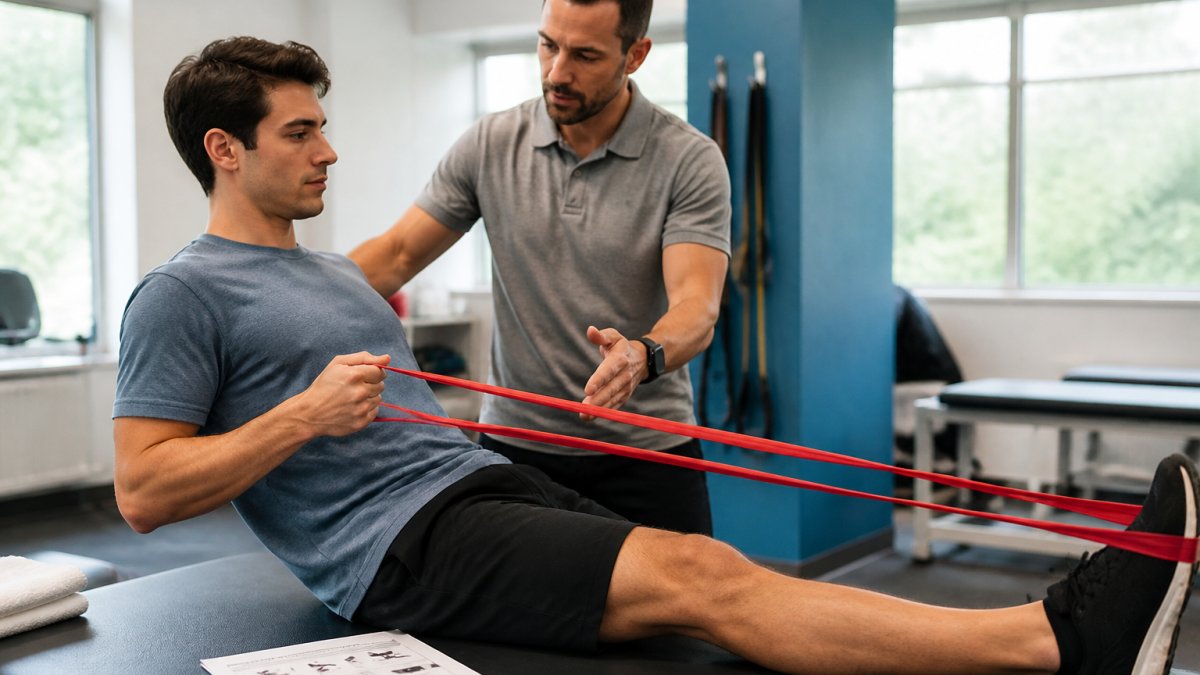
A home exercise program fails for boring reasons. The band is in a drawer, the sheet is lost, and the routine takes ten minutes to set up. Fix the setup and adherence follows.
Try these adjustments:
- Lay out equipment the night before
- Anchor the routine to an existing habit, like coffee or the evening news
- Keep sessions short enough that you never dread them
- Track completion, not intensity
If you are unsure whether a movement is safe, check with your therapist before adding it. The American Physical Therapy Association publishes plain-language guidance on what physical therapy involves and how to get the most from sessions.
Step 4: Create a Progress Tracking Template That Shows Wins
A progress tracking template turns invisible rehab into visible evidence. Use a simple rehab journal with four columns, filled in daily and reviewed weekly.
| Column | What to Record | Example Entry |
|---|---|---|
| Today's action | The exercise or activity completed | 10 minutes band rows |
| Pain level | A simple 0-10 rating before and after | 4 before, 3 after |
| Effort | How hard it felt | Moderate |
| One win | Anything that went better | Slept through the night |
Add a Clinician-Approved Milestone Row
The daily columns show effort. They do not show whether you are actually healing. Add a fifth row that tracks function against targets your physical therapist set, so progress is measured in capability rather than in how sore you felt on a Tuesday.
Examples of clinician-approved milestones:
- Walk a set distance without a limp
- Complete every assigned exercise for seven straight days
- Lift a household object without compensation
- Return to a specific daily task, like driving or climbing stairs, pain-free
Ask your therapist to write the next milestone in their words at each visit. You are not inventing targets, you are recording the ones they already set.
Run a Five-Minute Sunday Review
Review the sheet every Sunday. Look for patterns, not perfection. Two good weeks in a row is real measurable progress, even if the mirror says otherwise.
Ask three questions:
- Did I hit my daily floor most days this week?
- Is my pain trend flat, improving, or worsening across the week?
- What is the next clinician-approved milestone, and what is one step toward it?
Bring the journal to appointments. Your clinician can spot trends you missed, and the conversation gets more specific fast. If a milestone stalls for two or three weeks, that is useful information for your care team, not a personal failure. Tracking these plateaus helps distinguish between genuine physical limitations and the lingering fear of movement that often complicates the path to full recovery.
Step 5: Cope With Setbacks During Rehabilitation
Coping with setbacks during rehabilitation comes down to one reframe: a flare-up is information, not a restart. It tells you the current load was too high, too soon, or too frequent.
Setbacks are close to universal in injury recovery. A bad week does not erase good weeks. It adjusts the plan.
Tell Normal Fluctuation From a Warning Sign
Most rehab pain is expected. Soreness that shows up after a new exercise and fades within a day or two is a normal response to load. So is fatigue that lifts after a rest day.
- Expected: soreness that peaks 24 to 48 hours after activity and eases with rest, ice, or a lighter session
- Worth a call: pain that sharpens during the movement, persists at rest, or wakes you at night
- Stop and seek care: new swelling, redness, warmth, numbness, tingling, or a joint that gives way
This is general guidance, not a diagnosis. Your physical therapist knows your injury and your stage, so route any doubt to them rather than to a search engine.
Work the Setback Protocol
When pain or fatigue spikes:
- Pause the aggravating activity, not everything, keep the movements that stay comfortable
- Note what changed in the three days before: sleep, load, new exercises, stress
- Message your clinician with the specifics rather than self-diagnosing online
- Return at a lower level, then rebuild in small steps over one to two weeks
- Log the episode so patterns become visible across weeks
Patience is a skill here, and it is trainable. So is knowing when to ask for more help. The National Institute of Mental Health outlines signs that persistent distress deserves professional support, including low mood that lasts for weeks.
Protect Your Head on Bad Days
Setbacks hit mood as hard as they hit tissue. A short walk, a call with a teammate, or an hour on a hobby you can do one-handed keeps the day from becoming a total loss. The goal on a flare-up day is not progress, it is not quitting.
Step 6: Build Support and Accountability Around Your Injury Recovery
Support and accountability turn rehab from a private struggle into a shared project.
Build your support system in layers:
- Friends and family: ask one person to check in weekly
- A workout buddy: someone who walks, swims, or does modified sessions with you
- Your care team: physical therapist, doctor, and anyone coordinating your plan
- Online community: a support group for your specific injury or surgery
Be specific when you ask for help. "Text me every Sunday and ask if I did my exercises" works far better than "let me know if you need anything."
Adapting activities keeps you connected while you heal. The Centers for Disease Control and Prevention notes that regular physical activity supports mental health, which matters more than ever when training is on hold.
Step 7: Rebuild Return to Sport Confidence After Injury
Return to sport confidence after injury is built through graded exposure, not positive thinking. Confidence follows evidence, so give yourself small, safe proofs that your body can handle load again.
The sequence that works:
- Master the movement in a controlled setting
- Add speed or resistance in small steps
- Practice sport-specific drills at partial effort
- Rejoin full practice only when your clinician signs off
Expect nerves on the first session back. That is normal, and it fades with repetition. What matters is that you are progressing on a plan, not gambling on a feeling.
This is also where mindset pays off. At Burrow Athletic, we build performance-driven gear for people who show up that way, and every purchase supports The Be Good Foundation, our way of backing character and community beyond the field.
Frequently Asked Questions
Why is it so hard to stay motivated during injury recovery?
Injury recovery removes the routines that normally keep you motivated. You lose the visible progress of training, the social pull of teammates, and the daily wins that make effort feel worth it. Pain and fatigue also drain energy, and timelines often stretch longer than expected. Knowing this is normal helps. Instead of waiting to feel motivated, build structure: small measurable goals, a written progress log, scheduled check-ins with your physical therapist, and a support system that keeps you accountable. Motivation follows action more often than it comes before it.
How do I set realistic goals for injury rehabilitation without slowing my progress?
Set goals with your clinician, not around them. Ask what safe movement looks like this week, then break it into three tiers: a daily habit you control, a weekly milestone, and a longer return-to-activity target. Keep the daily goals small enough to hit even on a bad day, such as completing your home exercise program or a ten-minute walk. Review the plan at each appointment and adjust based on pain levels and symptoms. Goals that match your current stage prevent both frustration and the temptation to push too hard.
How can I stay positive when I feel discouraged during physical therapy?
Track what you can control rather than what you cannot. Keep a simple rehab journal with a daily check-in on pain, sleep, and exercises completed, plus a weekly review of one thing that improved. On discouraging days, shrink the task: do the first exercise, then decide about the rest. Tell your physical therapist how you feel so the plan can be adjusted. Celebrate small wins out loud, and lean on friends, family, or an online community. Persistence during plateaus is what separates steady recovery from stop-start cycles.
Can injuries cause depression, and when should I get mental health support?
Injuries can trigger low mood, isolation, and anxiety about returning to activity, especially when recovery drags on. Those feelings are common, but persistent distress that lasts weeks, disrupts sleep, or keeps you from daily life deserves professional attention. Talk to your doctor or a licensed mental health professional. Alongside that, stay connected with friends and family, keep some enjoyable low-impact activity in your week, and maintain a daily routine. Treat mental health support as part of rehabilitation, not a sign that you are handling recovery badly.
Injury recovery tests patience more than pain tolerance. The athletes who come back strongest are the ones who build systems, track small wins, and lean on people around them. If you want gear that matches that mindset, explore the Cincinnati hats collection at Burrow Athletic and wear the reminder that resilience is a choice you make daily.