

Table of Contents
- How Charity Shopping Programs Work
- The Best Online Stores That Donate to Charity
- Browser Extensions for Charitable Giving
- How to Verify Charity Donation Claims
- Step-by-Step: Registering for Charity Shopping Programs
- Privacy and Data Security of Shopping Portals
- Frequently Asked Questions
Last Updated: September 10, 2026
How Charity Shopping Programs Work
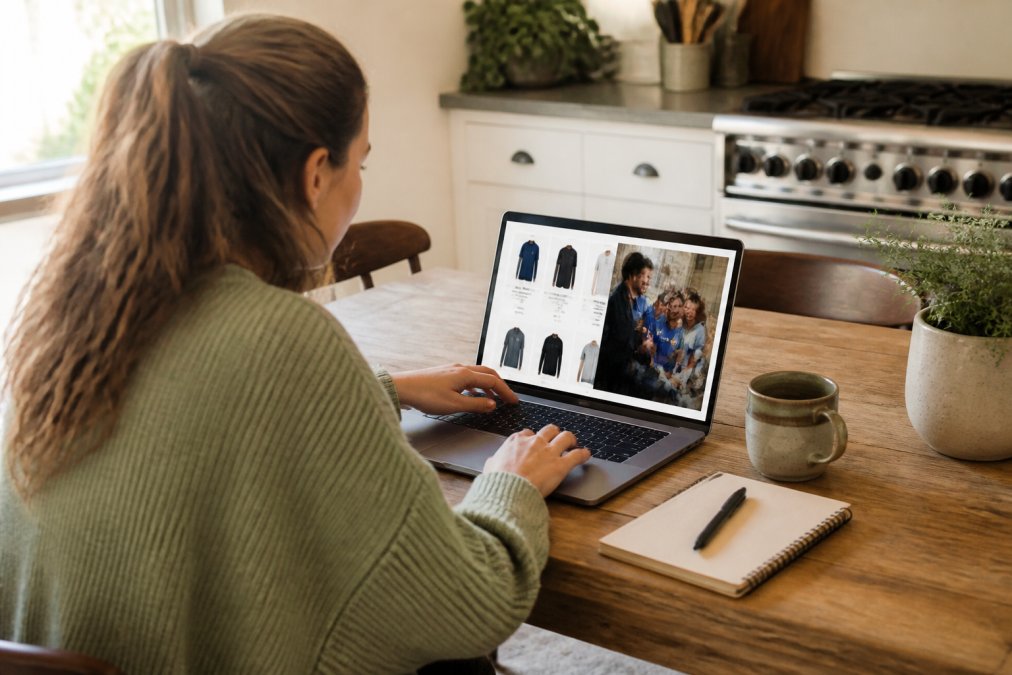
Charity shopping programs and brand-led giving can work in different ways. Check the published terms to understand how a purchase supports a nonprofit. Burrow Athletic is rooted in character, resilience, and purpose. Every purchase supports The Be Good Foundation.
Here's the part most people miss. The store isn't donating out of generosity alone. It's paying for your attention.
Affiliate Commissions vs. Direct Donations
Affiliate commissions are referral fees paid when a shopping portal sends a retailer a customer. Brand-led donations may follow a different arrangement. Verify the specific terms rather than assuming a fixed amount or percentage from every sale.
The Best Online Stores That Donate to Charity
The best online stores that donate to charity are the ones that publish exactly how much goes to the nonprofit and when it's paid out. Vague "we give back" language is a red flag. Look for a named foundation, a stated percentage, and a payout schedule.
A common approach among values-driven brands is to tie donations to a specific cause rather than a general fund. That specificity makes the impact easier to verify and easier to track over time.
What Percentage Actually Gets Donated
Donation amounts and arrangements vary. Burrow states that every purchase supports The Be Good Foundation. Contact the brand for contribution details that are not published.
| Program Type | Who Funds the Donation | How Payouts Usually Work | Best For |
|---|---|---|---|
| Direct brand giving | The retailer | Tied to each sale | Shoppers who want a named cause |
| Affiliate shopping portals | Retailer marketing budget | Batched, often quarterly | Everyday multi-store shopping |
| Round-up at checkout | The customer | Per transaction | Small, frequent contributions |
Browser Extensions for Charitable Giving
Browser extensions for charitable giving work by detecting when you land on a participating retailer's site and automatically applying the donation link. They remove the friction of remembering to click through a portal first. The trade-off is access: an extension can see the pages you visit, so you're trusting it with browsing data in exchange for convenience.
Mobile Apps vs. Desktop Extensions
Mobile apps and desktop extensions behave differently, and the gap surprises people. Desktop extensions fire reliably because they sit inside the browser session. Mobile shopping often happens inside retailer apps, where extensions can't reach, so mobile programs lean on in-app links or a portal you open first. If most of your shopping happens on a phone, test whether the program actually captures those purchases before you commit.
How to Verify Charity Donation Claims
Verifying a charity shopping claim takes about ten minutes, and it protects both your money and your data. Work through four layers: the nonprofit, the brand, the platform, and the paper trail.
Confirm the nonprofit’s identity and status. Use the IRS Tax Exempt Organization Search and, where relevant, state charity records. Some eligible organizations, including certain churches, may not appear in the searchable listing. Reporting requirements vary: eligible small organizations may file Form 990-N, and some organizations are exempt from annual returns. A missing full Form 990 alone does not establish illegitimacy. Ask the organization about its status and reporting obligations.
Layer 2: Confirm the brand publishes its terms. A real giving commitment has specifics: a named nonprofit, a stated percentage or per-item amount, a payout schedule, and a cap if one exists. "A portion of proceeds" is not a term, it's marketing. Look for language like "1% of every order, paid quarterly to [named foundation]" and check whether the brand restates those terms on a dedicated page rather than burying them in a footer. If the terms change, the page should show a revision date.
Layer 3: Confirm the platform is transparent. If you're shopping through a portal or extension rather than a brand's own program, the platform should publish which retailers participate, what percentage each retailer pays, and how often funds move to nonprofits. A platform that hides its retailer list or its rates is asking you to trust a black box.
Layer 4: Look for reciprocity. The strongest verification signal is a two-sided relationship. Does the nonprofit acknowledge the brand or platform as a partner on its own website or annual report? One-sided claims, where the brand names the charity but the charity never names the brand, are harder to confirm and occasionally turn out to be aspirational rather than contractual.
Tax Implications of Shopping-Based Donations
This is the question most guides skip, and it's the one that trips up well-meaning shoppers. When a retailer or platform donates on your behalf, the contribution is generally treated as the company's, not yours (irs.gov). You didn't transfer the money, you didn't receive a receipt in your name, and you generally can't claim a deduction for it on your federal return. The IRS deductibility rules turn on who made the gift and whether you have substantiation, a written acknowledgment from the charity showing your contribution. A brand's press release is not that acknowledgment.
If your goal is a deduction you can actually claim, the reliable path is to donate directly to the 501(c)(3) and keep the receipt or acknowledgment letter. Shopping-based giving is best understood as a way to redirect corporate marketing dollars, not as a substitute for your own charitable contributions. Situations vary, business owners, itemizers, and people with donor-advised funds face different rules, so confirm specifics with a tax professional rather than assuming.
Step-by-Step: Registering for Charity Shopping Programs
Registration is usually quick, but the details decide whether your purchases actually track. Follow these steps:
- Choose your nonprofit from the program's verified list
- Create an account with a valid email you check regularly
- Install the browser extension or mobile app if the program offers one
- Confirm your nonprofit selection saved in your account settings
- Start your shopping session from the portal or extension, not a search engine
- Complete checkout in the same session without switching devices
- Check your impact dashboard after the return window closes to confirm tracking
Expected result: Your chosen cause appears in your account's impact tracking, and completed purchases show as pending until the retailer confirms them.
Privacy and Data Security of Shopping Portals
Shopping portals and browser extensions collect more than most shoppers realize, and the donation model gives them a plausible reason to ask for broad access. Understanding what they actually capture, and what a reasonable request looks like, is the difference between a useful tool and a tracking pipeline you installed yourself.
What these tools typically collect. A shopping portal sees the retailers you visit, the products you view, the items you buy, and the order totals it needs to calculate a donation. Browser extensions can go further: many request permission to "read and change all your data on all websites," which is the broadest permission a browser offers. That permission is sometimes necessary for the extension to detect when you land on a participating retailer, but it also means the extension can see every page you load, not just shopping pages. Mobile apps collect similar data plus device identifiers, and some request access to email, a red flag unless the app has a specific, disclosed reason.
How to read an extension's permissions before you install. On the browser's extension listing, look for the permissions disclosure. A donation tool that only needs to function on retail sites should request access to specific domains or activate only when you click it. If it asks for access to all sites, all tabs, your clipboard, or your downloads, ask whether the donation feature actually requires that. Often it doesn't.
How to vet a portal's data practices. Four documents tell you most of what you need:
- Privacy policy, what data is collected, why, and who it's shared with. Look for named third parties, not "trusted partners."
- Data retention statement, how long your data is kept and what triggers deletion.
- Account deletion process, a real one, not an email address you have to hunt for.
- Security disclosures, whether the site uses HTTPS everywhere, whether it publishes a breach-notification policy, and whether it offers two-factor authentication on accounts.
A portal that won't tell you what it does with your data isn't one to trust with your shopping habits. If any of those four documents is missing or written to obscure rather than explain, treat the program as unverified.
Payout frequency: the metric nobody publishes. Most guides compare donation percentages and stop there. The more useful question is how quickly the charity actually receives the money. Programs vary widely, some remit monthly, some quarterly, some only after a minimum threshold is reached, and some hold funds until the end of the retailer's return window. A program advertising a higher percentage but paying out twice a year may deliver less value to a nonprofit than a lower-percentage program that remits monthly. Before you commit, look for a published payout schedule. If the program doesn't state one, ask. A charity that receives funds predictably can plan programs; one waiting on an annual lump sum cannot.
Mobile app vs. desktop extension: which actually tracks. Desktop extensions generally fire reliably because they sit inside the browser session where the purchase happens. Mobile is messier: much mobile shopping happens inside retailer apps, where browser extensions can't reach, so mobile programs depend on in-app links or a portal you open first. If most of your shopping happens on a phone, test the program on a small purchase before relying on it, and check the impact dashboard after the return window closes to confirm the donation registered. A tool that tracks on desktop but silently misses mobile purchases isn't saving you anything.
Frequently Asked Questions
How can I ensure my shopping actually benefits a charity?
Start by using a charity shopping portal that publishes its retailer partnerships and donation percentages. Check whether the platform provides impact tracking or donation receipts. Verify the nonprofit is registered and in good standing. Avoid programs that do not disclose which retailers participate or how much of each purchase goes to the cause. Transparency and fiscal accountability are the strongest signals that your money reaches the charity.
Are there browser extensions that donate to charity when I shop?
Yes. Several browser extensions for charitable giving automatically redirect you to a retailer's affiliate link and route the commission to your chosen nonprofit. These extensions work in the background, so you shop normally and the donation happens at checkout. Look for extensions that clearly state their payout threshold, list participating retailers, and explain how they track eligible purchases. Desktop extensions generally offer more retailer coverage than mobile apps.
What is the difference between cause-marketing and direct donations?
Cause marketing connects a purchase with a charitable commitment, while a direct donation lets you choose how much and when to give. Burrow states that every purchase supports The Be Good Foundation; that statement alone does not specify a donation percentage or establish tax deductibility for the shopper.
Can I claim tax deductions for purchases made through charity-linked programs?
In most cases, no. When you buy a product and the retailer donates a percentage to charity, you receive goods in return, so the IRS does not treat that as a charitable contribution. The donation is made by the company, not by you. To claim a deduction, you need to make a direct donation to a qualified 501(c)(3) organization and keep the receipt. Consult a tax professional for your specific situation.
Burrow Athletic is rooted in character, resilience, and purpose. Every purchase supports The Be Good Foundation.