

Table of Contents
- Why Performance Headwear Works Across Multiple Settings
- Performance Golf Hats: Built for the Course
- Sweat-Wicking Hats for Training and Heat Management
- Adjustable Performance Caps: The Versatility Factor
- Game Day Hats: Transitioning from Training to Venue
- Care and Durability: Making Your Hat Last
- Rules and Etiquette Across Venues
- Frequently Asked Questions
Last Updated: October 15, 2026
Why Performance Headwear Works Across Multiple Settings
Performance headwear works across environments, from the golf course to the stadium. What makes a hat "performance" is a combination of moisture management, sun protection, fit, and durability that keeps you comfortable on the fairway or in the stands.
A well-designed cap handles sweat, blocks UV rays, stays lightweight, and adjusts to your head shape without sacrificing style, which is why athletes reach for the same hat across settings.
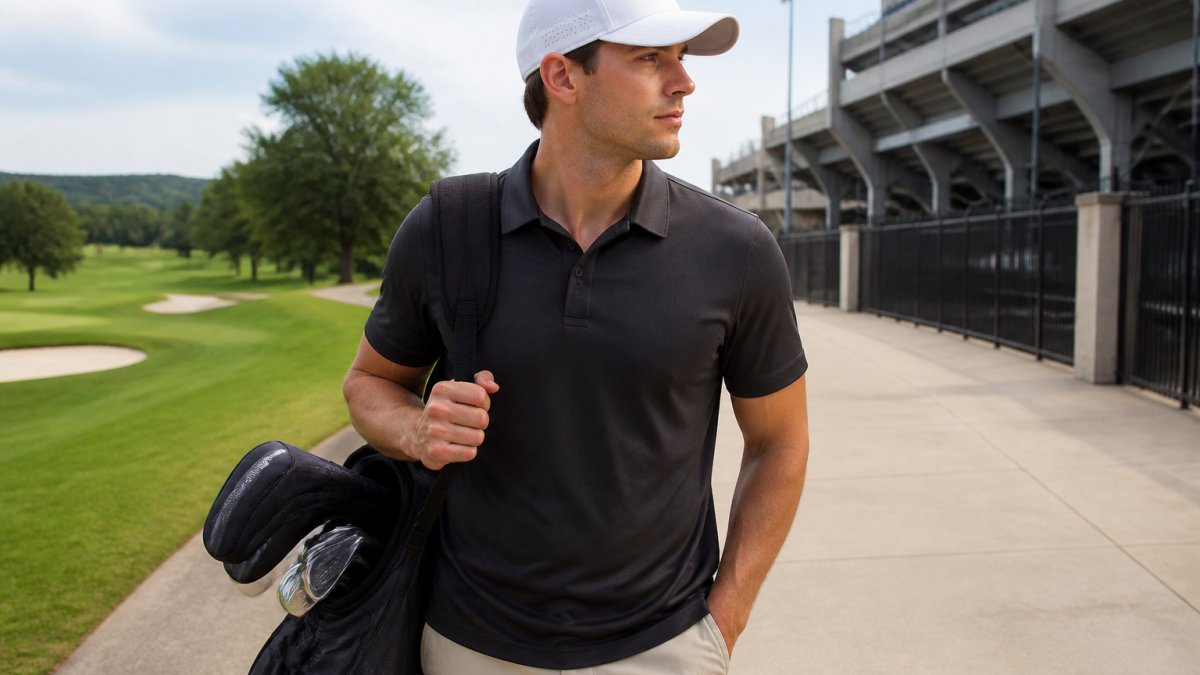
At Burrow Athletic, the GOAT performance headwear line is built on this principle: a hat that performs on the course and looks right at game day.
Most casual hats fail at one or more of these: a standard baseball cap traps heat, a structured visor feels stiff. Performance headwear solves all of these at once.
Performance Golf Hats: Built for the Course
Golf demands a lot from headwear: hours outdoors, constant sun on your face and neck, and a hat that stays secure during your swing without shifting.
Performance golf hats solve these challenges through deliberate design: a crown structured enough to hold its shape without feeling rigid, a brim that shades your face and neck without blocking your view of the ball, breathable fabric, and a sweatband that keeps your forehead dry.
Sun Protection and UPF Coverage
Sun protection on the golf course matters more than many golfers realize. A quality performance golf hat provides consistent coverage across the face, ears, and back of the neck.
Look for fabric with built-in UPF properties, UPF 50+ blocks 98% of UV radiation. Brim design matters too: a wider brim (typically 2.5 to 3 inches) provides better coverage, and some golfers prefer a back panel that extends lower to protect the neck.
Color matters too: darker colors absorb more UV, lighter colors reflect some of it. If you're sensitive to heat, a lighter-colored performance hat with UPF protection gives you both sun blocking and temperature management.
Lightweight Construction and Breathability
A heavy hat becomes uncomfortable after a few hours, it slides down as you sweat and creates a hot spot. Performance golf hats solve this through lightweight materials and strategic ventilation.
Modern performance fabrics weigh less than traditional cotton while managing moisture better. Polyester blends, nylon composites, and specialized athletic fabrics keep the hat light without sacrificing durability. Many also feature ventilation panels or mesh inserts on the sides and back of the crown to reduce heat buildup.
The sweatband contributes to breathability too: moisture-wicking material pulls sweat away from your skin, keeping your forehead dry and preventing sweat from dripping into your eyes.
Sweat-Wicking Hats for Training and Heat Management
When you're training, sweat management becomes critical. A hat that holds moisture feels heavy and slides around. Performance headwear designed for training uses fabric technologies to move sweat away from your skin and dry quickly.
Moisture-Wicking Fabrics and Quick-Drying Technology
Moisture-wicking works through fabric structure: water moves away from your skin through the fabric layers and evaporates from the outer surface, keeping you dry during intense activity.
Common moisture-wicking fabrics in performance headwear include:
- Polyester blends that pull sweat outward
- Nylon composites that dry quickly
- Specialized athletic fabrics designed for sweat management
- Mesh panels that allow direct air contact with your scalp
Quick-drying goes beyond wicking: the fabric releases moisture rapidly, so a performance training hat should feel nearly dry within 15-30 minutes of stopping activity, the difference between wearing it again the next day and letting it dry overnight.
The sweatband material matters here: a moisture-wicking sweatband absorbs sweat without holding it, preventing a wet band and reducing odor buildup.
Ventilation and Sweatband Design
Ventilation in a training hat moves hot, moist air away from your head. The most effective designs use multiple points: side panels for airflow around your temples, back panels to let heat escape the crown, and ventilation grommets or mesh zones that create airflow channels.
A good sweatband absorbs sweat without blocking airflow. It should be wide enough (typically 0.75 to 1 inch) to cover where sweat collects, and quick-drying and antimicrobial to prevent odor.
Many athletes prefer removable or replaceable sweatbands, so you can wash or replace the band without washing the entire hat.
Adjustable Performance Caps: The Versatility Factor
An adjustable cap fits more people and adapts to different situations, short hair one day, longer hair the next, a tighter fit during activity and a looser one for casual wear.
Fit for Different Head Shapes and Hairstyles
Head shapes vary, wider foreheads, larger back skulls, different hairstyles, so a one-size-fits-all structured cap won't work for everyone.
Performance caps with adjustable closures accommodate this variation: a snapback adjusts from snug to loose, a strap-and-buckle offers more precision, and velcro allows quick adjustments.
Crown structure affects fit too: an unstructured crown molds to your head, a lightly structured crown holds its shape with some give, and a fully structured crown is rigid but consistent across head shapes.
Hairstyles matter: if you wear a bun or ponytail, you need clearance at the back, so some performance caps feature a higher back panel or ponytail-friendly cutout. Longer hair usually feels better with a slightly looser fit.
Crown Profile and Structured Fit
The crown profile affects fit and appearance: a low crown sits closer to your head and suits smaller heads or a snug fit, a mid-crown is the most versatile, and a high crown adds volume for larger heads or thick hair.
Structured fit means the crown holds its shape rather than collapsing, maintaining its profile even after repeated wear and washing. An unstructured crown is more flexible and molds to your head, which some prefer for comfort.
Crown profile and closure work together: a high crown with a tight closure feels restrictive, a low crown with a loose closure slips. The best performance caps balance both for a comfortable, secure fit.
Game Day Hats: Transitioning from Training to Venue
Game day is different from training: less sweat, more time in a crowd, and you want to look sharp. A performance hat needs to transition smoothly from training to game day without feeling out of place.
Style, Comfort, and All-Day Wear
A game day hat needs to be comfortable for hours: not too tight, breathable, and lightweight. It also needs to look intentional, clean lines and a finished appearance, not sweat stains.
Performance headwear designed for game day uses the same moisture-wicking and breathability principles as training hats, with styling that works in a stadium or casual setting, team-inspired or neutral colors and clean, professional logo placement.
Fit still matters on game day: a hat that stays secure when you move, doesn't slip when you lean back, and feels comfortable after hours. An adjustable closure lets you dial in all-day comfort.
Brim Shape and Coverage Options
Brim shape affects function and style: a traditional curved brim is the most versatile, a flat brim looks modern but covers less of your face, and a wider "bucket" style provides maximum coverage with a different aesthetic.
For game day, most people prefer a brim proportional to the crown, too wide looks oversized, too short doesn't shade enough. The sweet spot is typically 2.5 to 3 inches.
Some performance hats offer structured brims that hold their shape. Others have flexible brims that can be adjusted slightly. A structured brim looks cleaner and more finished. A flexible brim is more forgiving if you accidentally bend or crush it.
Coverage options also include side panels or ear coverage. Some hats have extended side panels that protect your ears and temples. This is particularly useful if you're sensitive to sun or if you're in a very bright environment.
Care and Durability: Making Your Hat Last
A performance hat is an investment. Proper care extends its life significantly. The materials and construction matter, but how you treat your hat determines whether it lasts a season or several years.
Wash your hat regularly, especially if you sweat in it. Use cool water and mild detergent. Hand wash is better than machine washing, which can damage the structure. Avoid bleach and harsh chemicals. After washing, reshape the hat while it's damp and let it air dry.
Store your hat in a cool, dry place. Direct sunlight can fade colors and weaken fabric over time. A hat rack or hook is better than crumpling it in a drawer.
Inspect your hat regularly for damage. Small issues like loose stitching or minor wear can be addressed before they become big problems. Many performance hats are repairable, a skilled tailor can replace a sweatband or reinforce stitching.
The materials in performance headwear are durable by design, but they're not indestructible. Repeated exposure to sweat, sun, and washing will eventually wear them down. With proper care, a quality performance hat should last 2-3 years of regular use. Some last longer.
Rules and Etiquette Across Venues
Different settings have different expectations for headwear. Understanding these helps you wear your performance hat appropriately and respectfully.
On the golf course, most clubs allow caps and visors. Some traditional clubs have preferences about style, they might prefer a more classic look over a modern trucker cap. Check your course's dress code if you're playing somewhere new.
At sporting venues, headwear is typically encouraged. Fans wear team hats, caps, and visors constantly. The only real rule is that your hat shouldn't obstruct other people's views.
In casual settings, performance headwear has become mainstream. A quality cap works at the gym, on the street, at a casual restaurant, or anywhere else you'd normally wear a hat. The line between "athletic wear" and "everyday wear" has blurred significantly.
The key principle across all settings is simple: wear your hat clean, keep it in good condition, and be respectful of those around you. A well-maintained performance hat works anywhere.
Performance headwear bridges the gap between function and style. Each purchase supports the Be Good Foundation, so you're investing in gear that performs and a mission that matters.
Frequently Asked Questions
Can one performance hat really work for golf, training, and game day?
Yes. A well-designed performance headwear combines moisture-wicking fabrics, UV protection, adjustable fit, and neutral styling that functions across all three settings. The key is choosing a cap with breathable construction, a sweatband for moisture management, and a structured fit that stays secure during activity while looking polished at a venue. Many athletes use the same performance cap for early morning workouts, afternoon golf rounds, and evening game day appearances.
What features should you look for in performance headwear?
Prioritize moisture-wicking fabric to manage sweat, UPF sun protection for outdoor wear, lightweight construction for comfort, and an adjustable closure for a secure fit. Look for ventilation panels or breathable sweatbands to reduce heat buildup, and a brim shape that provides adequate coverage without obstructing your vision. The crown profile should suit your head shape, and the overall durability of seams and embroidery matters for long-term wear across multiple environments.
How do you clean and care for a performance hat to extend its life?
Hand wash your performance headwear in cool water with mild detergent, focusing on the sweatband and any soiled areas. Rinse thoroughly and air dry away from direct heat or sunlight, which can degrade moisture-wicking fabrics. Avoid machine washing and dryers. For stubborn stains, use a soft brush. Proper care preserves the fabric's performance properties and keeps the hat looking fresh across golf, training, and game day settings.
Are performance hats suitable for workouts and high-intensity training?
Absolutely. Sweat-wicking hats are specifically engineered for training environments. They pull moisture away from your scalp and hair, dry quickly, and stay in place during movement. The breathable construction prevents heat buildup during cardio or strength training, and the adjustable fit ensures the cap won't slip. Many athletes find performance headwear essential for outdoor workouts where sun exposure and sweat management both matter.