

Table of Contents
- Why Sustainable Athletic Wear for Training Performs Better Than You Think
- Recycled Polyester vs Organic Cotton for Training: Which Wins?
- What to Look for in Eco-Friendly Gym Clothes
- How to Care for Sustainable Athletic Apparel
- Matching Gear to Training Intensity
- End-of-Life Disposal and Circular Fashion
- Frequently Asked Questions
Last Updated: September 20, 2026
Why Sustainable Athletic Wear for Training Performs Better Than You Think
When comparing sustainable training clothing, check the product’s materials, certifications, manufacturing information, and evidence of durability. General performance or charitable messaging does not establish a sustainability claim.
The Problem With Synthetic Fibers in Sportswear
Most conventional gym clothes are made from polyester, nylon, and elastane, all derived from petroleum. They wick sweat well, but they come with two costs that don't show up on the price tag. First, producing virgin synthetic fibers is energy-intensive and tied to fossil fuel extraction. Second, every wash sheds microplastics, tiny plastic fragments that slip through wastewater treatment and into rivers and oceans.
Recycled Polyester vs Organic Cotton for Training: Which Wins?
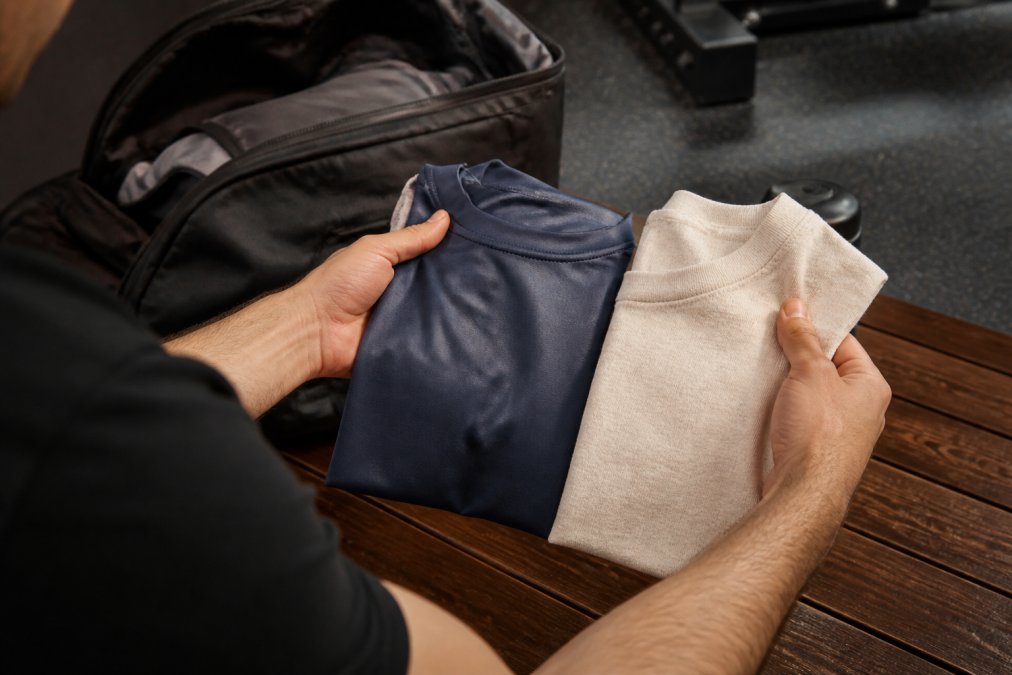
Recycled polyester wins for high-sweat, high-intensity training because it wicks moisture and dries fast. Organic cotton wins for low-intensity movement and recovery days because it breathes well and feels soft against skin. Neither is universally better; the right pick depends on how hard you train and how often you wash your gear.
Moisture-Wicking and Breathability Compared
Recycled polyester moves sweat away from skin and evaporates it quickly, which is why it dominates running, HIIT, and hot-yoga gear. Organic cotton absorbs moisture rather than repelling it, so it feels damp longer during heavy sweat. For breathability, cotton lets air pass through more freely, which keeps you cooler at rest but clammy mid-workout. Blends of the two, or cotton mixed with a small amount of elastane for stretch, often hit the sweet spot for moderate training.
Durability and Microplastic Shedding
Here's the nuance most comparisons skip. Recycled polyester is durable, but it still sheds microplastics when washed, just like virgin polyester. Organic cotton doesn't shed plastic, but it wears faster under heavy friction and repeated high-heat drying. The practical takeaway: choose recycled polyester for performance and wash it in a microfiber-catching bag on cold; choose organic cotton for low-impact days and air-dry it to extend its life.
What to Look for in Eco-Friendly Gym Clothes
Look for third-party certifications, transparent fiber sourcing, and construction details that signal durability. Certifications do the heavy lifting here because "eco-friendly" on a hangtag is unregulated marketing language in the United States, the Federal Trade Commission's Green Guides set the bar for what environmental claims are allowed, and vague terms like "green" or "all natural" can trigger enforcement when they mislead shoppers.
What Each Certification Actually Verifies
Not all certifications cover the same thing, and a hangtag logo tells you nothing until you know its scope.
- GOTS (Global Organic Textile Standard), verifies organic fiber content from harvest through processing, plus restrictions on chemical inputs and social criteria for workers. It applies to the whole supply chain, not just the farm.
- GRS (Global Recycled Standard), verifies recycled content and traces it through production, with additional environmental and social requirements. It is the standard behind most "made from recycled bottles" claims.
- OEKO-TEX Standard 100, tests the finished garment for harmful substances like certain azo dyes, formaldehyde, and heavy metals. It says nothing about fiber origin or labor.
- bluesign, focuses on chemical input management and resource use during manufacturing, with an approved chemical list for mills.
- B Corp certification, a whole-company assessment covering governance, workers, community, and environment. Useful context, but it is not a fabric-level guarantee.
Construction Details That Predict Longevity
Fiber content is only half the story. Seaming, stitch density, and fabric weight determine whether a piece survives a year of training or fails in three months.
- Flatlock or bonded seams reduce chafing and distribute stress across the seam rather than concentrating it at stitch points.
- Reinforced gussets and bar-tacks at crotch, underarm, and drawcord stress points, these are where fabric fails first.
- Fabric weight measured in grams per square meter (GSM). Lightweight knits around 120-150 GSM suit hot-weather training; mid-weight 180-220 GSM holds shape better under repeated lifting and washing.
- Four-way stretch vs. two-way, four-way stretch recovers its shape after squatting and lunging; two-way stretch tends to bag out at the knees and seat.
- Stitch density, tighter, denser stitching resists seam blowout, but too dense can perforate lightweight knits. A common pattern is 10-12 stitches per inch on performance knits.
Supply Chain Transparency and Labor
Ethical manufacturing is not a bonus feature; it is part of what makes a garment genuinely sustainable. Look for brands that publish the names and locations of their mills and cut-and-sew factories, or that participate in recognized audit programs. In the United States, the Department of Labor maintains a list of goods and their source countries produced with forced or child labor, and independent tools let shoppers check factory disclosures.
A Practical Buying Checklist
- Match the certification to the claim: GOTS for organic cotton, GRS for recycled content, OEKO-TEX or bluesign for chemical safety.
- Check fabric weight and stretch direction against your training type.
- Inspect seams and stress points in person or in high-resolution product photos.
- Confirm the brand discloses its supply chain beyond the final factory.
- Verify a take-back or repair program exists before you need it.
A common mistake is buying on fiber content alone. Two shirts can both say "organic cotton" and perform completely differently based on knit structure, weight, and finishing.
How to Care for Sustainable Athletic Apparel
Caring for sustainable athletic apparel comes down to three habits: wash cold, wash less, and air-dry. Heat is the enemy of every performance fabric, natural or recycled.
- Turn garments inside out before washing to reduce surface abrasion
- Use cold water and a gentle, low-suds detergent
- Skip fabric softener, which coats fibers and kills wicking
- Wash synthetic pieces in a microfiber-catching laundry bag
- Air-dry whenever possible; if you must tumble, use low heat
- Wash full loads to reduce friction between garments
Matching Gear to Training Intensity
Match fabric to intensity, not to fashion. The wrong fiber for your workout is the fastest way to feel uncomfortable and replace gear early. Below is a framework built on fabric mechanics rather than brand names, plus the two things most guides skip: how these fabrics actually hold up over repeated wash cycles, and how much microplastic each one sheds.
How Fabric Properties Map to Training Demands
Every training type stresses fabric differently. The key variables are moisture transport (how fast sweat moves off skin), air permeability (how much air passes through), stretch recovery (whether the fabric snaps back), and abrasion resistance (how it handles friction against skin, equipment, and the floor).
| Training Type | Best Fabric | Why It Works | Wash Frequency |
|---|---|---|---|
| HIIT, running, hot yoga | Recycled polyester | Fast wicking, quick dry, high abrasion resistance | After every session |
| Strength training, lifting | Polyester-cotton blend | Stretch plus breathability, resists bar and belt friction | Every 1-2 sessions |
| Recovery, mobility, walking | Organic cotton | Soft, breathable, low sweat volume | Every 2-3 wears |
| Cold-weather training | Recycled poly with brushed lining | Insulation plus moisture control | Every 2-3 wears |
Performance Testing: What Repeated Wash Cycles Reveal
Most articles focus on ethics and skip the lab. A common pattern among practitioners who test gear over time is to track three metrics across 50+ wash cycles: pilling, color retention, and elastic recovery at the waistband and cuffs.
- Recycled polyester typically holds color and shape well through 50 cold-water washes, but pilling increases if it is tumble-dried. Elastic recovery in waistbands degrades faster with heat than with mechanical wear.
- Organic cotton tends to soften and can develop small holes at high-friction points (underarms, inner thigh) sooner than synthetics, especially with high-heat drying. Air-dried cotton often outlasts tumble-dried cotton by a wide margin in subjective wear tests.
- Blends generally outperform both pure fibers on shape retention, because the synthetic component provides recovery while the natural component provides breathability and hand-feel.
Microplastic Shedding: A Closer Look
What the research consistently shows:
- Shedding scales with fabric construction. Loosely knit, low-twist yarns shed more than tightly knit, high-twist yarns. Brushed fleece and plush linings shed the most.
- Washing conditions matter more than fiber origin. Higher temperatures, longer cycles, and larger water volumes increase shedding. Cold, short, full-load washes reduce it.
- Recycled and virgin polyester shed similarly. The recycled feedstock does not change the polymer chemistry, so the shedding profile is comparable.
- Natural fibers also shed, cotton and wool release fibers too, but those fibers biodegrade rather than persisting as plastic.
Practical reductions that actually work:
- Wash synthetic pieces in a microfiber-catching laundry bag or install an inline filter on your washing machine.
- Use cold water and a gentle cycle, and skip the extra rinse.
- Wash full loads to reduce garment-to-garment friction.
- Air-dry to avoid the heat and tumbling that accelerate fiber breakage.
- Choose tightly knit, higher-GSM synthetics over brushed or plush finishes when shedding is your priority.
The honest framing: there is no zero-shed synthetic training fabric on the market today. The realistic goal is to minimize shedding through construction choices and washing habits, and to reserve natural fibers for the lower-sweat sessions where they perform well anyway.
End-of-Life Disposal and Circular Fashion
Circular fashion means designing gear so it can be resold, repaired, or recycled instead of thrown away. Textile waste is a growing problem, and most donated clothing ends up in landfills or export markets rather than being rewoven into new fabric.
- Check whether the brand runs a take-back or trade-in program
- Look for gear made from single-fiber fabrics, which recycle more easily than blends
- Repair small tears and replace drawcords before retiring a piece
- Donate only wearable items to organizations that actually distribute them
- Avoid "wishcycling," where stained or worn items get dumped rather than processed
Frequently Asked Questions
What makes athletic wear sustainable?
Sustainable athletic wear combines eco-friendly materials like organic cotton and recycled polyester with ethical manufacturing practices. Look for GOTS-certified fabrics, fair labor transparency, and low-impact dyes. Brands that prioritize renewable resources and reduce carbon footprint throughout the supply chain create genuinely sustainable training gear. The key is verifying certifications rather than trusting marketing claims alone.
Can sustainable athletic wear handle high-intensity interval training?
Yes, when you choose the right fabric blend. Recycled polyester offers moisture-wicking and stretch comparable to virgin synthetics, making it suitable for HIIT and heavy sweating. Organic cotton works better for low-impact training like yoga or walking. Check for compression features and flatlock seaming if you need gear that stays put during explosive movements.
How do I choose eco-friendly gym clothes that last through intense training?
Focus on fabric weight and construction quality. Heavier knits resist pilling and hold shape longer. Look for reinforced seams, four-way stretch, and moisture-wicking finishes. GOTS-certified organic cotton and high-quality recycled polyester both hold up well when cared for properly. Avoid extremely thin fabrics that break down after repeated washing.
What materials should I look for in sustainable training gear?
Start with GOTS-certified organic cotton for breathability and comfort during lower-intensity sessions. Choose recycled polyester for sweat-wicking performance during cardio and strength training. Blends of both offer balance. Avoid conventional synthetic fibers where possible because they shed microplastics. Check labels for transparency about supply chain and dye processes.
Burrow Athletic’s current product range is headwear, including the GOAT hat, rather than a full gym clothing range. Burrow Athletic is rooted in character, resilience, and purpose. Every purchase supports The Be Good Foundation.