

Table of Contents
- The Fabric Foundation: What Separates High Quality Activewear from Fast Fashion
- Durable Athletic Fabric Types: Synthetics, Blends, and Natural Fibers
- Construction Quality: Seams, Stitching, and Abrasion Resistance
- Chemical Safety and Toxicity in Performance Fabrics
- Activity-Specific Fabric Mapping: Matching Gear to Your Training
- How to Care for Performance Activewear to Extend Its Life
- Women Owned Activewear Brands and the Quality Conversation
- Conclusion: Building a Wardrobe That Works as Hard as You Do
- Frequently Asked Questions
Last Updated: September 22, 2026
The Fabric Foundation: What Separates High Quality Activewear from Fast Fashion
Understanding what makes activewear high quality starts with fabric and construction rather than the logo. Compare published specifications, care instructions, and evidence of durability for the specific garment.
Fabric Weight and Denier: The Numbers That Matter
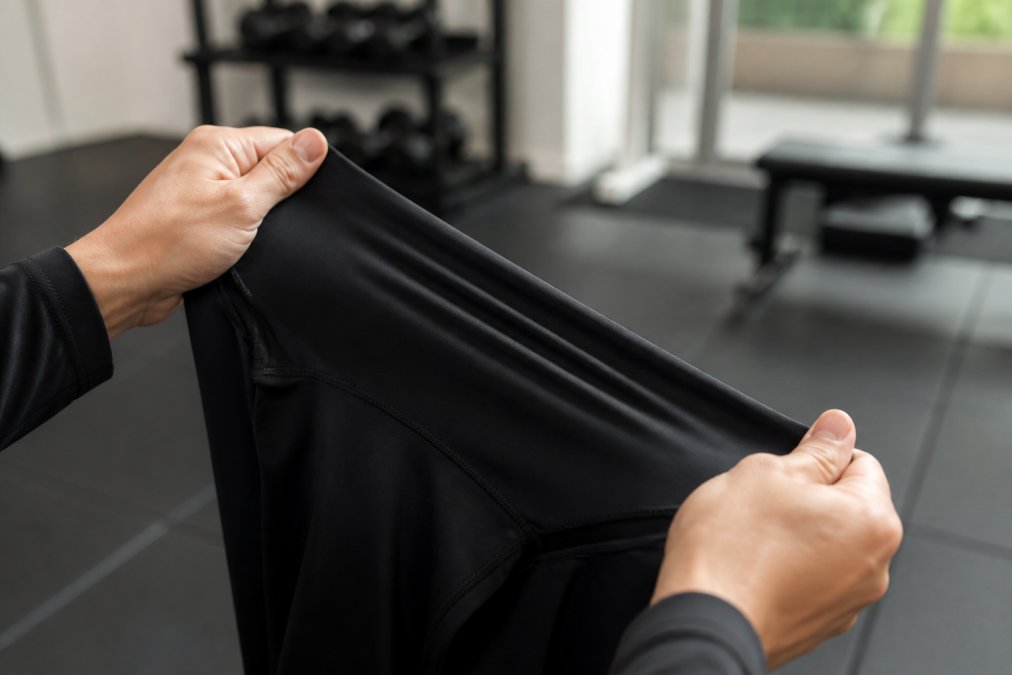
Fabric weight is mass per unit area, measured in grams per square meter (GSM). Denier measures the linear density of individual yarn fibers; higher denier means thicker, more durable yarns.
Moisture-Wicking Technology and Breathability
Moisture-wicking fabrics move sweat to the surface, where it evaporates faster, using hydrophobic fibers combined with hydrophilic treatments or capillary structures.
Durable Athletic Fabric Types: Synthetics, Blends, and Natural Fibers
The most durable athletic fabrics blend synthetic fibers for stretch, breathability, and longevity. Polyester, nylon, and spandex dominate, but merino wool and lyocell fill specific niches.
Synthetic vs. Natural: Performance Trade-offs
| Fiber Type | Key Strength | Main Limitation | Best For |
|---|---|---|---|
| Polyester | Moisture-wicking, durable, affordable | Can retain odor without treatment | High-sweat cardio, everyday training |
| Nylon | Abrasion resistance, soft hand feel | Slower drying than polyester | Yoga, strength training, compression wear |
| Spandex/Lycra | Four-way stretch, shape retention | Degrades with heat exposure | Any activity requiring flexibility |
| Merino Wool | Thermal regulation, natural odor resistance | Lower abrasion resistance, higher cost | Cold-weather training, multi-day wear |
| Lyocell | Soft, breathable, sustainable sourcing | Lower elasticity without blending | Low-impact training, recovery wear |
Synthetic blends typically outperform single-fiber fabrics, a polyester-spandex blend combines moisture management with elasticity.
Stretch, Recovery, and Shape Retention
Four-way stretch means fabric extends in all directions, not just horizontally, critical for squats, lunges, and overhead presses where two-way stretch restricts range of motion.
Construction Quality: Seams, Stitching, and Abrasion Resistance
Construction determines whether a good fabric performs in practice. Flatlock stitching creates smooth, low-profile seams that reduce chafing; overlock stitching is cheaper but bulkier and can irritate skin.
Chemical Safety and Toxicity in Performance Fabrics
Most activewear guides skip chemical safety, treating performance as purely mechanical. That omission matters: the finishes that make synthetics perform, water repellents, antimicrobials, UV blockers, dyes, are where the most consequential quality differences hide.
The PFAS Problem in Performance Finishes
Per- and polyfluoroalkyl substances (PFAS) are synthetic chemicals used for decades in water- and stain-repellent finishes, appearing in "water-resistant" outer layers, windbreakers, and some compression garments. The concern is persistence: PFAS do not readily break down, and some older long-chain compounds have been linked to health effects at cumulative exposure levels.
Antimicrobials: Silver, Triclosan, and What to Look For
Odor control is a common performance claim delivered through chemistries with very different safety profiles.
- Silver-ion treatments bind silver to the fiber surface and release ions that disrupt bacterial metabolism; they are widely used and generally regarded as safe for skin contact at textile concentrations.
- Triclosan and triclocarban were once common antimicrobials. The FDA banned their use in consumer antiseptic washes in 2016, and they have largely fallen out of favor in textiles.
- Zeolite and chitosan-based treatments are newer, bio-based alternatives that avoid metal-based chemistry entirely.
Dyes, Sublimation, and Heavy Metals
Sublimation printing bonds dye into polyester at high heat rather than layering ink on top, so graphics do not crack or peel. The quality variable is the ink: low-cost sublimation inks can carry heavy-metal pigments, cadmium, lead, chromium, that higher-quality inks avoid.
Certifications That Actually Verify Something
Certification language is where marketing and substance diverge. The ones worth knowing:
| Certification | What It Verifies |
|---|---|
| OEKO-TEX Standard 100 | Tests finished textile for harmful substances including formaldehyde, heavy metals, and restricted azo dyes |
| bluesign | Audits the full production process for chemical input management, not just the finished fabric |
| Global Recycled Standard (GRS) | Verifies recycled content claims and traces the supply chain |
| Cradle to Cradle Certified | Evaluates material health alongside recyclability and social fairness |
What You Can Actually Check
You will not find a lab report on a hangtag, but you can read the signals:
- Does the brand disclose its finish chemistry, or only the performance benefit?
- Is there a certificate number, or just a logo?
- Does the care label warn against high heat (which can release finish chemistry) or specify cold wash?
- Does the brand publish a restricted substances list (RSL)?
Activity-Specific Fabric Mapping: Matching Gear to Your Training
Most guides say different activities need different fabrics and stop there. The useful version is a mapping: given an activity's mechanical and thermal demands, what specs actually deliver? Below is a framework for any garment, plus ranges for each training style.
The Three Variables That Drive the Match
Every activity can be scored on three axes:
- Sweat rate, how much moisture the fabric must move per hour. High-sweat activities need hydrophobic fibers and capillary structures; low-sweat activities can tolerate more absorbent blends.
- Range of motion, how far joints travel under load. This sets the minimum spandex content and knit structure.
- Abrasion load, how much friction the fabric sees against equipment, ground, or itself. This sets the denier floor.
A fabric that scores well on one axis and poorly on another fails predictably. A 150 GSM polyester with 8% spandex is excellent for a 10K and miserable for barbell work, the abrasion load will pill and thin it within weeks.
High-Intensity Cardio: Running, HIIT, Cycling
- Target weight: 150-200 GSM
- Fiber: Polyester-dominant (80%+), with 10-15% spandex for recovery
- Knit: Interlock or birdseye mesh, often with mapped ventilation zones
- Avoid: Cotton blends (retain sweat), high-nylon content (slower dry time)
Running and cycling reward low weight and fast dry time over abrasion resistance, since the fabric rarely contacts anything abrasive. HIIT sits between cardio and strength, it needs a running fabric's breathability with slightly higher denier to survive burpees and box jumps.
Strength Training and Functional Fitness
- Target weight: 200-260 GSM
- Fiber: Nylon-spandex or polyester-nylon-spandex blends
- Knit: Dense, tight interlock with reinforced panels at knees, seat, and shoulders
- Spandex content: 18-25% for full recovery under load
Nylon outperforms polyester here thanks to higher abrasion resistance and a softer hand feel under compression; the trade-off is slower drying, acceptable since strength sessions produce less sustained sweat. Look for bartack reinforcement at strap and waistband attachment points, where cheap gear fails first.
Yoga, Pilates, and Low-Impact Mobility
- Target weight: 180-240 GSM
- Fiber: Nylon-lycra or polyester-lycra with a brushed or peached finish
- Knit: Four-way stretch with high recovery; opacity matters more than breathability
- Spandex content: 20-30% for the "buttery" hand feel and squat-proof opacity
The quality failure mode in yoga wear is not abrasion, it is see-through stretch. A fabric that passes the fitting-room stretch test can go translucent under a deep lunge after a few washes as spandex fatigues. Higher spandex content and denser knits resist this longer, making the at-home stretch-and-see-through test most useful here.
Cold-Weather Training
- Target weight: 240-320 GSM, often with a brushed interior
- Fiber: Merino wool blends (17.5-19.5 micron) or brushed polyester with a grid fleece structure
- Knit: Grid or channeled back for moisture transport away from skin
- Avoid: Pure cotton base layers, which hold sweat and chill
Merino's advantage is odor resistance and thermal regulation across a wide temperature band, which is why it dominates multi-day and cold-weather use despite lower abrasion resistance. Brushed synthetics are cheaper and dry faster but need antimicrobial treatment for odor.
Recovery and Loungewear
- Target weight: 200-280 GSM
- Fiber: Lyocell, modal, or cotton-modal blends
- Knit: Looser jersey or French terry
- Priority: Softness and breathability over performance
Recovery wear is the one category where natural and semi-synthetic fibers genuinely compete with synthetics, because the demands are thermal comfort and skin feel rather than moisture transport under load.
A Quick Decision Shortcut
If you remember nothing else: match spandex content to range of motion, denier to abrasion load, and GSM to sweat rate and temperature. A garment that gets all three right will outperform a pricier one that gets one wrong.
How to Care for Performance Activewear to Extend Its Life
Proper care dramatically extends garment longevity. The most common mistake is fabric softener, which coats fibers and blocks moisture-wicking properties.
- Turn garments inside out before washing
- Use cold water (never hot, which degrades spandex)
- Skip fabric softener entirely
- Use mild detergent without bleach
- Wash with similar fabrics, not cotton towels or denim
- Air dry when possible; if using a dryer, use low heat
- Avoid ironing; heat damages synthetic fibers
Women Owned Activewear Brands and the Quality Conversation
WBENC certification verifies women-owned business status. It does not certify textile performance, fabric sourcing or factory labor conditions; assess those claims using separate product information and evidence.
Conclusion: Building a Wardrobe That Works as Hard as You Do
Evaluating what makes activewear high quality requires looking past marketing claims to fabric specifications, construction details, and treatment methods. The best gear combines appropriate fiber blends, dense knits, reinforced seams, and responsible chemical treatments.
Frequently Asked Questions
What fabric features define high-quality activewear?
High-quality activewear typically uses synthetic blends like polyester, nylon, and spandex for moisture-wicking, breathability, and four-way stretch. Look for flatlock stitching to prevent chafing, antimicrobial treatments for odor control, and a fabric weight between 200-300 GSM for durability. The best pieces balance wicking performance with shape retention, so they survive repeated washing without pilling or losing elasticity. Check for UV resistance if you train outdoors.
How can you tell if leggings are high quality?
Squat test the fabric: high-quality leggings should be opaque when stretched, not sheer. Check the waistband for a wide, flat design that stays put without digging. Look at seam construction; flatlock stitching lies flat and resists abrasion. Run your hand over the fabric: it should feel dense and smooth, not thin or slick. Finally, check the care label for spandex content (at least 15-20% for good recovery) and avoid pieces with excessive pilling after one wash.
Does price always correlate with activewear quality?
No. Price often reflects brand marketing, retail markup, and celebrity endorsements rather than material quality. A $120 legging can use the same fabric as a $40 pair. Focus on specifications: fabric weight, denier, spandex percentage, seam type, and whether the brand discloses its manufacturing standards. Some women owned activewear brands offer better value because they invest in materials and ethical production instead of expensive ad campaigns. Always read reviews about durability, not just fit.
What are the signs of poor-quality athletic apparel?
Warning signs include thin, sheer fabric that shows through when stretched; seams that pucker or use standard overlock stitching instead of flatlock; a lack of spandex or less than 10% spandex (leading to sagging); and care labels that recommend dry cleaning or hand washing only. Poor-quality gear often pills after a few washes, loses shape, and retains odors even after washing. If the fabric feels slick and plastic-like, it likely lacks breathability and moisture management.
How does sustainable manufacturing affect activewear quality?
Sustainability claims and product quality need separate evidence. OEKO-TEX STANDARD 100 tests for harmful substances within its criteria; it does not guarantee garment durability, ethical manufacturing or improved moisture management. Compare construction, fit and product-specific information.
Why is moisture-wicking technology important in activewear?
Moisture-wicking technology pulls sweat away from your skin to the fabric's surface, where it evaporates quickly. Without it, wet fabric clings, causes chafing, and drops your body temperature when you stop moving. High-quality activewear uses hydrophobic fibers (like polyester) combined with hydrophilic treatments to move moisture efficiently. This keeps you dry, comfortable, and focused. Breathability works alongside wicking; look for mesh panels or interlock knits in high-sweat areas.