

Table of Contents
- What Makes Athletic Training Gear Sustainable?
- Why Choose Non-Toxic Athletic Apparel Brands
- Natural Fibers vs. Recycled Synthetics: Which Performs?
- How to Spot Durable Eco-Friendly Workout Clothes
- Beyond the Label: Fair Trade and Ethical Manufacturing
- How to Wash Sustainable Activewear to Make It Last
- Your Checklist for Buying Sustainable Training Gear
- Conclusion: Train Hard, Leave a Lighter Footprint
- Frequently Asked Questions
Last Updated: September 8, 2026
Most athletic apparel is made from plastics. When you buy sustainable athletic training gear, you are not just choosing a fabric; you are voting on the future of the textile industry and the health of your own skin. A growing movement of eco-conscious brands is proving that high-performance gear can be both fossil-free and functional.
This guide from Burrow Athletic breaks down what makes training apparel sustainable, how to evaluate performance claims, and how to care for your gear. We cover natural fibers versus recycled synthetics, non-toxic dyes, and the often-ignored issue of microplastics.
What Makes Athletic Training Gear Sustainable?
Sustainable athletic training gear minimizes environmental impact across its entire lifecycle. The key pillars are the materials used, the chemicals involved in production, and the labor practices behind the brand. A truly sustainable product addresses all three, not just the fabric content.
The material choice is the most visible factor. Organic cotton and recycled polyester are common starting points, but processing matters just as much. Low-impact dyes and chemical-free finishing reduce water pollution and protect factory workers.
A common mistake is focusing only on the fabric while ignoring the supply chain. A shirt made from organic cotton loses its ethical value if sewn in unsafe conditions. Transparency about where and how garments are made is a hallmark of a trustworthy brand.
Why Choose Non-Toxic Athletic Apparel Brands
Non-toxic athletic apparel brands prioritize your health by avoiding harmful chemicals. Many conventional workout clothes are treated with PFAS or synthetic dyes that can irritate sensitive skin. When you sweat, your pores open, potentially absorbing these substances.
Choosing chemical-free gear reduces your exposure to irritants and supports cleaner manufacturing, as textile dyeing runoff is a major source of water pollution. PFAS-free brands using low-impact dyes address both health and environmental concerns.
Natural fibers like organic cotton and merino wool are naturally breathable and sweat-wicking without chemical treatments. For sensitive skin, switching to non-toxic apparel can eliminate rashes and chafing from synthetic blends.
Natural Fibers vs. Recycled Synthetics: Which Performs?
Most guides stop at 'cotton for yoga, polyester for HIIT.' That's a starting point, not an answer. We've synthesized the available research and textile science to show how these materials hold up in real training scenarios.
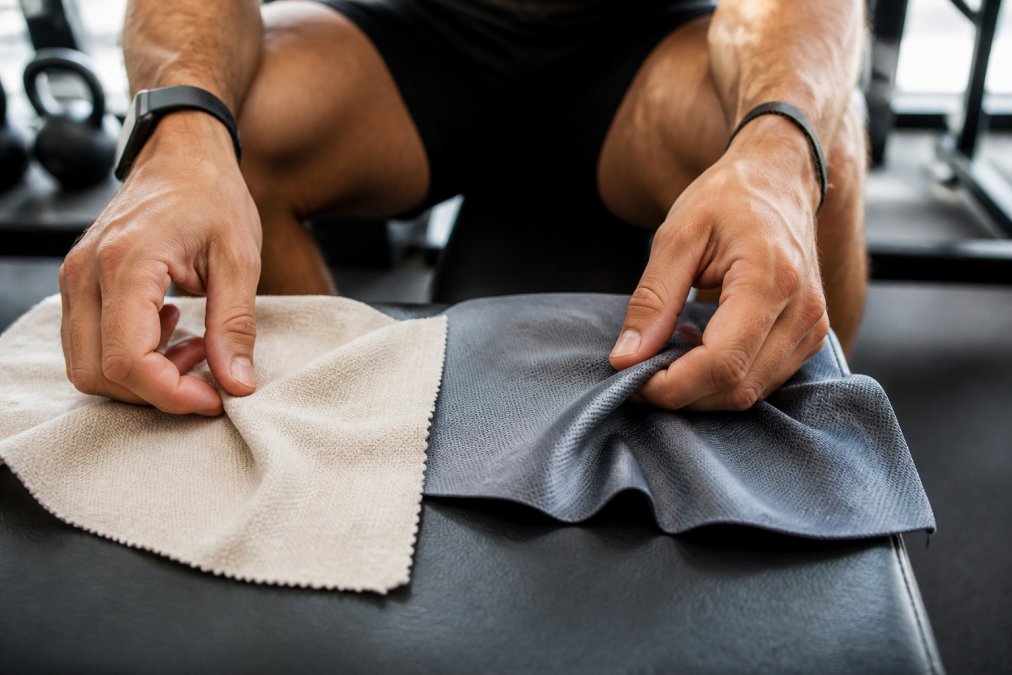
The Science of Sweat Management
The primary job of training gear is to manage moisture. Natural fibers like cotton absorb sweat into the fiber itself, making the fabric feel wet and heavy. Recycled polyester is hydrophobic, it wicks moisture along the fiber's surface through capillary action, spreading it so it can evaporate faster.
Moisture-wicking and drying depend on fabric construction and treatment as well as fiber type. Compare the actual garment’s specifications and your comfort rather than applying a fixed drying advantage to all polyester blends.
The Durability and Compression Factor
For activities requiring compression and support, weightlifting, CrossFit, or sprinting, recycled synthetics are the clear winner. The plastic polymer structure provides a consistent, high-tension stretch that natural fibers cannot replicate without blending. This is why most compression leggings and sports bras use nylon or polyester blends.
Natural fibers have their own performance niche. Merino wool's crimped structure creates tiny air pockets that trap heat in winter and wick moisture in summer, providing natural thermoregulation. It's also naturally antimicrobial. For yoga or mobility work, organic cotton's breathability and softness are unmatched.
The Unseen Cost: Microplastic Shedding
A 2016 University of Plymouth study published in Marine Pollution Bulletin estimated fiber release from 6 kg loads of different fabrics. Acrylic produced the highest estimate, about 729,000 fibers; that figure is not a universal result for polyester fleece or every wash. Release depends on fabric and washing conditions.
Natural fibers like cotton and wool are biodegradable, though they can still release chemical dyes. If you choose recycled synthetics, commit to mitigating their microplastic impact by using a Guppyfriend washing bag, installing a machine filter, or choosing brands with fiber-shedding reduction technologies.
A Framework for Your Decision
Instead of a blanket 'which is better' answer, use this decision framework based on your primary training modality:
| Training Type | Primary Fabric Choice | Why | Key Consideration |
|---|---|---|---|
| HIIT / CrossFit | Recycled Polyester/Spandex Blend | Superior moisture wicking and compression for explosive movements. | High microplastic shedding risk; use a wash bag. |
| Endurance Running (Outdoor) | Merino Wool or Wool/Synthetic Blend | Natural thermoregulation and odor resistance for multi-hour efforts. | Wool can be more delicate; look for reinforced seams. |
| Yoga / Pilates / Mobility | Organic Cotton or Tencel Blend | Breathability, softness, and unrestricted movement for low-sweat activities. | Cotton absorbs sweat and can feel heavy if you do hot yoga. |
| Weightlifting / Strength Training | Recycled Nylon/Spandex Blend | High durability and shape retention under heavy load and friction. | Nylon is a plastic; check for brand take-back programs. |
There is no single 'best' sustainable fabric. The most sustainable choice performs for your specific activity, lasts for years, and has an end-of-life impact you are prepared to manage.
How to Spot Durable Eco-Friendly Workout Clothes
Durable eco-friendly workout clothes are defined by construction quality, not just material label. Before you buy sustainable athletic training gear, inspect the seams, fabric weight, and warranty. A heavier fabric weight, measured in GSM, generally indicates a more substantial garment.
Look for reinforced stitching in high-stress areas like the shoulders and crotch. Flatlock seams reduce chafing. If a brand expects cold-water washing and hang drying, they are designing for longevity.
A common mistake is assuming "eco-friendly" means flimsy. Many natural fiber garments with a tight knit are incredibly strong. Brands offering repair programs or take-back schemes demonstrate a genuine commitment to circular fashion.
Beyond the Label: Fair Trade and Ethical Manufacturing
Fair trade certifications ensure that the people making your gear are paid fairly and work in safe conditions. Organic cotton does not automatically guarantee social responsibility. Look for explicit statements about factory audits, living wages, and worker welfare.
Brands that publish supplier lists or share supply chain details are more likely to be genuine. Vague claims about "ethical" production without verifiable details should raise a red flag. Independent certifications provide a third-party check.
Microplastics and End-of-Life Disposal
Every time you wash a polyester or nylon garment, thousands of tiny plastic fibers break off and flow into waterways. Recycling programs do not currently solve this because plastic degrades in quality each time it is reprocessed.
Consider the end-of-life plan before you buy. Some brands offer take-back programs where worn-out items are recycled into new products. If you buy recycled polyester, check for a circular program; otherwise, you are simply delaying the landfill date.
How to Wash Sustainable Activewear to Make It Last
Proper care is the single biggest factor in extending the life of your gear. The number one rule is to use cold water. Hot water degrades elastic fibers and accelerates color fading, while cold water is gentler and uses less energy.
Always hang dry your athletic wear. Tumble dryers break down technical fibers and cause shrinkage. Air drying preserves the garment's integrity and prevents heat damage that leads to odor retention, potentially doubling the lifespan of your training pieces.
Wash synthetic items less frequently, most gear can be worn two to three times before washing. Turn garments inside out to protect the outer surface from friction. Avoid fabric softeners, as they coat fibers and ruin moisture-wicking properties.
Your Checklist for Buying Sustainable Training Gear
Use this checklist when you are ready to buy sustainable athletic training gear. It consolidates everything we have covered into a quick reference for evaluating any brand.
- Material Sourcing: Is the primary fiber organic, recycled, or a biodegradable natural fiber?
- Chemical Inputs: Does the brand advertise PFAS-free and non-toxic dyes?
- Durability: Is the fabric weight substantial? Are the seams reinforced?
- Labor Practices: Does the brand provide transparency about factories and fair wages?
- End of Life: Does the brand offer a take-back or recycling program?
- Care Requirements: Are you willing to wash in cold water and hang dry to preserve the garment?
The Budget-Conscious Shopper's Playbook
The biggest myth in sustainable fashion is that it requires a premium budget. While flagship brands like Patagonia and prAna command higher prices, there are proven pathways to building an eco-friendly training wardrobe without breaking the bank. The key is shifting from 'buying sustainable products' to 'building a sustainable system.'
Strategy 1: Explore the Secondhand Market. Platforms such as eBay, Poshmark and ThredUp offer used apparel. Check condition, fit and return policies before buying; current availability and resale growth vary by market and year.
- Search for 'Deadstock' or 'Past Season': Search for specific fabric technologies (e.g., 'Polartec fleece,' 'merino wool base layer') rather than brand names. You'll often find technical pieces at 50-70% off retail.
- Inspect for Integrity: Look for detailed photos of the inside seams and waistbands. Check for 'pilling' (small fabric balls) which indicates wear, and 'delamination' (peeling) in bonded fabrics.
- Filter by Fabric: Use search filters to specify 'organic cotton' or 'merino wool' to bypass synthetic-heavy results.
Strategy 2: Leverage Outlet and Sale Cycles. Sign up for email lists from REI Co-op, Backcountry, and Moosejaw. Their 'Garage Sale' or 'Used Gear' sections often have returned items at steep discounts. REI's Anniversary Sale (typically in May) and Black Friday/Cyber Monday offer 20-30% off core sustainable lines. Patagonia's 'Worn Wear' program sells certified used gear with a warranty, often at 40% off retail.
Strategy 3: Prioritize 'Cost Per Wear' Over Price Tag. A $120 pair of organic cotton leggings worn 200 times costs $0.60 per wear. A $40 pair that loses elasticity after 20 washes costs $2.00 per wear. Higher-quality sustainable gear is often the more economical choice. Invest in 3-4 high-quality, versatile pieces that can be mixed and matched across all your activities.
Strategy 4: The 'Gear Swap' Network. Organize or participate in a local gear swap with your training community. Many running clubs and CrossFit boxes host seasonal swaps where members trade gently used gear, saving money and keeping items out of landfills.
The 'Value vs. Premium' Decision Matrix
When you're on a budget, you need to know where to splurge and where to save. Use this matrix to guide your purchases:
| Gear Type | Where to Save (Secondhand/Outlet) | Where to Splurge (New) | Rationale |
|---|---|---|---|
| Base Layers (Tops) | Yes, easy to sanitize and inspect | If you have sensitive skin | Base layers are in direct contact with skin; new organic cotton or merino is best for allergies. |
| Bottoms (Leggings/Shorts) | Yes, but inspect waistband and seams closely | If you need specific compression | The elastic in leggings degrades; secondhand may have lost shape. New is better for high-compression needs. |
| Sports Bras | No, rarely worth the risk | Yes, always buy new | Support structure degrades invisibly. A worn bra can lead to injury. This is a non-negotiable new purchase. |
| Outer Layers (Jackets) | Yes, excellent secondhand finds | If you need specific weatherproofing | Technical shells are durable and often outlast their first owner's interest. Great for secondhand. |
| Socks | No, hygiene and wear | Yes, buy in bulk from sustainable brands | Socks take a beating and are hard to inspect for wear. New merino socks are a worthwhile investment. |
By adopting this multi-pronged approach, you can build a fully sustainable training wardrobe for under $200. The goal is to make smart, informed choices that maximize the lifespan of every garment you own.
Conclusion: Train Hard, Leave a Lighter Footprint
The challenge of sustainable activewear is reconciling high performance with environmental responsibility. It requires looking beyond marketing buzzwords and examining the entire lifecycle of a product.
Burrow Athletic is rooted in character, resilience, and purpose. Every purchase supports The Be Good Foundation.
Apply this guide’s sustainability checks to the specific products you are considering. Burrow Athletic’s current product range focuses on headwear, including GOAT.
Frequently Asked Questions
Does sustainable training gear perform as well as conventional brands?
Yes. Modern sustainable fabrics are engineered for performance. Organic cotton blends offer breathability and comfort for yoga and low-impact training, while recycled polyester and nylon provide the stretch, compression, and moisture-wicking properties needed for high-intensity workouts. Look for gear with specific performance features rather than assuming eco-friendly means lower quality.
Are recycled materials as durable as traditional synthetic fabrics for training?
Recycled polyester and nylon are processed to meet the same strength and durability standards as virgin synthetics. The durability depends more on the fabric's denier and knit structure than on whether it contains recycled content. Check the material weight and look for reinforced seams in high-stress areas like shoulders and thighs to ensure your gear holds up.
How do I identify truly sustainable activewear brands?
Look for transparency about the supply chain. Reputable brands share their manufacturing partners, fabric sourcing, and certifications like GOTS for organic cotton or Fair Trade for ethical labor. They also explain their sustainability goals with specific targets. Be wary of vague claims without data. A brand committed to durability and repair programs shows a deeper commitment to reducing textile waste.