

Table of Contents
- Does Clothing Impact Mental Well-Being? What the Research Says
- How Clothes Affect Mood: The Psychology Behind Your Outfit
- Enclothed Cognition: How What You Wear Shapes How You Think
- Clothing and Self-Esteem: Fit, Comfort, and Confidence
- Getting Dressed and Depression: When Clothing Feels Like Too Much
- Sensory Needs, Disability, and Neurodivergence: Clothing That Works for You
- Practical Steps for Choosing Clothes That Support Mental Well-Being
- Conclusion: What to Remember About Clothing and Mental Well-Being
- Frequently Asked Questions
Last Updated: October 5, 2026
Does Clothing Impact Mental Well-Being? What the Research Says
Does clothing impact mental well being? Yes, and the effect is real enough that psychologists have a name for part of it.
The honest answer is layered. Clothing is not a treatment for mental illness. But it is a daily input into how you feel, and small inputs add up.
Mental well-being is the state of feeling balanced, capable, and able to cope with everyday stress.
Here is the part most guides skip: the strength of the link depends on the person. For some, an outfit is a mood booster.
How Clothes Affect Mood: The Psychology Behind Your Outfit
How clothes affect mood comes down to two forces: how the fabric feels on your body and what the garment means to you.
The physical side is simple. Scratchy seams, tight waistbands, and stiff collars keep your body on edge. That low-grade irritation wears on you.
The mental side is about association. A jacket you wore on a good day carries some of that day with it.
- Comfort lowers background stress
- Fit removes distraction
- Meaning adds emotional weight, good or bad
None of this is magic. It is the ordinary business of paying attention to how your clothes make you feel.
Enclothed Cognition: How What You Wear Shapes How You Think
Enclothed cognition is the idea that the symbolic meaning of a garment, combined with wearing it, changes your mental state.
The key finding: it is not the coat itself. It is what you believe the coat means.
This matters because it explains why a uniform, a team jersey, or a favorite training top can change how you carry yourself. You are not just wearing cloth.
A common mistake is treating this as a trick. It is not.
Clothing and Self-Esteem: Fit, Comfort, and Confidence
Clothing and self-esteem connect most strongly through fit. A garment that fits well removes a quiet source of stress. A garment that fits badly adds one.
Think about the last time you tugged at a hem or adjusted a waistband all day.
Body image plays a role here too. Many people carry a mental picture of how they "should" look, often shaped by narrow fashion standards.
What helps:
- Choose clothes for the body you have now
- Prioritize comfort and movement over trends
- Notice when an outfit makes you shrink, and stop wearing it
Confidence from clothing is not about looking a certain way. It is about removing the reasons to feel uneasy.
Getting Dressed and Depression: When Clothing Feels Like Too Much
Getting dressed and depression often collide. When energy is low, even picking a shirt can feel like a mountain.
It helps to understand why it happens, because the reason shapes the fix. Depression can affect three systems that dressing depends on:
- Executive function, the brain's planning and sequencing system. Choosing an outfit means holding several steps in mind at once (weather, activity, clean laundry, matching). When executive function is taxed, that stack of small decisions feels enormous.
- Anhedonia, the reduced ability to feel pleasure. If nothing sounds rewarding, the payoff of "looking nice" disappears, so the effort has no visible return.
- Fatigue and sleep disruption, low energy makes any multi-step task feel heavier than it is.
That is why the barrier is rarely laziness. It is a load problem.
Ways to reduce the load:
- Lay out clothes the night before, when decision fatigue is lower
- Keep a small rotation of easy, comfortable outfits
- Choose soft fabrics and simple fits with no hardware to fiddle with
- Skip anything that needs ironing, tucking, or adjusting
- Store one complete outfit, shoes included, in a single spot for hard mornings
- Buy duplicates of a shirt you already trust, so "choosing" becomes "grabbing"
A useful reframe: on low days, the goal is not to look a certain way.
Where clothing helps, and where it stops.
This is the part worth being precise about.
Watch for these signals that clothing-related effort is no longer the issue:
- Getting dressed feels impossible for weeks, not days
- You have stopped leaving the house or seeing people
- Low mood, hopelessness, or loss of interest persists most of the day, most days
- Sleep, appetite, or concentration have shifted noticeably
If any of those sound familiar, that is worth talking about with a doctor or licensed mental health professional.
If you are in crisis or having thoughts of harming yourself, contact the 988 Suicide & Crisis Lifeline by calling or texting 988 (Contact Us). It is free, confidential, and available 24/7.
Sensory Needs, Disability, and Neurodivergence: Clothing That Works for You
For people with sensory needs, disability, or neurodivergence, clothing can make or break a day. Tags, seams, and tight cuffs are not minor annoyances.
This is one of the clearest places where the question of does clothing impact mental well being comes into focus.
What tends to help:
- Seamless or tagless construction
- Soft, breathable fabrics
- Adjustable waistbands and closures
- Loose-fitting options that do not restrict movement
- Consistent sizing so you know what to expect
For some, a predictable wardrobe removes a daily source of stress. Wearing the same style of shirt in several colors is not boring.
The wider point: clothing should serve the wearer. When it does not, that is a design gap, not a personal failing.
Practical Steps for Choosing Clothes That Support Mental Well-Being
Most articles on this topic stop at "wear what makes you feel good." That advice is fine but vague. What follows is a concrete, evidence-informed process, plus an honest note on what clothing can and cannot do.
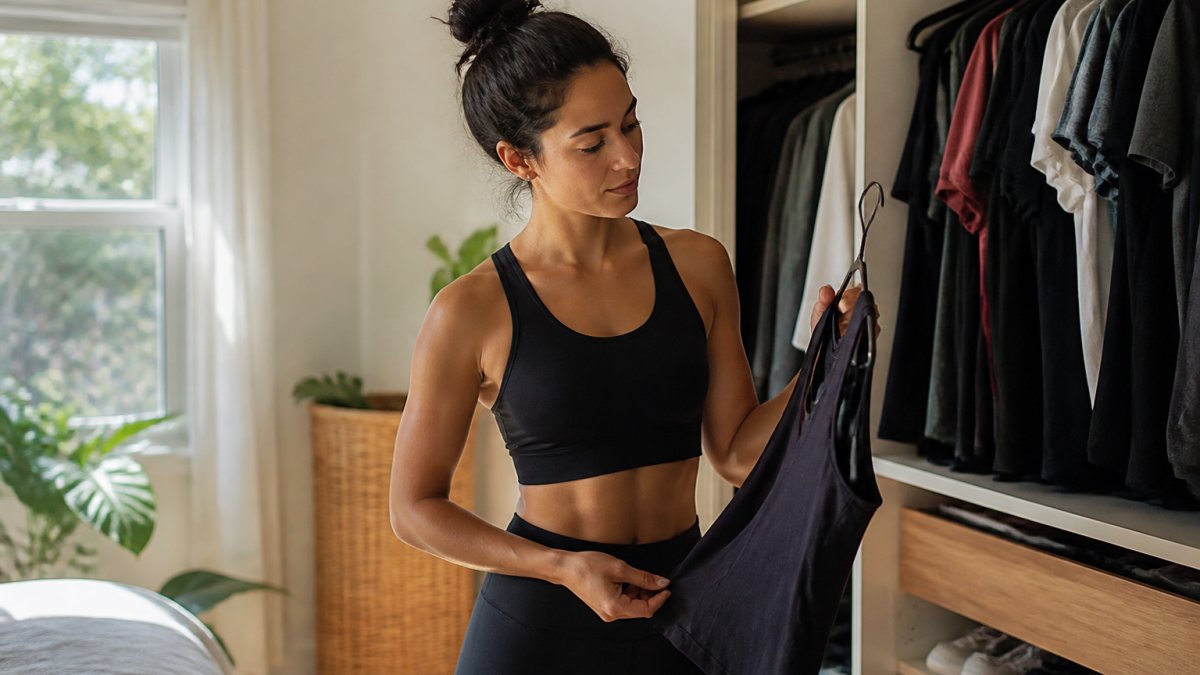
Step 1: Separate short-term mood from longer-term well-being
This distinction matters, and almost no guide makes it. Clothing's clearest effects are short-term and situational, a comfort fix, a small confidence lift, a reduced distraction. Those are real, but they fade when the garment comes off or the novelty wears off.
Longer-term mental health, clinical anxiety, depression, body-image disorders, is shaped by many factors, and clothing is a minor input, not a driver. So the right expectation is: use clothing to improve your day, and look elsewhere (therapy, medical care, sleep, movement, connection) for conditions that persist.
Step 2: Run a comfort and fit audit
Start with the body, not the mirror. Ask three questions about each item:
- Does it itch, pinch, or scratch? If yes, it goes back. No exceptions.
- Can I move without adjusting it? If you are tugging a hem or hitching a waistband, that is a low-grade stressor running all day.
- Does it fit the body I have now? Not the body from two years ago, not a goal size. Current fit removes a quiet source of friction.
A practical test: wear the item for a full day and note how often you thought about it. The best clothes disappear.
Step 3: Name the feeling you want
Work backward from a target state, not a trend. If you want to feel focused, a structured "work" layer can act as a cue. If you want to feel calm, softer fabrics and looser fits tend to help. This is the same principle behind enclothed cognition, the meaning you attach to a garment shapes how you carry yourself, so choose items whose meaning matches who you actually are. A costume you do not believe in tends to backfire.
Step 4: Build a small, trusted rotation
Decision fatigue is real, and a predictable wardrobe removes daily choices. Keep 5-7 outfits you trust and rotate them. Wearing the same style of shirt in several colors is not boring, it is a system. For people with sensory needs or neurodivergence, consistency is especially valuable because it removes the uncertainty of "will this one feel different today?"
Step 5: Adapt to your actual context
Clothing's effect depends on where you are and what you are doing. A few common patterns:
- Work-from-home: Without a commute or an office, the line between work and rest blurs. A simple "work top" can signal the start of focus and a change into comfortable clothes can mark the end of the day. The point is the transition, not the formality.
- School or campus: Peer appearance pressure peaks in these settings. Choosing a couple of reliable, comfortable staples can reduce morning stress and lower the pull of comparison.
- Physical activity: Gear that fits and breathes lets you focus on the movement instead of the garment. Ill-fitting gear adds distraction exactly when you want less of it.
- Sensory or disability needs: Prioritize seamless or tagless construction, soft breathable fabrics, adjustable closures, and easy on/off. There is no universal "comfortable", the wearer defines it.
Step 6: Cut the noise and test one change
Remove anything from your closet that makes you feel small, and test a single swap rather than overhauling everything. Change one item, notice how the day goes, and keep what works. Small, reversible experiments beat dramatic reinvention.
A quick decision guide:
| If you feel... | Try... | Why it helps |
|---|---|---|
| Low energy | Soft, easy layers | Lowers effort and friction |
| Anxious | Fitted but not tight | Creates a sense of control |
| Unfocused | A "work" outfit | Signals the brain to focus |
| Overwhelmed | A repeat outfit | Removes one decision |
| Flat | One bold item | Adds a small lift |
Conclusion: What to Remember About Clothing and Mental Well-Being
Clothing is not a cure, but it is a lever. It can lift a mood, steady a nerve, or add one more thing to carry. The difference usually comes down to fit, comfort, and meaning.
Burrow Athletic is rooted in character, resilience, and purpose. Every purchase supports The Be Good Foundation.
Learn more about the Foundation and Burrow’s values.
Frequently Asked Questions
Does getting dressed help with depression?
Getting dressed can be a small but meaningful step when you're depressed. It creates a sense of routine and accomplishment, which can interrupt the cycle of withdrawal. The key is lowering the bar: choose soft, comfortable clothes that are easy to put on. You do not need to look polished. Simply changing out of sleepwear can signal to your brain that the day has started, which supports mental well-being. If depression makes even this feel impossible, that is a sign to talk to a healthcare provider.
Can comfortable clothes reduce stress or anxiety?
Yes. Tight-fitting clothes, scratchy fabrics, and restrictive waistbands can increase physical tension and distract you, which feeds anxiety. Loose-fitting, soft clothing allows your body to relax. For people with sensory sensitivities, seamless and tag-free options make a noticeable difference. The effect is not just physical: when you are not constantly adjusting your clothes, you have more mental space for the things that matter. Choosing comfort-first pieces is a practical way to support emotional well-being.
What is enclothed cognition and how does it work?
Enclothed cognition is the idea that what you wear can influence your thoughts and behavior. The effect depends on two things: the symbolic meaning you attach to the clothing and the physical experience of wearing it. For example, wearing a lab coat described as a doctor's coat improved attention in some studies, while the same coat described as a painter's coat did not. In everyday life, choosing clothes that feel authentic to you can shift how you show up and how you feel.
How can clothing affect confidence and self-esteem?
Clothing affects self-esteem through fit, comfort, and self-expression. When clothes fit well and match your personal style, you are less likely to feel self-conscious and more likely to engage with others. A 2020 study found that wearing clothes with positive meaning improved mood and confidence. The opposite is also true: ill-fitting or uncomfortable clothes can trigger appearance shame and anxiety. Building a wardrobe of pieces that feel like you is a simple, evidence-informed way to support confidence.