

Table of Contents
- Why Athletic Performance Gear Needs Special Care
- What You'll Need Before You Wash Athletic Gear
- Step-by-Step: How to Wash Athletic Performance Gear
- How to Get Smell Out of Gym Clothes
- Best Laundry Detergent for Synthetic Fabrics
- Can You Put Workout Clothes in the Dryer?
- Common Mistakes That Break Down Performance Gear
- Frequently Asked Questions
Last Updated: September 27, 2026
Why Athletic Performance Gear Needs Special Care
How to wash athletic performance gear comes down to one rule: treat synthetics differently than cotton. Performance fabrics are built with fibers and finishes that hold sweat-wicking and stretch properties, and hot water, harsh detergent, or softener can strip those properties away over time.
A few habits protect your gear:
- Wash synthetics separately from cotton and towels
- Use cold water and a gentle cycle
- Skip fabric softener completely
- Air dry when you can
What You'll Need Before You Wash Athletic Gear
You don't need much to wash athletic performance gear well. A few basics cover almost every load.
Gather these first:
- A front-loading or high-efficiency washer
- A gentle, residue-free detergent made for synthetics
- A mesh laundry bag for small items and delicates
- A drying rack or a low-heat dryer setting
- A stain pretreater for tough spots
Step-by-Step: How to Wash Athletic Performance Gear
Follow these steps and your gear keeps its wicking, stretch, and shape. The whole process takes about 40 minutes of hands-off time once you sort and load.
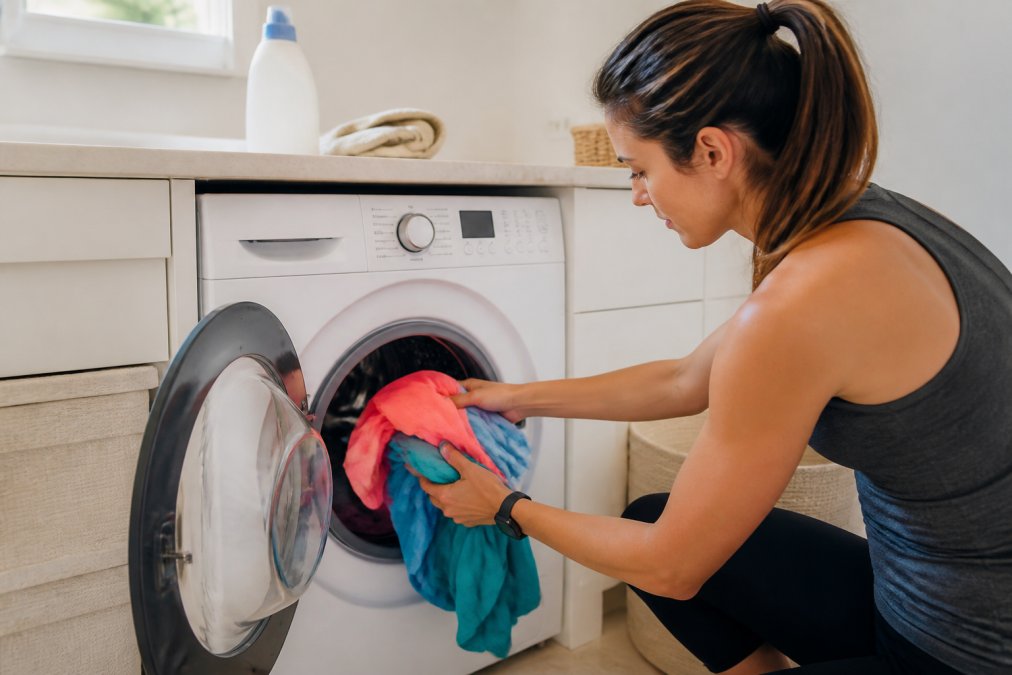
Sort by Fabric and Color
Separate synthetics from cotton, and lights from darks. This matters more for performance gear than for regular laundry.
Sort into three piles:
- Synthetic performance wear (polyester, nylon, spandex blends)
- Cotton and heavy knits
- Towels and anything with zippers or hooks
Choose the Right Cycle and Water Temperature
The best setting for performance gear is a gentle or delicate cycle with cold water. Heat is the enemy here.
Set it up this way:
- Cycle: gentle or delicate
- Temperature: cold
- Spin: medium or low
- Extra rinse: on, if your machine offers it
Skip Fabric Softener and Use the Right Amount of Detergent
Fabric softener is the number one killer of performance fabric. It coats the fibers in a waxy film that blocks wicking and traps odor.
A few rules to follow:
- No softener, no dryer sheets
- Half the normal detergent amount for a full load
- Liquid detergent over powder for cold washes
- Add a half cup of white vinegar to the rinse for odor, if you like
How to Get Smell Out of Gym Clothes
Getting smell out of gym clothes starts with understanding where it comes from. It's not just sweat. It's bacteria and body oils trapped in the fibers, plus detergent residue that keeps them there.
Why Regular Washing Stops Working
Over time, two things build up on performance fabric:
- Sebum and oil residue that detergent alone doesn't fully remove
- Detergent and softener residue that traps bacteria against the fiber
Once that film thickens, a normal cold wash can't cut through it. The odor returns faster each cycle. This is the point where most people give up and replace the gear, when a reset wash would have fixed it.
A Staged Fix, From Mild to Aggressive
Work through these in order. Stop when the smell is gone.
Stage 1, The standard reset (try this first)
- Soak gear in cold water with a half cup of white vinegar for 30 minutes before washing
- Wash with a small amount of gentle, residue-free detergent and an extra rinse
- Never use softener, which seals odor in
- Air dry fully in sunlight when possible, since UV helps kill bacteria
- Rotate your gear so nothing sits damp in a bag for long
Stage 2, The deep reset (if odor persists after two washes)
- Soak overnight in cold water with a scoop of oxygen-based bleach (sodium percarbonate), not chlorine bleach
- Chlorine bleach damages spandex and can yellow synthetics, so keep it away from performance gear
- Run a second rinse cycle to flush the loosened residue
- Air dry and check before wearing
Stage 3, The enzyme reset (for stubborn, set-in odor)
- Use a detergent formulated with enzymes, which break down the proteins and fats bacteria feed on
- Wash warm, not hot, on a gentle cycle
- Add an extra rinse
The Gym Bag Is Half the Problem
The biggest culprit is often not the wash at all. Damp clothes left in a closed bag grow bacteria fast. Hang gear to dry the moment you get home, and never leave wet items balled up in a bag overnight. A mesh laundry bag that lets air circulate inside your gym bag makes a measurable difference.
Best Laundry Detergent for Synthetic Fabrics
The best laundry detergent for synthetic fabrics is a gentle, residue-free formula with no softeners, dyes, or heavy perfumes. Look for one labeled for activewear or high-efficiency machines.
What to Look For on the Label
Avoid these ingredients and claims:
- Fabric softener or cationic surfactants, these are the waxy coating agents. Look for the word "softening" anywhere on the front or back panel.
- Optical brighteners, they make whites look brighter but leave a film that dulls wicking and can irritate skin.
- Heavy fragrance or "long-lasting scent", fragrance oils bond to the same fiber surfaces that hold odor, and they can mask a smell problem instead of fixing it.
- Chlorine bleach, never on performance gear. It degrades spandex and elastane.
Look for these instead:
- Free of fabric softener and added softeners
- Low-suds or HE-compatible, critical for front-loaders, where excess suds can damage the machine and leave residue
- Unscented or lightly scented
- Liquid form for cold-water washing
- Enzyme-based formulas if odor is a recurring issue
Liquid vs. Powder vs. Pods
Powder detergents can clump in cold water and leave spots on synthetics. Liquid dissolves better at low temperatures, which is why it's the safer default for cold washes.
How Much Is Actually Enough
A common mistake is reaching for the strongest detergent you can find, or filling the cap to the top. Stronger isn't better here. It strips finishes and leaves more residue than a gentle formula.
- Use roughly half the normal detergent amount for a full load of synthetics
- For a small load, use a quarter of the normal amount
- If you see suds lingering in the drum after the wash, you used too much
- An extra rinse cycle is cheap insurance against residue
Natural and Plant-Based Options
If you want a natural option, a small amount of a plant-based, fragrance-free detergent works well. Test it on one item first, since some plant-based formulas rely on oils that can leave their own film on synthetics. The same rules apply: no softeners, no brighteners, no heavy scent.
Can You Put Workout Clothes in the Dryer?
You can put workout clothes in the dryer, but low heat is the only safe setting. High heat breaks down stretch fibers and can shrink or warp gear.
Here's how to protect your gear if you do use the dryer:
- Set it to low or no heat
- Use a short cycle, not a full dry
- Remove items while still a little damp
- Never use dryer sheets, which leave the same residue as softener
Common Mistakes That Break Down Performance Gear
Most gear fails early because of a handful of repeat mistakes. Avoid these and you'll get far more life out of every piece.
The big ones:
- Using fabric softener or dryer sheets, which coat fibers and block wicking
- Washing in hot water, which damages stretch and finishes
- Using too much detergent, which leaves residue that traps odor
- Drying on high heat, which weakens elastic fibers
- Letting damp gear sit in a gym bag, which grows bacteria fast
- Washing synthetics with heavy cotton and towels, which adds lint and friction
| Mistake | Fix | Why It Matters |
|---|---|---|
| Fabric softener | Skip it entirely | Coats fibers, blocks wicking |
| Hot water | Wash cold | Protects stretch and finishes |
| Too much detergent | Use half the normal amount | Residue traps odor |
| High-heat drying | Air dry or low heat | Heat weakens elastic fibers |
| Damp gym bag | Hang to dry right away | Bacteria grows fast when damp |
Frequently Asked Questions
Can you use fabric softener on athletic gear?
No. Fabric softener coats synthetic fibers and blocks the tiny channels that move sweat away from your skin. Over time it also traps odor-causing bacteria, so your gear smells worse after each wash. Skip softener entirely and use a detergent made for synthetic fabrics instead. If you want a softer feel, add half a cup of white vinegar to the rinse cycle.
Why does my athletic gear still smell after washing?
Odor-causing bacteria get trapped in synthetic fibers and regular detergent at low temperatures does not always remove them. Wash athletic gear in warm water (not hot) with a detergent that contains enzymes. Avoid overloading the machine so water and detergent can circulate. If the smell lingers, soak the items in a vinegar-and-water solution for 30 minutes before washing.
Should I wash performance fabrics in cold or hot water?
Warm water works best for most athletic performance gear. Cold water may not fully remove body oils and bacteria, while hot water can damage spandex, elastane, and other stretch fibers. Check the care tag on each item. When in doubt, use the warm setting on a gentle cycle and always rinse thoroughly to flush out detergent residue.
How often should you wash athletic performance gear?
Wash your gear after every one to two wears. Synthetic fabrics hold sweat and bacteria even when they feel dry, and letting dirty gear sit in a hamper gives odor time to set in. If you sweat heavily or train outdoors in heat, wash after each use. Air-dry damp gear immediately after a workout if you cannot wash it right away.
These garment-care suggestions are general guidance. For hats, follow the specific product’s care instructions; do not assume that machine-washing advice for gym clothing applies. Burrow Athletic’s current product range is headwear, including the GOAT hat, rather than a full gym clothing range.