

Last Updated: November 16, 2026
Quick Summary
Durable teal sports bras are worth it for running if they deliver the right support, fabric recovery and construction. Judge them on impact level, stretch recovery, seam quality and colorfastness before the shade. Rotating two or three bras and washing them in cold water extends their life.
- Match the bra's support level to the impact of your running, since higher-impact runs need firmer compression.
- Check that the fabric returns to shape after stretching and does not feel thin or see-through.
- Look for flatlock seams and reinforced stress points at the straps and band.
- Wash teal bras in cold water, avoid high dryer heat, and turn them inside out to protect the color.
- Compare cost per run rather than shelf price, and replace the bra when the band rides up mid-run.
Table of Contents
- Best Sports Bras for Running in Teal: What to Compare
- Sports Bras for Running Large Breasts: Support and Fit Priorities
- How to Choose a Durable Running Sports Bra
- Price, Value and How Often to Replace a Running Bra
- Picking Your Teal Running Bra Before Your Next Long Run
- Frequently Asked Questions
Teal running gear is easy to buy on color alone, and that is where many shoppers go wrong. A bra can look right on the hanger and still fail on the trail. The better check is to look at support, fabric, construction and care before the shade gets a vote. Teal sports bras for running deserve that same scrutiny as any other performance piece.
Color does matter in practice. A teal bra that fades after a few washes, or that turns sheer under bright light, is not a good running bra regardless of how it looks online. So the first question is not "Do I like teal?" but "Will this hold its shape, its color and its support through the training I actually do?"
Start with three questions. What impact level does your running require? How does the fabric recover after a sweaty session? Do the seams and bands still feel secure after twenty or thirty washes? Those answers will tell you more than the product photo.
Best Sports Bras for Running in Teal: What to Compare
Shoppers often compare teal running bras by price and shade first. A more useful comparison is by support level, coverage and the fabric's stretch and recovery. Lay candidate bras side by side and check the same features on each one, so the decision rests on performance rather than a single appealing photo.
Pay attention to strap design and band width as well. Wider bands and adjustable straps usually spread load more evenly, which matters more than a bold color when you are running.
Shortlist two or three teal options that match your impact level, then test them against the criteria below before you commit.
Support Level and Bounce Control for Running
Running creates more bounce than most workouts, so support is the first thing to check. Match the bra to the impact of your routine. Higher-impact running generally calls for firmer compression or a structured design, while lighter sessions can use a medium-support style.
Look for product descriptions that name the support level and explain how the bra controls movement. A vague claim like "great support" tells you little. Specific details about cup construction, compression panels and band design tell you much more.
Breathability, Moisture-Wicking and Comfort
A teal bra that traps sweat will chafe, even when the fit is right. Check whether the fabric is described as breathable or moisture-wicking, and whether the design includes mesh panels or ventilated areas where heat builds up.
Comfort also depends on how the fabric feels against the skin after a long run. Soft, lightweight knits tend to stay comfortable as they dry, while heavier materials can feel damp and restrictive.
Sports Bras for Running Large Breasts: Support and Fit Priorities
Larger-bust runners have different priorities. Bounce control and band stability usually matter more than a sleek look, and a bra that fits well in the band often feels more supportive than one that is simply tighter.
Check that the cup offers full coverage and that the straps do not dig in or slip during movement.
Choosing a bra that fits your body, not just your color preference, is the most reliable way to avoid discomfort on long runs.
How to Choose a Durable Running Sports Bra
Durability is where teal running bras separate. A bra that looks new after one wash may lose its stretch after a month of heavy training. Assess the construction before you buy, and you will spend less time replacing gear that failed early.
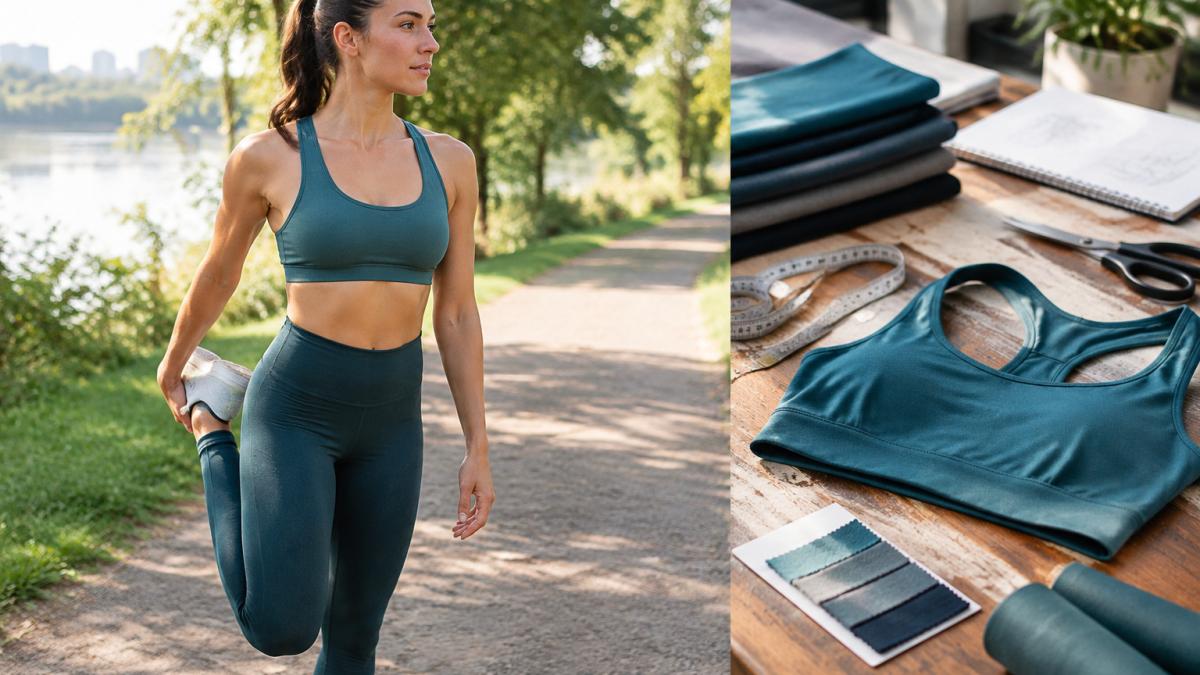
!Woman in a teal sports bra and running leggings stretching on a park trail in morning light
Ask whether the product description mentions the fabric blend, seam type and band design. Reinforced stitching and well-finished edges usually hold up better than thin, unfinished seams.
Fabric Stretch, Seams and Construction
Fabric stretch affects both fit and lifespan. A quality fabric should return to shape after stretching. Pull a sample gently in each direction if you can. Fabric that stays stretched or feels thin and see-through is unlikely to support running well for long.
Flatlock seams generally sit more comfortably against the skin than raised seams, and reinforced stress points at the straps and band help a bra keep its shape. Check these details on any teal bra you are considering. To see whether synthetic materials in athletic wear raise health or longevity concerns, read Are Synthetic Chemicals in Athletic Wear Harmful?.
Color Retention and Care for Teal Fabric
Teal can fade faster than black or gray, especially after frequent washing in hot water. Care instructions matter. Wash in cold water, avoid high heat in the dryer, and turn the bra inside out to reduce friction on the color. For a full routine, see proper washing steps for performance gear.
Dyes vary in how well they hold up to sweat, sunlight and detergent, so review the care label and any manufacturer guidance on colorfastness before you buy. Learn how synthetic dyes behave in athletic apparel. Following those steps extends both the color and the life of the bra.
Price, Value and How Often to Replace a Running Bra
Price is the easiest thing to compare and the least useful. Two teal bras at the same shelf price can differ by a year of usable life. The useful comparison is cost per training session, not cost per bra.
How to estimate cost per run
A simple method most runners can do in their head:
- Estimate how many runs per week the bra will see. A three-run week is a reasonable baseline for a dedicated running bra.
- Estimate usable life in months. A well-constructed bra rotated with one or two others typically holds support for six to twelve months of regular running; a single-bra rotation on a heavy schedule often falls to three to six.
- Multiply runs per week by 4.3 (average weeks per month) by months of life. That is your total run count.
- Divide the current price on the product page by that run count.
A bra that costs more but lasts twice as long usually wins on this math. The catch is that lifespan depends heavily on rotation and care, which is why the care routine in the previous section is a value lever, not just a color-preservation tip.
Signs it is time to replace
Replace a running bra when any of these appear, regardless of how it looks:
- Band rides up in the back during a run. The band elastic has lost recovery. This is the most reliable single signal.
- Straps need re-adjusting mid-run when they did not before.
- Cups crease or gap at the top edge under compression.
- Fabric at the underband or strap junction feels thin or slick compared with the rest of the bra.
- Visible color shift toward gray-green in teal, which usually tracks with elastane breakdown.
- Persistent odor after a normal wash. Odor that survives cold-water washing and air drying usually means bacteria have colonized fiber cracks.
A bra can pass every visual check and still fail the band test. The practical check is to put it on and do ten jumping jacks in front of a mirror. If the band moves more than a finger's width, it is done as a running bra, demote it to walking or yard work.
Rotation and lifespan
Rotating two or three bras is the cheapest durability upgrade available. Elastane recovers best when it has at least 24 hours between wears to relax, and a bra that never fully dries between sessions breaks down faster at the band and strap roots. A three-bra rotation on a three-run week gives each bra two rest days, which is enough for most fabrics to return to shape.
Watch out: storing a damp bra in a gym bag or a closed drawer is one of the fastest ways to shorten its life. Bacteria and residual sweat degrade elastic and dye together. Hang it to dry fully before it goes back in rotation.
What to look for on the product page
Because prices and promotions change, check the current price directly on the product page for the specific teal colorway you want. Beyond price, look for three things that predict lifespan: a stated fabric blend with an elastane percentage, a description of the band construction (encased elastic versus bonded), and care instructions that recommend cold wash and air dry.
Value in a teal running bra comes down to how many quality runs it delivers before the band gives out. Buy for the run count, care for the color, and rotate to stretch the lifespan, that combination beats shopping on price alone.
Picking Your Teal Running Bra Before Your Next Long Run
Before your next long run, check support level, fabric recovery, seam construction and care needs for the teal bra you are considering. Those four points will steer you toward gear that performs and keeps its color.
If you want to see what is available, visit the Burrow Athletic website and compare the details against the checklist above. Choose the bra that fits your training, not just the one that looks best on the hanger.
Frequently Asked Questions
What are the best sports bras for runners?
The best running sports bra depends on your bust size, pace and how much bounce you feel on runs. High-support styles with compression or encapsulation generally control movement best for larger cup sizes and fast running, while medium-support designs suit lighter jogs. Check the support level listed on the product, read fit notes for true-to-size guidance, and prioritize a fabric with all-way stretch and moisture-wicking performance. Teal options should be judged on the same criteria as any other color: support, fit, breathability and how the fabric holds up after repeated washing.
How do you choose a durable sports bra for running?
Look at construction before color. Flatlock or bonded seams generally reduce chafing and tend to last longer than thin stitched edges. Heavier, tightly knit fabric usually resists pilling and stretch loss better than very sheer, lightweight blends. Check for sturdy bands and adjustable straps that keep their hold after many washes. Care matters too: washing cold, skipping the dryer and avoiding fabric softener help preserve elasticity and color on teal and other dark shades.
What should runners with larger breasts look for in a sports bra?
Runners with larger breasts should prioritize high support, a secure band and a design that limits movement in all directions. Encapsulation or compression styles are common choices, and the band should sit level and snug without digging in. Try sizing up in the band or cup if the bra rides up or pinches. Look for wide shoulder straps, breathable fabric for heat management and reviews that mention bounce control during running specifically.
How often should you replace a sports bra used for running?
Most runners replace a sports bra after it starts to lose support, stretch out or show fabric thinning, often after several months of frequent wear. A quick test: if the bra no longer holds the bust steady when you bounce or the band slides up during a run, it is time to replace it. Rotating two or three bras also extends each one's life, since fabric recovers between wears.
