

Last Updated: November 14, 2026
Quick Summary
To select breathable gym wear for hot weather, choose polyester, nylon, polypropylene or merino blends that move sweat away from your skin and dry fast, and skip cotton because it holds moisture. Judge construction over labels: open-knit fabrics and visible mesh panels vent heat, while dense or rubbery fabrics trap it. Check the fabric label and hold the garment to light before buying.
- Polyester wicks sweat well and dries fast, making it the workhorse for hot-weather training tops.
- Merino wool resists odor but dries more slowly than polyester in humid sessions.
- Wash performance fabrics in cold water and skip softener so wicking fibers stay unclogged.
- Flatlock stitching and raglan sleeves reduce chafing at underarms and inner thighs.
- A close fit with mesh panels vents better than a billowing shirt that traps hot air.
Table of Contents
- Why Breathable Gym Wear Changes Hot Weather Training
- Best Moisture-Wicking Fabrics for Exercise in the Heat
- A Step-by-Step Checklist for Choosing Breathable Gym Wear
- How to Assess Breathability Beyond Marketing Claims
- Fit, Chafing, and Ventilation Details That Matter
- How to Care for Performance Athletic Gear So It Stays Breathable
- Matching Breathable Gym Wear to Your Activity and Body Areas
- Where Women Owned Activewear Brands Fit Into Your Search
- Frequently Asked Questions
Why Breathable Gym Wear Changes Hot Weather Training
Learning how to select breathable gym wear for hot weather comes down to one principle: move sweat away from your skin faster than your body produces it. Breathable gym wear is athletic clothing built from fabrics and constructions that let heat escape and moisture evaporate instead of trapping both against your body. Small, deliberate choices compound into real results. Get the fabric wrong and a summer session turns into a slog of chafing, overheating, and soaked cotton. Get it right and you notice almost nothing at all, which is exactly the point. Below, we'll walk through the fabrics that work, the marketing claims to distrust, and a checklist you can run in the fitting room.
Best Moisture-Wicking Fabrics for Exercise in the Heat
The best moisture-wicking fabrics for exercise are synthetics engineered to pull sweat to the surface and dry fast, but "best" depends on the trade-off you are willing to accept. Cotton absorbs and holds moisture, which is why it feels heavy and clingy once you start sweating. Here is how the main categories compare on the properties that actually affect hot-weather training.
| Fabric | Sweat Handling | Drying Speed | Breathability | Odor Resistance | Durability | Best For |
|---|---|---|---|---|---|---|
| Polyester | Wicks well, holds little water | Fast | Good with open knits | Low to moderate | High | Everyday training, tops |
| Nylon | Wicks well, slightly smoother feel | Fast | Moderate to good | Low to moderate | High | Leggings, fitted tops |
| Polypropylene | Wicks well, very light | Very fast | Good | Moderate | Moderate | High-sweat sessions |
| Merino wool | Absorbs then releases vapor | Moderate | Excellent | High | Moderate | Cooler or mixed conditions |
| Cotton | Absorbs and holds sweat | Slow | Poor when wet | Low | Moderate | Rest days, not training |
Synthetic Fabrics: Polyester, Nylon, and Polypropylene
Polyester is the workhorse of hot-weather activewear. It carries sweat to the fabric surface where airflow evaporates it, and it stays light when damp. Nylon behaves similarly with a smoother, cooler hand feel, which suits leggings and fitted tops. Polypropylene is the lightest of the three and shines in high-sweat sessions. The trade-off with all three is odor: synthetics tend to hold body oils and bacteria, so they need more frequent washing than wool. Look for open-knit construction and mesh panels rather than a tight, rubbery weave, because the same polyester can feel breathable or suffocating depending on knit density.
Natural Fibers and Fabric Blends
Merino wool is the natural fiber worth knowing (Wool Fibre Properties, Facts & Benefits). It absorbs moisture and releases it as vapor, and it resists odor better than most synthetics. The trade-off is drying speed: merino holds more water than polyester and dries more slowly, which matters in high-humidity sessions. Blends pair merino with polyester or nylon to combine odor control with faster drying. Pure cotton is the one to leave in the drawer on hot training days because it holds moisture against the skin instead of moving it away.
Fabric Trade-Offs and Care
Breathability is not a single property, so compare fabrics on five axes: airflow, odor, drying time, durability, and laundering. Synthetics win on drying speed and durability but lose on odor; merino wins on odor and comfort but loses on drying speed; blends split the difference. Care changes the equation too. Detergent residue and fabric softener clog wicking fibers, so a polyester shirt that performs on day one can feel clammy by month three if washed wrong. Wash in cold water, skip softener, and air dry when you can.
Judge the construction of a garment, not just its label, since a dense knit can trap heat even when it is marketed as moisture-wicking.
A Step-by-Step Checklist for Choosing Breathable Gym Wear
Run this checklist before you buy. It takes about five minutes in a store or thirty seconds online once you know what to look for.
- Check the fabric label: polyester, nylon, polypropylene, or a merino blend
- Hold the fabric up to light and look for open-knit gaps or mesh panels
- Squeeze a damp section: it should feel light, not heavy and clingy
- Read the care tag before buying, since some finishes need specific washing
- Try the fit through the shoulders and waist: snug, never restrictive
- Check seams at the underarms and inner thighs for flatlock stitching
- Confirm light colors if you train outdoors in direct sun
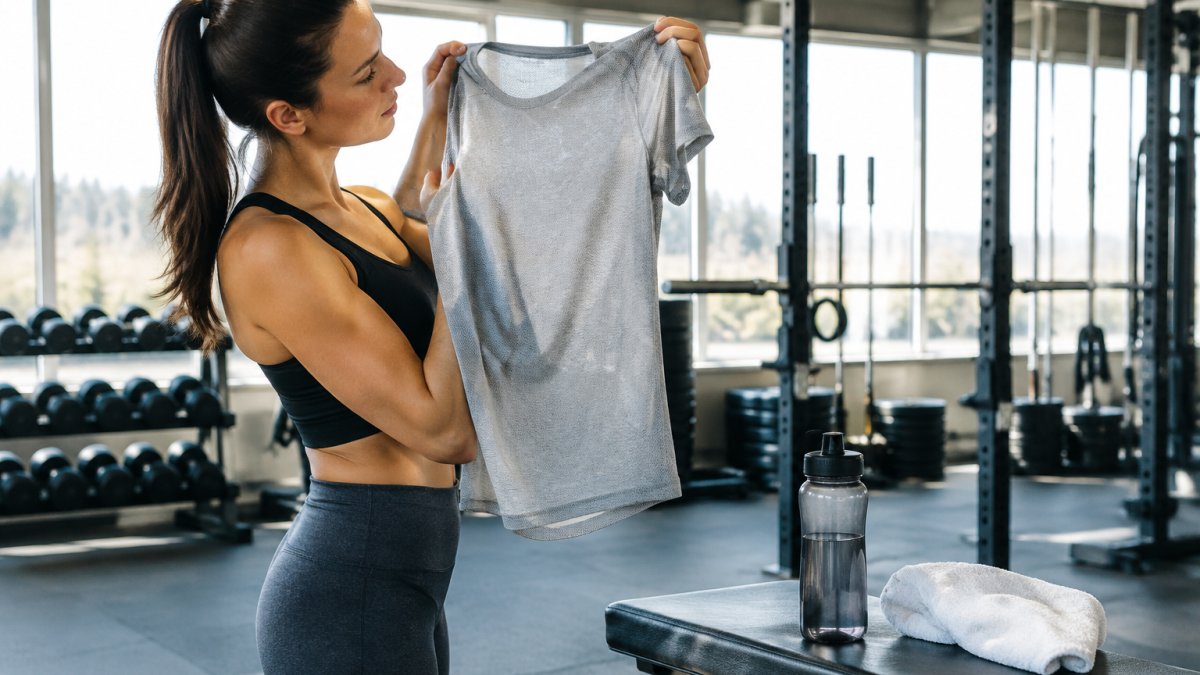
The fabric label and the light test do most of the work. If a garment passes both, the rest is fit and finish.
How to Assess Breathability Beyond Marketing Claims
Treat the word "breathable" on a hangtag with caution, since it is not a standardized term. Judge the garment instead by construction: open-knit fabrics, visible mesh panels, and thin, flexible material let air move. A dense, smooth, slightly stiff fabric with a rubbery feel usually traps heat regardless of the label.
If you have questions about what performance fabrics are actually made of, our guide on whether synthetic chemicals in athletic wear are harmful covers the material side in detail. And if you want a broader quality benchmark, read what makes activewear high quality before your next purchase.
Fit, Chafing, and Ventilation Details That Matter
Chafing comes from friction plus moisture, so the fix is a fit that moves with you and seams that sit flat. Flatlock stitching, raglan sleeves, and longer inseams on shorts all reduce rubbing at the underarms and inner thighs. Loose is not automatically cooler: a billowing shirt traps hot air, while a close fit with mesh panels vents better. Our step-by-step guide on preventing chafing on long runs goes deeper if that is your main problem in humidity.
How to Care for Performance Athletic Gear So It Stays Breathable
Performance fabrics lose their wicking ability when detergent residue and fabric softener clog the fibers. Wash in cold water, skip the softener, and air dry when you can. Our seven-step walkthrough on how to wash athletic performance gear covers the full routine. Treat this as maintenance, not housekeeping: a shirt that wicks well on day one and poorly by month three was usually washed wrong.
Matching Breathable Gym Wear to Your Activity and Body Areas
Different sessions put heat in different places, and the right garment depends on intensity, duration, and where you sweat most. Heavy lifting needs stretch and ventilation at the shoulders and back, so look for open-knit backs or mesh panels across the upper back. Running and cycling need lightweight tops and shorts that dry fast, with flat seams at the inner thighs to reduce friction. Hot yoga calls for the thinnest, most open fabrics you can find, because the room is already hot and airflow is limited. Think in layers for warm-ups and cool-downs, and choose light colors for outdoor sun exposure.
The body areas that sweat most, your back, chest, and inner thighs, deserve the most attention when you shop. For the back and chest, prioritize mesh panels and open knits. For the inner thighs, prioritize flatlock stitching and longer inseams on shorts. For the underarms, raglan sleeves and flat seams reduce rubbing. A close fit with mesh panels vents better than a billowing shirt, which traps hot air.
Duration matters too. A 30-minute session may only need a lightweight top, while a 90-minute session in humidity benefits from the fastest-drying fabric you can find and a spare shirt. Pair breathable clothing with hydration and shade, and know the signs of heat illness: dizziness, nausea, confusion, and stopped sweating are reasons to stop and cool down.
Watch out: loose is not automatically cooler, because a billowing shirt traps hot air while a close fit with ventilation moves it.
Where Women Owned Activewear Brands Fit Into Your Search
Values and performance can go together, so it is worth checking who makes what before you commit. For a performance-focused look at the options, see our guide to ethical gym wear for women. Fit comes first, mission second, and the best gear delivers both.
Hot weather training exposes every weak point in your kit, and the fix starts with fabric, construction, and fit rather than branding. Burrow Athletic builds performance-driven gear rooted in character and resilience, with athletic-driven design made to move. Every purchase supports The Be Good Foundation, so your training gear carries a purpose beyond the gym. Start with our GOAT headwear collection and gear up for how you show up every day.
Frequently Asked Questions
What is the most breathable fabric for exercise in hot weather?
Open-knit polyester and nylon blends with mesh panels usually move heat and sweat fastest, because the synthetic fibers spread moisture across the surface so it dries quickly. Polypropylene works well as a base layer for the same reason. Cotton absorbs sweat and holds it against your skin, which feels heavy once you start moving. Look for a fabric weight that feels thin in your hand, visible airflow through the knit, and labels that name the fiber rather than only a brand technology.
Are synthetic or natural fibers better for hot weather workouts?
Synthetics win for sweat management during hard training. Polyester, nylon, and polypropylene pull moisture away from your skin and dry in minutes, while cotton and other natural fibers soak it up and stay damp. Natural fibers can feel comfortable at rest, and small blends can soften a synthetic shirt, but for breathable gym wear in the heat, choose a synthetic or synthetic-dominant blend. Check the care label: most performance fabrics prefer cold water and air drying to keep their knit open.
How do I choose gym clothes that prevent overheating?
Start with lightweight, quick-drying fabric and loose or articulated cuts that let air move. Prioritize mesh panels at the back, underarms, and sides where heat builds up. Choose light colors for outdoor sessions so the fabric absorbs less heat, and add sun protection such as a hat and sunscreen for daytime training. Avoid heavy layers and cotton tees. If you sweat heavily, bring a spare shirt so you are not sitting in damp fabric between sets.
How should I care for performance athletic gear so it keeps wicking?
Wash performance gear in cold water with a mild detergent, skip fabric softener and dryer sheets, and air dry when you can. Softeners coat the fibers and reduce how well they move sweat. Turn garments inside out, wash them with similar fabrics, and avoid overloading the machine. For odor control, wash soon after training and let pieces dry fully before they go in the hamper. Follow the care label on each item, since knit construction and blends vary.
