

Table of Contents
- Deemed Fit vs Phocus Athletic: What Each Brand Offers
- Who Each Brand Serves: Training Goals and Use Cases
- Activewear Fit and Sizing: How Deemed Fit and Phocus Athletic Compare
- Activewear Fabric Guide: What to Check Before You Buy
- Sustainable Activewear Brands: Reading Claims Without the Hype
- Women-Owned Activewear Brands: Why Ownership and Mission Matter
- Pricing, Plans, and Value: What Your Money Buys
- Coaching Credentials, Safety Practices, and Evidence
- Frequently Asked Questions
Last Updated: October 20, 2026
Deemed Fit vs Phocus Athletic: What Each Brand Offers
Deemed Fit vs Phocus Athletic is a comparison shoppers make when they want values-driven activewear without guessing what they'll receive. Both sell direct-to-consumer, both lead with mission language, and neither is a household name.
Neither brand publishes enough detail to compare fabric specs side by side. The useful comparison is fit philosophy, sizing support, and how much evidence each brand gives you before checkout.
Deemed Fit at a Glance
Deemed Fit positions itself as fitness apparel built around discipline and daily training. Its catalog leans on training staples, tops, bottoms, and layers for gym sessions rather than lifestyle wear. Sizing guidance and fabric detail vary by product page, so read the size chart on each item.
Phocus Athletic at a Glance
Phocus Athletic builds its identity around focus and mindset, pairing performance apparel with messaging about mental readiness. The catalog covers training and casual athletic wear with understated designs, so it's the lane for gear that transitions from a workout to the rest of your day. The trade-off is the same: limited published specification detail, so you're buying partly on brand story.
| Brand | Positioning | Catalog Focus | Best For |
|---|---|---|---|
| Deemed Fit | Discipline and daily training | Training tops, bottoms, layers | Scheduled gym training |
| Phocus Athletic | Focus and mindset | Training plus casual athletic | Gym-to-everyday wear |
| Burrow Athletic | Character, resilience, purpose | GOAT headwear | Game day and giving back |
Who Each Brand Serves: Training Goals and Use Cases
Most comparisons of Deemed Fit and Phocus Athletic stop at "they overlap." The real question is which brand's catalog and messaging line up with your actual week, and where each one leaves you short.
Start with your three hardest use cases
Before comparing brands, write down the three hardest things you'll ask the gear to do, heavy squats three times a week, a weekly 5K, weekend coaching on your feet for four hours. Then check whether a brand's catalog covers all three.
Use-case matrix: where each brand fits
| Use case | Deemed Fit | Phocus Athletic | What to verify before buying |
|---|---|---|---|
| Structured lifting and conditioning | Strong fit, training-first catalog and discipline-focused messaging | Workable, but styling skews broader | Fabric weight and stretch recovery on bottoms |
| Gym-to-everyday transition | Weaker, catalog leans training-only | Strong fit, understated designs cross over | Whether the cut is roomy enough for layering |
| Scheduled class or small-group training | Good fit if you train on a fixed schedule | Good fit if you want one outfit for class and errands | Waistband construction and whether tops stay put |
| Sport-specific demands (cycling compression, reflective road running) | Not the lane | Not the lane | Look for category-specific brands instead |
| Mindset and pre-training routine | Messaging emphasizes consistency and effort | Messaging emphasizes focus and mental readiness | Whether the brand publishes anything beyond slogans |
Who Deemed Fit is built for
Deemed Fit's positioning, discipline, daily training, consistency, maps to the athlete who trains on a schedule and wants gear that keeps up without thinking about it. The trade-off: sizing guidance and fabric detail vary by product page, so read the size chart on each item.
Who Phocus Athletic is built for
Phocus Athletic's identity, focus, mindset, mental readiness, pairs performance apparel with a broader styling range. If you want one set of clothes for a run, a session, and errands after, its roomier cuts and understated designs make more sense. The trade-off is the same: limited published specification detail.
Where neither brand fits
Neither brand is built for sport-specific demands like compression needs in cycling or reflective requirements for early-morning road running. If those matter, you're shopping the wrong category, not the wrong brand.
A quick decision path
- If your week is mostly scheduled lifting and conditioning: start with Deemed Fit, and verify fabric weight and stretch recovery on bottoms before ordering multiple pieces.
- If you want one outfit to move from workout to errands: start with Phocus Athletic, and check the cut through the torso for layering.
- If you need sport-specific performance features: neither brand is the right category, look for brands that publish compression ratings or reflective standards.
Activewear Fit and Sizing: How Deemed Fit and Phocus Athletic Compare
Fit is the single biggest return driver in online activewear, and neither Deemed Fit nor Phocus Athletic removes the guesswork.
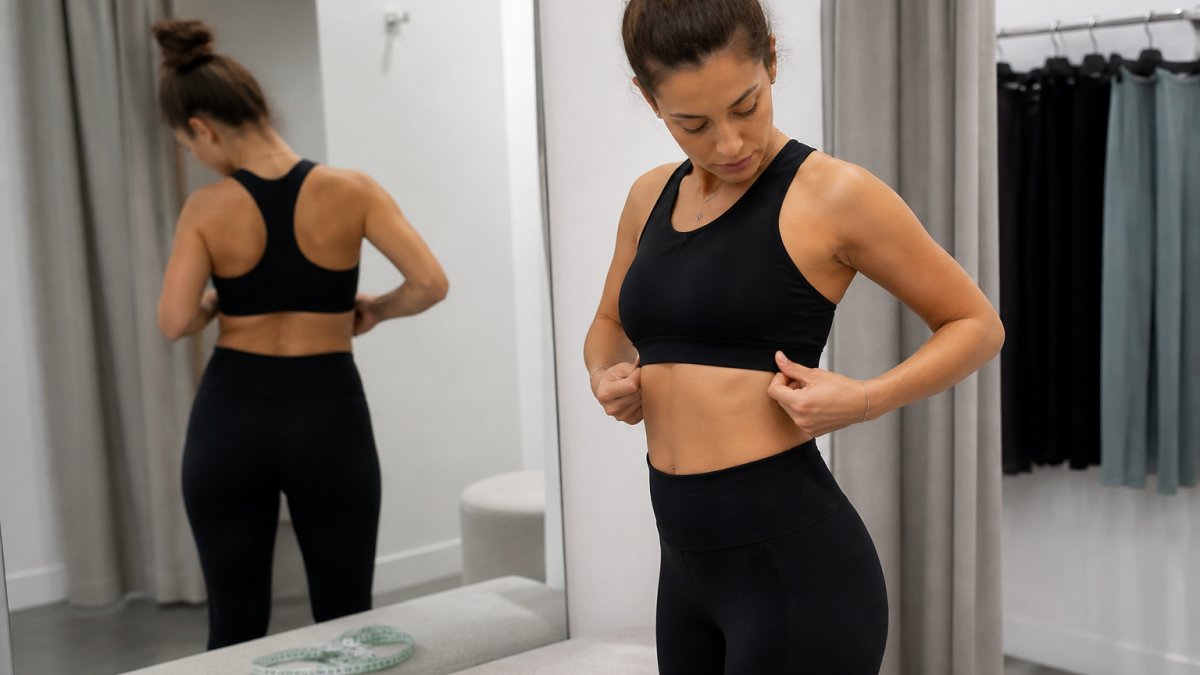
A common mistake is ordering your usual size across every category. Tops and bottoms from the same brand often fit differently. Order one item first, confirm the fit, then build out.
- Measure your chest, waist, and hip rather than relying on size labels
- Compare your measurements to the specific product's chart, not the brand's general chart
- Check the return window before ordering multiple sizes
- Read the fiber content: stretch fabrics relax after washing
Activewear Fabric Guide: What to Check Before You Buy
Fabric decides how gear performs, and this is where both Deemed Fit and Phocus Athletic give you the least information. Read the label for four things: fiber blend, stretch percentage, fabric weight, and care instructions.
Sweat-wicking claims deserve scrutiny. The Federal Trade Commission's guidance on textile and clothing claims sets the standard brands are expected to meet when they describe fiber content and performance.
Sustainable Activewear Brands: Reading Claims Without the Hype
Sustainability language is where activewear marketing runs furthest ahead of verifiable fact. "Eco-friendly," "conscious," and "planet-positive" are not regulated terms, and any brand can print them. What you can verify is third-party certification, named fiber sources, and published supply chain detail.
Our advice: treat sustainability claims as a tiebreaker, not a deciding factor. The U.S. Environmental Protection Agency's Safer Choice program is one place to understand what verified product labeling actually requires.
Women-Owned Activewear Brands: Why Ownership and Mission Matter
Ownership matters because it shapes what a brand prioritizes when margins tighten. Women-owned activewear brands often build around fit problems the broader market ignored, which shows up in sizing ranges and cut decisions.
Mission deserves the same skepticism. A charitable tie-in is only meaningful if the brand tells you the mechanism: which organization, what share of proceeds, and how it's reported. At Burrow Athletic, every purchase supports The Be Good Foundation, and that's the standard we'd hold any brand to.
Pricing, Plans, and Value: What Your Money Buys
Neither Deemed Fit nor Phocus Athletic publishes a stable, comparable price list, and prices shift with sales and seasonal drops. Here's a value framework you can apply the moment you land on either product page.
The four numbers that decide value
Sticker price is the least useful number in activewear. These four decide whether a purchase was smart:
- Cost per wear. Divide the price by the number of times you'll realistically wear the item in a year. A training top worn three times a week for two years beats a cheaper one that pills in a month.
- Return window and terms. Check the window length, whether returns are free, and whether sale items are excluded, those details decide whether ordering two sizes to find your fit is cheap or expensive.
- Care cost. Fabrics that need cold wash and line dry cost more over time. A heat-dry cycle on a stretch blend shows up as sagging knees and stretched waistbands within weeks.
- Sale-cycle timing. Both brands run seasonal drops. If you're not in a hurry, waiting for a markdown on a staple is usually smarter than paying full price on a new arrival.
How to compare the two brands side by side
Because neither brand publishes a clean price sheet, build your own comparison. Pull these fields from each product page into one row per item:
| Field to capture | Why it matters |
|---|---|
| Listed price at time of viewing | Prices shift with sales, date-stamp what you saw |
| Fiber blend and stretch percentage | Determines performance and how the item ages |
| Fabric weight | Lightweight suits training and running; heavier knits hold shape for lifting |
| Return window and exclusions | Decides the real cost of ordering multiple sizes |
| Care instructions | Cold wash and line dry cost more over time |
| Size chart source | Per-product charts beat brand-wide charts every time |
What "value" actually means in this category
Value in activewear is not the lowest price. It's the lowest cost per wear on gear that fits your dominant use case. A roomier Phocus Athletic piece that transitions from gym to errands may deliver more wears per dollar than a training-only Deemed Fit piece, or the reverse, if your week is mostly lifting.
The disclosure test
A brand that publishes fiber content, stretch percentage, fabric weight, and care instructions gives you what you need to judge value. A brand that publishes only lifestyle photography and mission language is asking you to buy on story. Neither Deemed Fit nor Phocus Athletic consistently clears the disclosure bar, so order one item first and confirm fit before building out.
A practical buying sequence
- Order one item from each brand in your usual size.
- Measure chest, waist, and hip and compare to the specific product's chart, not the brand's general chart.
- Wear each item through your three hardest use cases before ordering more.
- Check the return window before the first wash, most return policies end once the item is washed.
Coaching Credentials, Safety Practices, and Evidence
Neither Deemed Fit nor Phocus Athletic publishes coaching credentials, and that's expected: they sell apparel, not training programs.
Safety in activewear comes down to fit and visibility. The Consumer Product Safety Commission's apparel flammability standards cover certain clothing categories, and it's worth knowing which rules apply to what you're buying.
Choosing between Deemed Fit and Phocus Athletic comes down to fit, disclosure, and what you actually train.
Frequently Asked Questions
What is the difference between Deemed Fit and Phocus Athletic?
Deemed Fit and Phocus Athletic are both activewear labels with values-driven messaging, but they differ in focus. Deemed Fit leans toward training-first gear with a community angle, while Phocus Athletic emphasizes performance apparel and brand storytelling. Neither publishes a full public spec sheet, so compare fabric content, size charts, return windows, and care instructions on each brand's site before buying. The practical difference shows up in fit consistency, fabric weight for your sport, and how clearly each brand explains its sourcing and sizing.
How do Deemed Fit and Phocus Athletic compare in fit and sizing?
Sizing is the most common reason activewear gets returned, so check the size chart on each product page rather than assuming your usual size. Look for chest, waist, and inseam measurements in inches, plus notes on whether the fabric has stretch or a compression fit. If you are between sizes, size up for training tops and consider true-to-size for leggings with a high-stretch blend. Order one item first to test fit before committing to a full set.
Are Deemed Fit and Phocus Athletic women-owned brands?
Ownership is not always disclosed on a brand's homepage, so verify it directly. Check the About page, the company's state business registration, and any press coverage that names founders. Women-owned activewear brands often highlight that status in their brand story, but treat unverified claims with caution. If ownership matters to you, look for a named founder, a registered business entity, and consistent messaging across the site and social channels.
What should I look for when choosing sustainable activewear?
Start with fabric content: recycled polyester, organic cotton, and Tencel are common lower-impact choices, but the label should state percentages. Check for third-party certifications such as GOTS or bluesign, and read the care guide because washing synthetic fabrics sheds microfibers. Look at durability signals like reinforced seams and flatlock stitching, since longer wear is the most direct way to reduce waste. Avoid vague terms like eco-friendly without a named standard behind them.