

Table of Contents
- DeemedFit vs ActivelyBlack Comparison: What You Need to Know
- DeemedFit vs Actively Black Leggings: Fit, Feel, and Function
- Inclusive Activewear Sizing: How the Two Brands Measure Up
- Activewear Fabric and Performance: What Actually Holds Up
- Pricing and Value: Where Your Money Goes
- Brand Mission and Community Impact: Beyond the Gear
- Which Brand Fits Your Training and Values?
- Conclusion: Making the Right Choice for Your Activewear
- Frequently Asked Questions
Last Updated: October 6, 2026
DeemedFit vs ActivelyBlack Comparison: What You Need to Know
An activewear comparison of DeemedFit vs ActivelyBlack comes down to two Black-owned brands with different center of gravity: DeemedFit leans on made-to-order, size-inclusive basics, while ActivelyBlack leans on performance fabric, athlete partnerships, and visible representation at scale.
The two names get compared because they sit near each other in the same activewear conversation, not because they are interchangeable. One is built around made-to-order production and a wide size range; the other around performance-driven fabric and high-visibility sports partnerships.
DeemedFit vs Actively Black Leggings: Fit, Feel, and Function
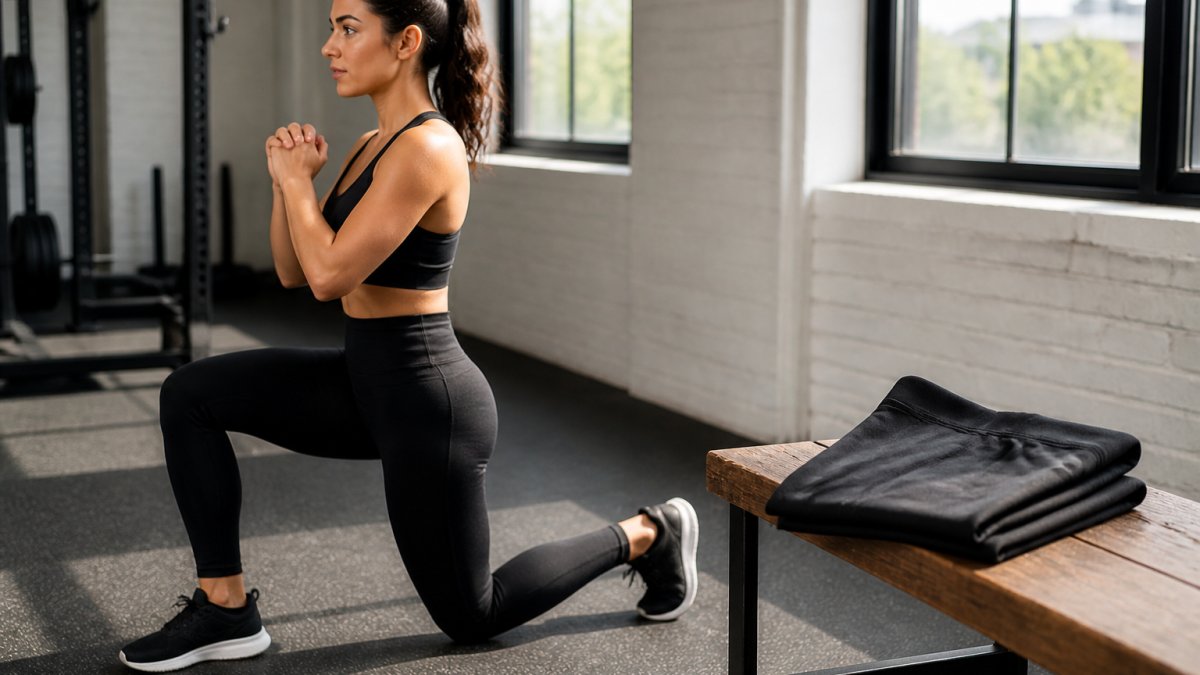
DeemedFit leggings are made-to-order, so fit is built around your submitted measurements rather than a fixed size run. Actively Black leggings are ready-to-ship performance pieces built on standard sizing with compression-forward construction.
- DeemedFit: made-to-order model, measurement-based fit, longer lead time before shipping
- Actively Black: standard size run, compression-forward performance build, faster shipping
- Feel: DeemedFit leans toward a softer, custom-fit hand; Actively Black leans toward a locked-in, athletic hand
- Best for: DeemedFit suits hard-to-fit bodies; Actively Black suits lifters who want compression
A common mistake is assuming a made-to-order legging automatically fits better. It only fits better if you measure correctly, get the inseam or hip wrong and you face a longer return cycle than with a standard size.
Inclusive Activewear Sizing: How the Two Brands Measure Up
Inclusive activewear sizing means building a size range and fit system that accommodates a wide span of body types rather than a narrow middle.
The standard size run (Actively Black). A ready-to-ship performance brand builds a fixed range of sizes and cuts every unit to those patterns.
| Criteria | DeemedFit (made-to-order) | Actively Black (standard run) |
|---|---|---|
| How fit is determined | Your submitted measurements | Brand's graded size chart |
| Ceiling on fit quality | Your measurement accuracy | How well the range is graded |
| Lead time before shipping | Longer | Faster |
| Exchange process if fit is off | Fit-dispute / remake cycle | Standard size exchange |
| Risk if you measure or size wrong | Higher, longer cycle | Lower, faster resolution |
| Try-on before buying | Not possible | Not possible |
| Best for hard-to-fit bodies | Strong, if measurements are right | Moderate, depends on range width |
Neither brand offers an in-person try-on, which is the real constraint, the sizing decision matters more than the brand name on the waistband.
How to measure so a made-to-order piece actually fits. The failure mode for made-to-order is not the brand, it is a bad tape measurement. Three measurements drive most legging fit problems:
- Hip: measure the fullest part of your seat, tape level, not pulled tight.
- Inseam: measure from the crotch seam of a pair of leggings that already fit you to the hem, not from your body.
- Waist: measure at the natural crease when you bend sideways, not at the narrowest point you can suck in to.
Measure over the underwear you will actually train in, and measure twice. A half-inch error at the hip is the difference between a locked-in fit and a waistband that rolls during a squat.
How to size a standard run. Size to your largest relevant measurement, not your smallest.
- Confirm hip, inseam, and waist with a soft tape, not a guess
- For made-to-order, measure over training underwear and measure twice
- For standard sizing, size to your largest measurement, not your smallest
- Read the return or remake window before you order, not after
- Start with one piece, not a full set
The methodology behind this comparison. This section compares the two brands on four sizing criteria, how fit is determined, the ceiling on fit quality, lead time, and exchange risk, using each brand's publicly stated production and sizing model. Where a brand does not publish a specific number, this guide does not invent one; check the current size chart and shipping page on each brand's site before ordering. The underlying trade-off does not change: made-to-order trades speed for fit ceiling, and a standard run trades fit ceiling for speed and predictability.
Activewear Fabric and Performance: What Actually Holds Up
Activewear fabric and performance is where the two brands diverge most clearly. Actively Black positions its fabric around performance and athlete use; DeemedFit around comfort and custom fit. Those are different promises, and they fail in different ways.
Most activewear comparisons stop at "performance fabric" and "comfort fabric" and leave the reader with nothing to check. Here is what each promise actually means at the fiber and construction level, and how to test it yourself.
The four criteria that decide whether leggings hold up.
- Stretch recovery. How well the fabric returns to shape after being stretched. Recovery is driven by elastane content and knit, higher elastane and a tighter knit recover better but feel stiffer. A comfort-first fabric with lower elastane feels softer on the first wear and sags at the knee and waistband sooner.
- Moisture handling. Whether the fabric moves sweat away from skin or holds it. Synthetic performance knits are engineered to wick; softer, brushed fabrics hold more moisture and feel heavier when wet. Neither is wrong, it depends on whether you train hard or lounge between sets.
- Opacity under a squat. Whether the fabric goes see-through when stretched. Opacity is a function of fabric weight (grams per square meter, or GSM) and knit density. A lighter, softer fabric is more likely to go sheer under tension; a heavier, denser knit resists it. This is the most common complaint in activewear reviews, and it is a spec problem, not a brand problem.
- Seam durability. Whether seams hold under repeated stretch. Flatlock and coverstitch seams stretch with the fabric; standard serged seams do not, and they pop first. Check the inside of the garment, not the outside.
How the two brands map onto those criteria.
- Actively Black: compression-forward construction, which typically means higher elastane content and a denser knit. That favors recovery and opacity, and it trades away some all-day softness.
- DeemedFit: comfort-first, made-to-order construction, which typically means a softer hand and a lighter knit. That favors feel and fit, and it puts more pressure on fabric weight to deliver opacity.
A five-minute test you can run at home. Before you commit to a second pair from either brand, run the first pair through this:
- The squat test: squat to depth in front of a mirror under bright light. Any sheerness at the hip or seat is a fabric-weight problem, not a fit problem.
- The recovery test: stretch the waistband and the knee, hold for ten seconds, release. If it does not snap back flat, recovery is weak.
- The seam test: turn the leggings inside out and look at the crotch and inner-thigh seams. Flatlock or coverstitch is durable; a single serged line is the first thing to fail.
- The wash test: wash and dry per the care label three times before you judge. If the fabric still holds shape and opacity after three cycles, it will likely hold for the life of the garment.
Why this matters more than the brand name. A made-to-order legging in a soft, light fabric and a ready-to-ship legging in a dense, compression knit are not competing on the same axis.
Pricing and Value: Where Your Money Goes
Pricing for both brands depends on the piece, fabric, and current promotions, so we do not quote figures here. What we can compare is where the money goes.
With a made-to-order model, more of your spend goes into production and fit rather than inventory and markdowns. With a ready-to-ship performance model, more goes into fabric development, athlete partnerships, and distribution. Neither is wasteful, they are just different bets.
- DeemedFit value case: you pay for a fit built around your measurements
- Actively Black value case: you pay for performance fabric and a recognized athletic identity
- Burrow Athletic value case: you pay for performance-driven gear where every purchase supports The Be Good Foundation
If you want the mission to be part of the purchase, that third option is worth a look. At Burrow Athletic, gear is built for physical and mental strength, and each order supports The Be Good Foundation. You can see current styles on our site.
Brand Mission and Community Impact: Beyond the Gear
Brand mission has become a real purchase criterion, not a marketing footnote. DeemedFit centers its story on made-to-order production and inclusive fit; Actively Black on representation in sport and visible athlete partnerships; Burrow Athletic on character, resilience, and community, with every purchase supporting The Be Good Foundation.
The honest question is not which mission sounds best, but which you can verify. Ask any brand three things before you buy:
- Which organization receives the money
- What share of the purchase is involved
- Where that is documented publicly
A mission you can trace is worth more than a mission you have to take on faith.
Which Brand Fits Your Training and Values?
Choose DeemedFit if you have struggled to find a standard size that fits and will wait longer for a made-to-order piece. Choose Actively Black for compression-forward performance fabric and a fast-shipping standard size. Choose Burrow Athletic for performance-driven gear and a purchase that supports The Be Good Foundation.
That is the whole decision, stripped of marketing. Fit model first, fabric second, mission third. Most buyers get this backwards and start with the logo.
- Hard-to-fit body, patient buyer: DeemedFit
- Lifter who wants compression now: Actively Black
- Buyer who wants performance plus verified impact: Burrow Athletic
Conclusion: Making the Right Choice for Your Activewear
The DeemedFit vs ActivelyBlack comparison is not really a contest. It is a fit-model question dressed up as a brand question. Get your measurements right, match the fabric to your training, and pick the mission you can actually verify.
If that last point matters to you, Burrow Athletic builds performance-driven gear for people who train with purpose. Every purchase supports The Be Good Foundation, and our designs are made to move with you through both physical and mental work. Shop Burrow Athletic.
Frequently Asked Questions
What is the difference between DeemedFit and Actively Black?
DeemedFit and Actively Black both sell performance activewear, but they differ in focus. DeemedFit emphasizes inclusive sizing and everyday training gear, while Actively Black leans into cultural representation and community-driven design. The better choice depends on whether you prioritize fit range or brand storytelling. Compare their fabric specs and return policies before buying.
Which brand has better activewear quality, DeemedFit or Actively Black?
Quality comes down to fabric weight, stitching, and how the gear holds up after repeated washes. Neither brand publishes standardized durability test results, so check customer reviews that mention pilling, seam slippage, or color fading after 20+ wears. Look for four-way stretch and flatlock seams if you train hard. Request fabric composition details from both brands before committing.
How do DeemedFit and Actively Black leggings compare for fit and comfort?
Fit varies by body type and intended use. DeemedFit leggings tend to run true to size with a mid-rise waistband, while Actively Black offers a compressive feel with a higher rise. For high-impact workouts, look for a wide waistband that stays put and a gusseted crotch. Order one size in each brand if you are between sizes, and check the return window before removing tags.
Which brand offers more inclusive sizing?
DeemedFit generally carries a wider range of sizes, often extending to 4XL, while Actively Black typically stops at 2XL or 3XL depending on the style. If you need extended sizes, check the specific product page because availability changes by drop. Also review the size chart for hip and inseam measurements, not just waist, to avoid returns.