

Last Updated: October 29, 2026
Quick Summary
Physical activity improves sleep quality by increasing time spent in deep sleep, helping regulate body temperature and easing the mental tension that keeps people awake. Regular moderate exercise, such as brisk walking, offers the most reliable gains, and the physical activity sleep benefits build over weeks of consistent movement.
- Public health guidance generally recommends at least 150 minutes of moderate aerobic activity per week.
- Start with 10 to 15 minutes of walking on most days and increase gradually.
- If you can speak in full sentences during exercise, you are in the moderate zone.
- Finishing a workout a few hours before bed generally does not prevent sleep.
- Watch for lighter sleep, elevated resting heart rate and persistent soreness as overtraining signs.
Table of Contents
- How Physical Activity Improves Sleep Quality
- How Much Exercise for Better Sleep
- Moderate vs. Vigorous Intensity: Which Helps Sleep More
- Best Exercise for Sleep: Aerobic, Strength and Walking
- Best Time to Exercise for Sleep and Evening Exercise Concerns
- Psychological Barriers, Recovery and Overtraining Risks
- Start Your Sleep-Supporting Routine This Week
- Frequently Asked Questions
How Physical Activity Improves Sleep Quality
Physical activity is one of the most practical tools for better sleep, and it costs nothing to try, so the physical activity sleep connection is worth exploring today. This guide walks through how regular movement helps you fall asleep faster and stay asleep longer. Most people don't need a new routine to start seeing the benefits. They need to understand the mechanics behind it.
The short answer is that exercise shifts your body toward the conditions sleep depends on. It raises the body's need for deep rest, helps regulate the internal clock, and eases the mental tension that keeps people awake. Physical activity improves sleep quality through several connected pathways, and the sections below cover the ones that matter most.
The Link Between Exercise and Sleep Architecture
Sleep moves in cycles, and the deep stages do most of the physical repair work. Regular activity tends to increase time spent in deep sleep, which is the stage most linked to feeling rested. A common mistake is expecting an immediate change after one hard session. For physical activity sleep benefits, the effect builds over weeks of consistent movement.
- Deep sleep supports muscle repair and recovery
- REM sleep supports memory and mood regulation
- Consistent activity makes it easier to move through full cycles
Body Temperature Regulation and Sleep Onset
Your core body temperature drops as you prepare for sleep, and that drop helps signal it is time to rest. Exercise raises body temperature during the session, and the cooldown afterward can help the body release heat more efficiently at bedtime. Many people find that a warm shower after a workout, followed by a cool bedroom, speeds up how quickly they drift off.
How Much Exercise for Better Sleep
Most adults benefit from regular, moderate activity spread across the week. Public health guidance generally recommends at least 150 minutes of moderate aerobic activity per week, according to the CDC Physical Activity Guidelines for Americans. The sleep benefits tend to follow the same pattern: steady activity beats occasional bursts.
Think of it as a dose you can build over time:
- Start with 10 to 15 minutes of walking on most days
- Add a few longer sessions as your schedule allows
- Increase gradually, especially if you are new to training
Watch out: Jumping straight into a high volume plan after a sedentary stretch can leave you more tired, not less. Build up slowly.
Moderate vs. Vigorous Intensity: Which Helps Sleep More
Both moderate and vigorous exercise can improve sleep, but they influence sleep through somewhat different pathways, and the right choice depends on your fitness base, schedule and how your body responds. Understanding the distinction helps you pick an intensity that actually moves your sleep quality rather than just leaving you sore.
Moderate-intensity activity, brisk walking, easy cycling, swimming at a conversational pace, or doubles tennis, raises your heart rate and breathing rate while still letting you hold a conversation. It is the most studied intensity for sleep, and it tends to produce reliable gains in sleep onset latency (how long it takes to fall asleep) and sleep efficiency (the share of time in bed actually spent asleep).
Vigorous-intensity activity, running, interval training, hill work, or fast cycling, pushes you to a pace where talking is difficult. It produces a larger acute rise in core body temperature and a bigger surge in fatigue-related signaling, which can deepen slow-wave (deep) sleep in the hours after a session.
A practical way to think about the dose:
- If you are new to exercise or returning after a break: build a base of moderate activity first. Most people see sleep improvements from consistent moderate work before they need intensity.
- If you already train regularly: a mix of moderate sessions and two or so vigorous sessions per week tends to give the best of both, the repeatability of moderate work plus the deeper fatigue from harder efforts.
- If you are training for a specific goal: keep the hard sessions earlier in the day when possible, and protect your sleep window with a longer cooldown.
One nuance competitors often skip: the intensity that helps your sleep is the intensity your body can recover from. A vigorous session you are not conditioned for can spike stress hormones and disrupt sleep for a night or two, which is why gradual progression matters more than chasing the hardest workout. If you are unsure, err toward moderate and add intensity only after a few weeks of consistent sleep.
For most people, the best choice is still the one they will repeat, but the reason is physiological, not just psychological. Repeatable moderate work accumulates the temperature and fatigue signals that sleep depends on, while sporadic maximal efforts mostly accumulate soreness.
The two intensities support sleep in different ways, and the table below sets out how each one fits into a routine.
| Intensity | Examples | Main sleep effect |
|---|---|---|
| Moderate | Brisk walking, easy cycling, swimming | Shorter time to fall asleep, better sleep efficiency |
| Vigorous | Running, interval training, hill work | Deeper slow-wave sleep after a session |
| Moderate (new exercisers) | Build a base first | Reliable gains from consistent work |
| Vigorous (regular trainers) | About two sessions per week | Adds deeper fatigue to moderate base |
| Test | Full sentences possible = moderate | Most weekly minutes should be moderate |
Best Exercise for Sleep: Aerobic, Strength and Walking
Aerobic work, strength training and walking each support sleep in different ways. Aerobic exercise is the most studied for sleep quality. Strength training helps build the physical fatigue that supports rest, and walking is the easiest habit to keep.
- Aerobic exercise: Cycling, swimming, or jogging for steady heart-rate work
- Strength training: Two sessions a week using bodyweight or weights
- Walking: Daily walks, especially after meals, for a low-barrier option
Best Time to Exercise for Sleep and Evening Exercise Concerns
Many people ask about the best time to exercise for sleep. Morning and afternoon sessions are generally easiest to schedule and tend to fit well with a regular sleep-wake cycle. Evening exercise is a common worry, but for most people, a workout finished a few hours before bed does not prevent sleep.
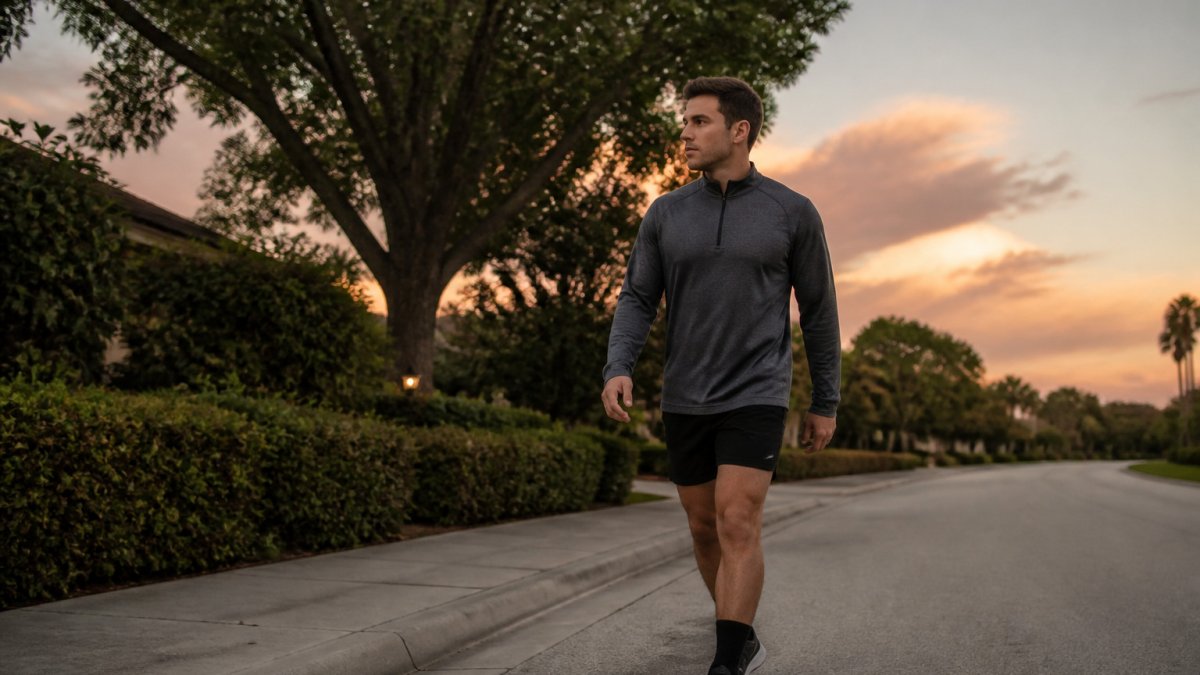
If evening workouts leave you wired, try moving the session earlier, lowering intensity, or adding a longer cooldown. Pay attention to how you feel the next morning.
Psychological Barriers, Recovery and Overtraining Risks
Most guides stop at physiology, but for people who sleep poorly, the harder problem is often mental: the fatigue, anxiety and low motivation that make exercise feel like one more thing to fail at. Addressing that psychological layer, alongside recovery and overtraining, is where a sleep-and-exercise plan actually holds together.
The psychological barrier. Poor sleep raises perceived effort and lowers mood, which makes a workout feel harder than it is. That can create a loop: bad sleep leads to skipped exercise, which removes the very stimulus that would improve sleep. Breaking the loop usually means lowering the bar, not raising it.
Anxiety and pre-sleep arousal. Vigorous exercise close to bedtime can leave some people mentally alert even when their body is tired. Optimizing your physical comfort during these sessions by utilizing supportive gear for workouts can further minimize the physiological stress that often contributes to lingering post-exercise tension.
Recovery as part of the plan. Recovery is not the absence of training; it is the phase where adaptation happens. Rest days, gentle movement and consistent sleep timing all support the process. You can compare options in our guide to recovery compression gear.
Overtraining warning signs. The 'too much of a good thing' problem is real. Watch for a cluster of these rather than any single one:
- Sleep that gets lighter or more fragmented despite fatigue
- A resting heart rate that stays elevated for several days
- Persistent soreness that does not ease with rest
- Irritability, low mood or loss of appetite
- Performance that drops even as effort rises
If several of these show up together, a deload week, reduced volume, more walking, earlier bedtimes, is usually the fastest fix. Our list of gear choices that help prevent injuries is another place to look.
Post-exercise cooling. Core body temperature needs to fall for sleep to come easily. After an evening session, a warm shower followed by a cool bedroom helps the body release heat.
Shifting focus from perfect workouts to consistent effort is often what makes a routine stick. For readers working around an injury, the [article: How to Stay Motivated During Injury Recovery] covers how to keep momentum without overtraining, and the [article: How to Build a Resilient Mindset: 8 Daily Habits] offers practical ways to stay consistent when motivation dips.
Start Your Sleep-Supporting Routine This Week
You do not need a perfect plan to start. Pick one or two changes and build from there. A short walk after dinner, a consistent bedtime and a steady schedule of movement are enough to begin.
Frequently Asked Questions
How does physical activity improve sleep quality?
Regular physical activity can help you fall asleep faster, reduce nighttime awakenings and spend more time in restorative sleep stages. Researchers link these benefits partly to body temperature regulation, stress hormone levels and circadian rhythm stability. Aerobic exercise tends to show the clearest benefits, though strength training also contributes. Results build over weeks of consistent activity rather than appearing after a single workout, so steady habits matter more than occasional intense sessions.
How much exercise do you need for better sleep?
Most adults benefit from at least 150 minutes per week of moderate-intensity aerobic activity, which is the level the federal Physical Activity Guidelines for Americans recommend for general health. Many people notice sleep improvements within a few weeks of reaching that target. Adding two days of muscle-strengthening work also supports overall health. If you are just starting, shorter sessions of 10 to 20 minutes spread across the week can still help, and you can build up gradually.
Can exercising at night make it harder to sleep?
For some people, vigorous exercise close to bedtime can raise heart rate and body temperature enough to delay sleep onset. Moderate activity in the evening is less likely to cause this problem and may still help. Individual responses vary, so pay attention to how you feel at bedtime. If evening workouts keep you awake, move the hardest sessions earlier in the day and keep a lighter cooldown routine at night.
Should you exercise if you have trouble sleeping?
Gentle, consistent exercise is generally considered a helpful part of managing sleep difficulties, but it should complement, not replace, guidance from a healthcare provider. If sleep problems persist for several weeks, affect daytime functioning or come with symptoms such as loud snoring or gasping, speak with a doctor. Keep workouts at a level you can sustain and avoid pushing to exhaustion, since overtraining can disrupt sleep rather than improve it.
Better sleep is one of the most useful goals you can work toward, and steady activity is one of the most reliable ways to get there. Start small, stay consistent and adjust as you learn what works for your body. When you are ready to train in gear built around character, resilience and purpose, explore the Burrow Athletic collection and our Be Good Foundation mission to see how each purchase gives back.
