

Last Updated: October 24, 2026
Quick Summary
The best injury prevention gear matches a specific risk in your sport, fits correctly, and gets replaced before it wears out. Prioritize a sport-certified helmet, a custom-fit mouthguard, sport-specific padding and proper footwear before adding compression sleeves or moisture-wicking layers.
- Check a helmet's certification mark and manufacture date, since liners degrade with age, heat and sweat.
- A custom-fit mouthguard stays in place better than a boil-and-bite model and protects teeth, jaw and soft tissue.
- Compression wear supports proprioception and recovery but does not prevent injuries on its own.
- Replace footwear when the midsole is worn or the sole is smooth, because worn midsoles change landing mechanics.
- Skip fabric softener on performance gear because it clogs wicking fibers and cuts breathability.
Table of Contents
- How to Judge Injury Prevention Gear Before You Buy
- Protective Equipment for Contact Sports: Helmets, Mouthguards and Pads
- The Benefits of Compression Clothing for Athletes, and Where They Stop
- Footwear and Safety Boots: Toe Caps, Metatarsal Guards and Slip-Resistant Soles
- Best Practices for Injury Prevention in Sports: Fit, Breathability and Load
- Workout Clothes by Activity: Training Shorts, Sports Bras and Support Layers
- Care, Replacement and Lifecycle: When Gear Stops Protecting You
- Build Your Injury Prevention Kit: What to Buy First
- Frequently Asked Questions
How to Judge Injury Prevention Gear Before You Buy
The best athletic gear for injury prevention matches a specific risk in your sport, fits correctly, and gets replaced before it wears out.
No piece of gear prevents injuries on its own. Helmets reduce head impact, mouthguards protect teeth, and compression sleeves support joints, but none fix poor mechanics or worn-out equipment.
Below, we break down the categories that matter, how to judge each before you spend money, and where each stops helping.
Protective Equipment for Contact Sports: Helmets, Mouthguards and Pads
Protective equipment for contact sports has the clearest injury-prevention record of any gear category, but only when it is certified for your sport, fitted correctly, and replaced on schedule. The common mistake is buying protection by reputation instead of matching it to the impact your sport delivers.
Match the Gear to the Sport and the Injury Risk
Different contact sports load the body differently, so the protective priority shifts. Use this mapping as a starting point, then confirm certification with your league rules.
| Sport | Highest-Risk Injury | Priority Protective Gear | What to Verify |
|---|---|---|---|
| Football | Concussion, knee and shoulder impact | Certified helmet, shoulder pads, knee pads, mouthguard | Helmet certification mark and manufacture date; pad coverage over the joint |
| Ice hockey | Concussion, facial and dental injury | Certified helmet with full facial protection, mouthguard, shoulder and shin pads | Cage or shield rating; helmet fit at the brow and jaw |
| Lacrosse | Head and facial impact, hand injury | Certified helmet, gloves, arm and shoulder pads, mouthguard | Helmet standard for the age group; glove wrist coverage |
| Soccer | Ankle sprain, head impact on headers | Ankle support, shin guards, padded headgear where allowed | Shin guard standard; headgear fit without slipping |
| Basketball | Ankle sprain, finger and dental injury | Ankle braces or taping, mouthguard, padded compression | Brace fit without restricting push-off |
| Wrestling | Ear, knee and skin injury | Headgear, knee pads, mouthguard | Headgear strap tension; pad retention during takedowns |
| Cycling and skating | Head impact, road rash | Certified helmet, pads for wrists, knees and elbows | Helmet standard for the activity; pad strap security |
This is a starting map, not a substitute for league rules or medical advice. If your sport mandates a specific standard, that standard wins over any general recommendation.
Helmets: Certification, Fit and Replacement
Helmets are the most regulated piece of athletic gear you will buy. Look for the certification mark matching your sport and age group, and check the manufacture date inside the shell. Liners degrade with age, heat and sweat, so a used helmet with an unknown history is a bad bet.
Fit checks that matter more than the label:
- The helmet sits level, with the front edge just above the eyebrows.
- The chin strap is snug enough that the helmet does not roll forward or back when you push it.
- The padding contacts the head evenly, with no pressure points that would cause you to loosen it mid-play.
Mouthguards: Custom Fit Beats Boil-and-Bite
Mouthguards are cheap insurance for teeth, jaw and soft tissue. A custom-fit guard stays in place better than a boil-and-bite model, and a guard that falls out mid-play protects nothing.
Safe-use signs: the guard should cover the molars, allow normal breathing and speaking, and stay put when you clench. Replace any guard that has been chewed through, stored loose in a gym bag, or left in heat that warped the fit.
Impact Padding and Body Armor: Coverage, Retention and Standards
Padding spreads force over a larger area and slows the rate of impact. For contact sports, check coverage first, then retention, a shoulder pad that rides up or a knee pad that slides exposes the joint on the exact play you bought it for.
Fit and safe-use checks:
- Pads stay centered over the joint through a full range of motion, not just standing still.
- Straps and closures hold without cutting circulation or restricting breathing.
- Hard shells sit over soft padding, never directly against bone.
What Protective Gear Cannot Do
Protective equipment reduces the severity of some impacts; it does not eliminate injury risk. A helmet does not prevent all concussions, a mouthguard does not stop jaw fractures, and pads do not protect against poor technique or overtraining. Gear works best paired with conditioning, coaching and rule compliance.
The Benefits of Compression Clothing for Athletes, and Where They Stop
Compression wear supports muscles and joints during activity, but it does not prevent injuries on its own. The benefits of compression clothing for athletes come down to fit, consistent pressure, and comfort over long sessions. Treat it as support, not armor.
What Compression Wear Can and Cannot Do
Compression sleeves and tights can improve proprioception, the sense of where your joints are in space, and reduce swelling after activity. Many athletes feel more stable in a well-fitted sleeve, and that confidence can help them move better.
What compression cannot do is substitute for strength work, warm-ups, or proper loading. The evidence for compression as direct injury prevention is mixed; the stronger case is comfort, proprioception and recovery.
How to Fit Compression Gear Safely
The most common mistake is buying compression that is too tight. A sleeve that pinches or restricts blood flow is worse than none. It should feel firm and even, never painful.
Fit and safe-use checks:
- Measure at the point the size chart specifies, not where you assume, and measure both limbs if you are between sizes.
- The sleeve should sit flat with no rolling at the top or bottom edge.
- You should be able to slide a fingertip under the edge without forcing it.
Where Compression Stops Helping
Compression is not a substitute for conditioning, technique or medical care. It does not stabilize a joint like a rigid brace, and it does not replace rehabilitation. If you are recovering from a diagnosed injury, follow your clinician's guidance rather than self-prescribing a sleeve.
Compression also stops helping when it is worn out. Elastic stretches with repeated washing and wear, and a sleeve that has lost its pressure is just a tight shirt.
Footwear and Safety Boots: Toe Caps, Metatarsal Guards and Slip-Resistant Soles
Footwear is the most overlooked injury prevention gear in most athletes' bags. Shoes and boots control how force travels from the ground into your ankles, knees, and hips. For hazardous work and training environments, safety boots add toe caps, metatarsal guards, and slip-resistant soles built to a stated standard.
Judge footwear on three things: fit at the heel and forefoot, the sole's grip on the surfaces you actually train on, and the shoe's age. A worn-out midsole changes your landing mechanics. For safety boots, confirm the toe cap and metatarsal guard meet the standard your workplace requires, and check the slip rating against wet or oily floors.
Best Practices for Injury Prevention in Sports: Fit, Breathability and Load
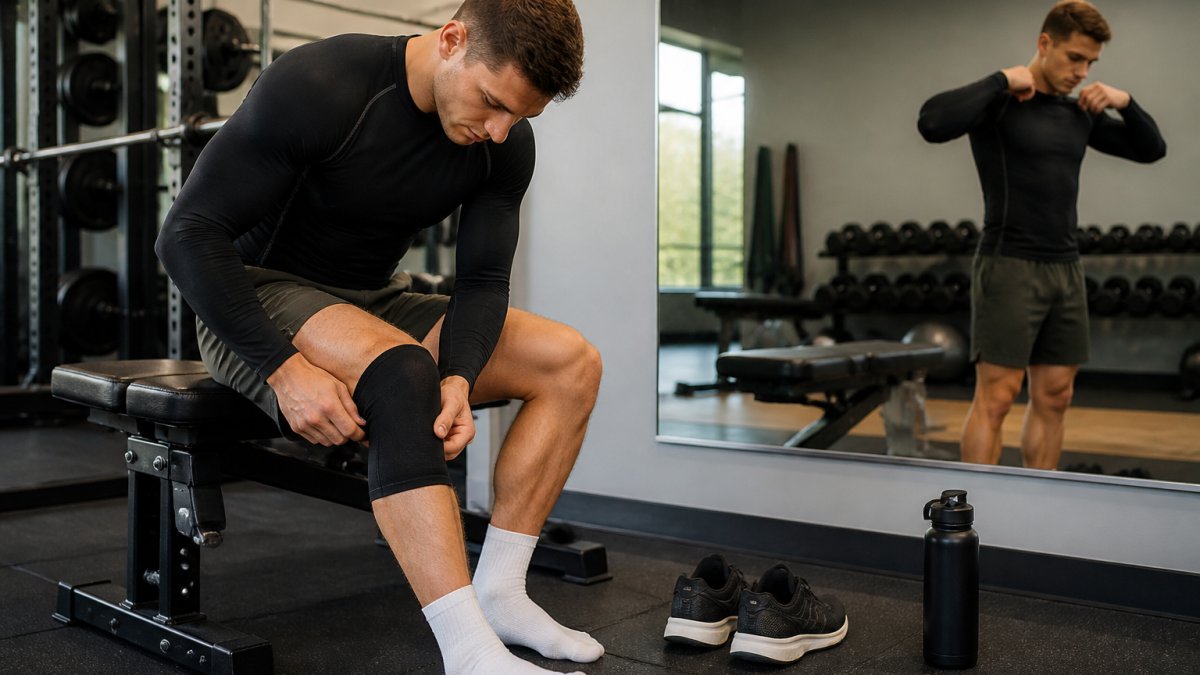
The best practices for injury prevention in sports start with fit, breathability, and load management. Gear that fits well and manages moisture keeps you moving correctly. Gear that doesn't makes you compensate, and compensation is where injuries start.
Fit and Sizing Checks
Fit is the single biggest factor you control. Check these before you buy:
- Measure at the point the size chart specifies, not where you assume
- Test the range of motion: squat, reach, and rotate in the gear
- Confirm nothing bunches, pinches, or slides during movement
Breathability, Moisture-Wicking and Thermoregulation
Breathability and moisture-wicking fabrics move sweat away from skin so your body can regulate temperature. Thermoregulation matters because overheating and chill both affect coordination and reaction time. Look for fabrics that wick and dry fast, and avoid cotton next to skin during hard sessions.
Workout Clothes by Activity: Training Shorts, Sports Bras and Support Layers
Workout clothes should match the demands of your activity, not just the look. Floor work needs shorts that don't ride up; heavy lifting needs support layers that hold without restricting; riding and overhead work need coverage and durability in different places.
Training shorts should stretch through the hips and stay put. Sports bras need a support level matched to impact; a low-support bra for running is a common and avoidable mistake.
Care, Replacement and Lifecycle: When Gear Stops Protecting You
Gear stops protecting you long before it looks worn out. Foam pads compress, elastic stretches, and helmet liners age even in storage.
Wash performance gear according to the label, skip fabric softener, and air-dry it. Fabric softener clogs wicking fibers and cuts breathability.
Watch out: a helmet with a cracked shell, a pad with flattened foam, or a sleeve with stretched elastic is no longer doing its job.
Build Your Injury Prevention Kit: What to Buy First
Build your kit in order of risk, not excitement. Start with the protection your sport demands, then add support and comfort layers. This table shows the priority order and what each piece is for.
| Priority | Gear | Primary Job | Replace When |
|---|---|---|---|
| 1 | Sport-certified helmet | Head impact protection | Cracked shell or past expiry |
| 2 | Custom-fit mouthguard | Teeth and jaw protection | Chewed through or loose |
| 3 | Sport-specific padding | Impact force spread | Foam flattened or straps stretched |
| 4 | Proper footwear | Force control and grip | Midsole worn or sole smooth |
| 5 | Compression sleeves | Joint support and proprioception | Elastic stretched or pinching |
| 6 | Moisture-wicking layers | Thermoregulation | Fabric pills or stops wicking |
Buy the first four before you buy anything else. If you are already injured, read our guide to staying motivated during injury recovery.
Frequently Asked Questions
What gear is most effective for preventing sports injuries?
The gear with the clearest protective role is equipment designed for impact: helmets, mouthguards, and sport-specific padding for contact sports, plus footwear matched to your surface. Compression wear and joint sleeves offer support and comfort but should not be treated as injury shields. Build your kit around the demands of your sport first, then add support layers for fit and recovery.
Does compression gear actually help prevent injuries?
Compression clothing is best understood as support and recovery gear, not a proven injury-prevention device. Athletes use it for muscle support, reduced movement of soft tissue, and moisture-wicking comfort during training. The benefits of compression clothing for athletes are real in terms of fit and feel, but pair it with proper warm-up, load management, and sport-specific protective equipment rather than relying on it alone.
What should I look for in protective athletic gear?
Check four things: the standard or certification the product claims to meet, the fit and coverage for your sport, breathability and moisture-wicking performance, and durability of straps, shells, and closures. Replace gear after hard impacts or when padding compresses. For footwear, confirm slip-resistant soles and, where required, toe caps or metatarsal guards. Fit matters as much as the material, because loose or oversized protection shifts on impact.
Can the right footwear reduce the risk of common training injuries?
Footwear is one of the highest-leverage purchases because it controls traction, stability, and load transfer. Match the shoe to the surface and activity: court shoes for lateral movement, training shoes for lifting, and slip-resistant soles for wet or oily floors. Replace worn tread and compressed midsoles, since degraded cushioning changes how force travels through the foot, ankle, and knee.
Injury prevention comes down to matching gear to risk and replacing it before it fails. That takes discipline, and it takes gear you trust. At Burrow Athletic, we build performance-driven headwear designed to move with you, and every purchase supports The Be Good Foundation. Explore our GOAT headwear and join a community built on character, resilience, and purpose. Get started with Burrow Athletic and gear up for how you show up every day.
