

Last Updated: October 31, 2026
Quick Summary
Color psychology in activewear shows that color reliably shifts your mood, confidence, and perceived effort, while evidence for direct physical gains is thin and inconsistent. Use color as a mindset tool for the session you want, and let training, sleep, and nutrition carry the physical load.
- Red may boost arousal and perceived power, but evidence for real strength gains is mixed at best.
- Blue suits steady cardio and skill work, while red and orange fit heavy strength sessions.
- Dark colors absorb more solar heat, which matters on long outdoor summer sessions.
- Test one new color at a time, rate energy and focus after warm-up, and repeat three times.
- Don't debut a new color on race day or let a bold shade distract you when you need calm.
Table of Contents
- How Color Psychology in Activewear Affects Performance
- What the Evidence Actually Supports
- Color Associations and the Moods They Trigger
- Sports Uniform Color and Athletic Performance
- Red Clothing and Athletic Performance: Strength or Myth?
- Workout Clothes and Motivation: Dressing for the Session You Want
- Choosing Activewear Colors: A Practical Framework
- Where Color Choice Meets Character: Picking Your Game Day Hat
- Frequently Asked Questions
How Color Psychology in Activewear Affects Performance
Color psychology in activewear is the study of how the colors you wear during training shape your mood, focus, and sense of readiness. At Burrow Athletic, we treat color as a tool, not a gimmick. Pick the right shade and it can nudge your mindset before you even lace up.
Here's the honest starting point most guides skip: the evidence for color changing your actual physical output is thin. The stronger, more reliable effect is on how you feel and how you think, and that distinction shapes everything that follows.
What the Evidence Actually Supports
Color psychology is the idea that specific hues trigger specific emotional and mental states. The mental side is well documented. The physical side is where claims outrun the proof.
Most of what you'll read online promises that a certain color makes you stronger or faster. Treat those promises with caution. A lot of it rests on small studies, and results don't always repeat. The safer read is that color reliably shifts mood, confidence, and perceived effort. It may also nudge measurable performance, but the effect is modest and highly personal.
What researchers actually measure
When you see a headline like "red makes athletes stronger," ask what was measured. Color-performance studies typically fall into a few buckets:
- Subjective ratings: mood, arousal, perceived exertion, confidence, and readiness, usually on simple scales. These are the most consistent findings because color clearly influences how people feel.
- Task performance: grip strength, jump height, sprint times, and reaction time. Results here are mixed and often small.
- Physiological markers: heart rate, blood pressure, and skin conductance. Some studies show arousal shifts, but the effects are usually short-lived and hard to separate from general excitement.
- Perception by others: referee decisions, opponent ratings, and viewer judgments. These are real effects but they concern how you're seen, not what your body can do.
A common pattern is that subjective measures move more reliably than objective ones. That doesn't make the mental side unimportant, perceived effort and confidence shape how hard you push, but it does mean you should be skeptical of any claim that a shirt color directly adds force or speed.
Why findings diverge
Color research is hard to run cleanly. Studies vary in sample size, the exact shade used ("red" covers a wide range), lighting, whether participants noticed the color, and what they were told beforehand. Many are small, and some don't replicate.
That's why the honest takeaway is not "color doesn't matter" or "color is magic." It's that color is a reliable mood and mindset tool with a modest, inconsistent physical signal.
For a deeper look at how what you wear feeds your mental state, our breakdown of whether clothing impacts mental well-being is worth your time.
Color Associations and the Moods They Trigger
Ask most people what red makes them feel and you'll get answers like "energized" or "alert." Ask about blue and you'll hear "calm" or "focused." These associations are common and fairly consistent across cultures, which is why they're useful starting points.
A quick map of the big four:
- Red: energy, intensity, urgency, a sense of power
- Blue: calm, focus, steadiness, control
- Yellow: optimism, alertness, a lift in mood
- Orange: warmth, enthusiasm, sociability
There's a second layer here, and it's the one that actually changes how you feel on a given day. Color association is personal.
If you want the fuller picture on how mood and apparel interact, our guide to how activewear impacts mental health goes deeper.
Red, Blue, Yellow, and Orange at a Glance
Here's the short version to keep in your head:
- Red wakes you up. Great for heavy lifts and short, hard efforts.
- Blue settles you down. Best for steady work, skill drills, and staying composed.
- Yellow lifts the mood. Useful on low-energy days when you need a push.
- Orange adds warmth and buzz. A good pick for group sessions and social training.
None of these are rules. They're starting points you can adjust to your own wiring.
Sports Uniform Color and Athletic Performance
The most-cited angle on sports uniform color and athletic performance comes from studies on referee bias and opponent perception.
What does that mean for you? The color of your kit may shape how others read you. It can also shape how you read yourself.
The practical takeaway is about context. In competition, a bold color can project confidence and put an opponent on the back foot, at least in perception.
Curious whether the gear itself, beyond color, moves the needle? We cover that in whether clothing quality affects workout performance.
Red Clothing and Athletic Performance: Strength or Myth?
Red clothing and athletic performance is the claim that gets the most hype, and the most pushback.
Here's what tends to hold up. Red is arousing. It can raise your sense of readiness and make a lift feel more aggressive. That mental shift can translate into a better session, especially for short, explosive work.
Watch out: the biggest mistake is treating red as a performance switch. If you show up under-slept and under-fueled, a red shirt won't rescue the session. Use red to amplify a good day, not to replace preparation.
Workout Clothes and Motivation: Dressing for the Session You Want
Workout clothes and motivation connect through a simple idea: what you put on signals to your brain what kind of session is coming. Dressing with intent can lower the friction to start and raise your sense of readiness.
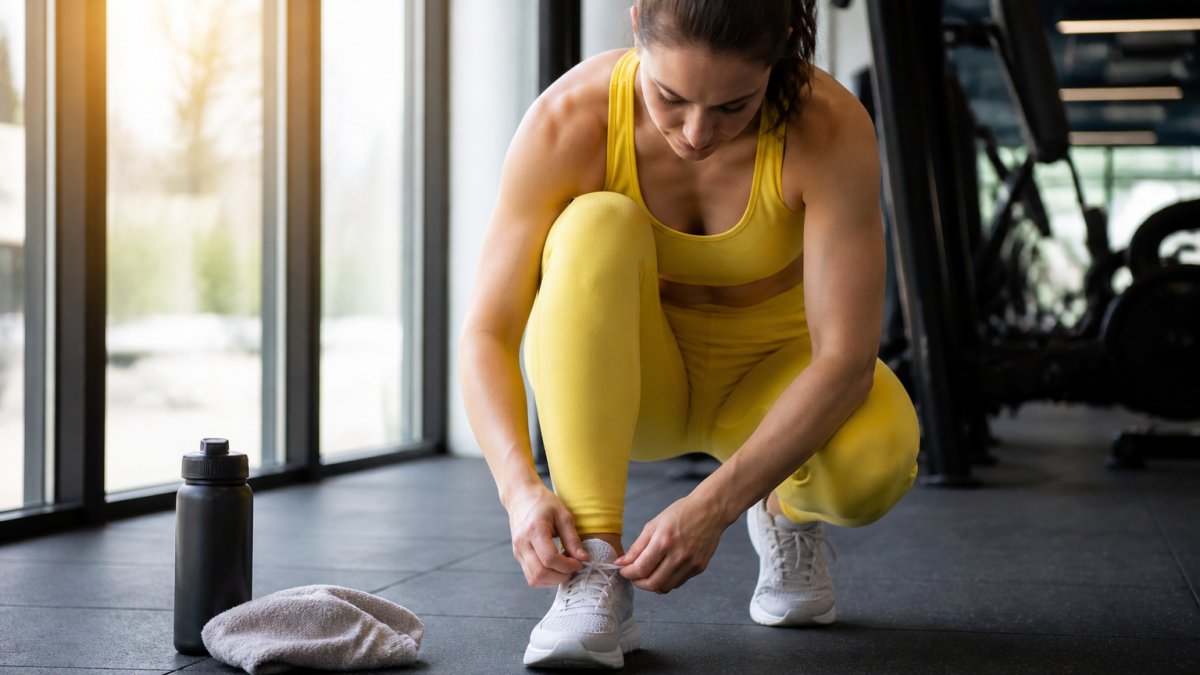
A common mistake is owning one neutral gym kit and wearing it for everything. That blurs the mental line between a hard day and an easy one. Try building small color cues instead:
- High-energy colors for heavy or fast days
- Calm colors for mobility, recovery, and skill work
- A favorite shade for days when motivation is low
If you want guidance on gear that builds confidence, our roundup of the best workout apparel for confidence is a solid next read.
Choosing Activewear Colors: A Practical Framework
Choosing activewear colors works best as a short, repeatable process rather than a guess in the mirror. Use this framework to match color to the session, then refine with your own testing.
The session-to-color framework
| Session Type | Lead Color | Why It Fits | Watch For |
|---|---|---|---|
| Heavy strength | Red, orange | Arousal and aggression | Overheating your nerves |
| Steady cardio | Blue | Calm, pacing, control | Feeling flat on low days |
| Skill and drills | Blue, muted hues | Focus and precision | Losing buzz in group settings |
| Low-motivation days | Yellow, orange | Mood lift and energy | Relying on color alone |
| Competition | Bold shades | Confidence and presence | Distraction if unfamiliar |
Activewear-specific constraints most guides skip
Color choice isn't just about mood. The fabric, the environment, and the rules of your sport all shape what works.
- Visibility and safety: If you train outdoors near traffic or at dawn and dusk, high-contrast colors and reflective details matter more than mood. A calm navy may feel right but disappear against a shaded path.
- Heat and sunlight: Dark colors absorb more solar heat, which can matter on long outdoor sessions in summer.
- Sweat visibility: Bold and dark shades hide sweat better than light grays and pastels. If self-consciousness is a factor, that's a legitimate practical consideration.
- Sport-specific uniform rules: Many leagues and events mandate uniform colors or require contrasting kits. Check the rules before you build a color strategy around a shade you can't wear in competition.
- Fabric and sheerness: Light hues can go sheer when wet. Check the fabric in motion, not just in the mirror.
A few practical rules of thumb: don't debut a new color on race day, and don't let a bold shade distract you in a setting where you need calm.
Test one color at a time
The only way to know what works for you is to test it. Change one variable at a time so you can actually read the result.
- Pick one session type to test, like heavy lifts
- Choose one new color and wear it for that session
- Rate your energy and focus right after your warm-up, on a 1-5 scale
- Note how the session felt and how you performed
- Repeat three times before you judge the color
- Keep the winners, drop the rest
To separate feel from output, log both. A simple two-column note, "how I felt" and "what I did" (reps, times, distances), keeps you honest.
This is personal. A color that fires up your training partner may distract you. Trust your own log over any general rule.
Where Color Choice Meets Character: Picking Your Game Day Hat
Game day is where color choice meets character. The shade you wear becomes part of how you show up, for yourself and for the people around you.
Our advice: pick a game day hat that matches the energy you want to bring. Want to project calm confidence? Go with a deep blue or a muted tone.
If you want a practical guide to what separates a good hat from a great one, read what makes a great performance hat.
Color can shape your mood, your focus, and your sense of readiness, but it can't replace the work.
Frequently Asked Questions
Can the color of your workout clothes affect your performance?
It can affect how you feel and how you think you performed, but the effect on measurable output is modest. Research on color psychology links clothing color to mood, confidence, and perceived effort. A red top may make you feel more assertive before a heavy set, while blue may help you settle into a steady run. Treat color as a mental cue rather than a performance enhancer, and test one shade at a time to see what actually changes your training.
Does wearing red improve athletic performance?
The red clothing and athletic performance link is one of the most studied and least settled in color psychology. Some studies find athletes in red are rated as more dominant by observers, and a few found small advantages in combat sports. Others found no reliable effect on strength, speed, or endurance. Red tends to raise arousal, which helps short, explosive efforts and can work against you in precision work. Wear it when you want to feel aggressive, not because it guarantees a result.
What color activewear makes you feel more confident?
There is no universal confidence color. Bold shades like red and black are commonly associated with strength and authority, while blue and green read as calm and composed. The stronger factor is personal: a color you associate with good sessions in the past will do more for your confidence than one chosen from a chart. Pick a shade you would wear to a competition, then use that same color as a repeatable pre-training cue.
Do bright colors make workouts feel easier?
Bright colors can lift mood and perceived energy, which may make a session feel more approachable, especially on low-motivation days. That is a perception effect, not a physiological one: your heart rate and oxygen cost do not change because of your shirt. Use bright hues as a motivational tool for days you are dragging, and save muted hues for sessions where you want to stay calm and focused.
