

Last Updated: November 19, 2026
Quick Summary
To recycle old athletic gear, sort items into still usable, repairable, and worn-out piles, then donate clean wearable clothing and route dead shoes to dedicated take-back programs, since most shoes can't go in curbside bins. Repair what you can, and send truly finished textiles to textile recycling.
- Wash everything before donating, because clean gear gets accepted and dirty gear gets turned away.
- Most old athletic shoes can't go in curbside recycling bins because their bonded layers can't be separated.
- Grind-and-reuse shoe programs accept any brand and condition, including shoes with dead midsoles.
- Tie laces together and remove inserts so pairs stay matched through sorting.
- Damaged helmets generally should not be resold or donated because the protective foam may be compromised.
Table of Contents
- Step 1: Sort Your Gear and Check What's Actually Reusable
- Step 2: Donate Athletic Clothing That Still Has Life Left
- Where to Donate Used Sports Equipment in Your Area
- What to Do With Old Sports Uniforms and Team Kits
- How to Recycle Old Athletic Shoes the Right Way
- Repair and Repurpose Gear Before You Toss It
- Dispose of Worn-Out Equipment Responsibly
- Build a Giving-Back Habit With Your Next Gear Haul
- Frequently Asked Questions
Step 1: Sort Your Gear and Check What's Actually Reusable
Learning how to recycle old athletic gear starts with one honest question: is this item still wearable? Sort everything into three piles: still usable, repairable, and truly worn out. That first pass saves you time and keeps good gear out of the waste stream.
Check each piece against a few simple tests:
- Fabric: Stretched elastic, thin patches, or permanent odor mean it's done.
- Soles: If a running shoe's midsole feels packed down or crumbly, it has lost its cushioning.
- Hardware: Broken zippers and snapped straps are often fixable.
Wash everything before it moves on. If you're unsure whether an item is truly worn out, our guide on how to wash athletic performance gear shows how proper care extends its life. For a deeper walkthrough of sorting and recycling, see 7 steps to recycle old workout clothes properly.
Step 2: Donate Athletic Clothing That Still Has Life Left
Donating is the highest-value move for wearable gear. It keeps textiles in use and puts functional clothing in the hands of people who need it. The key is donating items someone can actually wear, not a bag of castoffs.
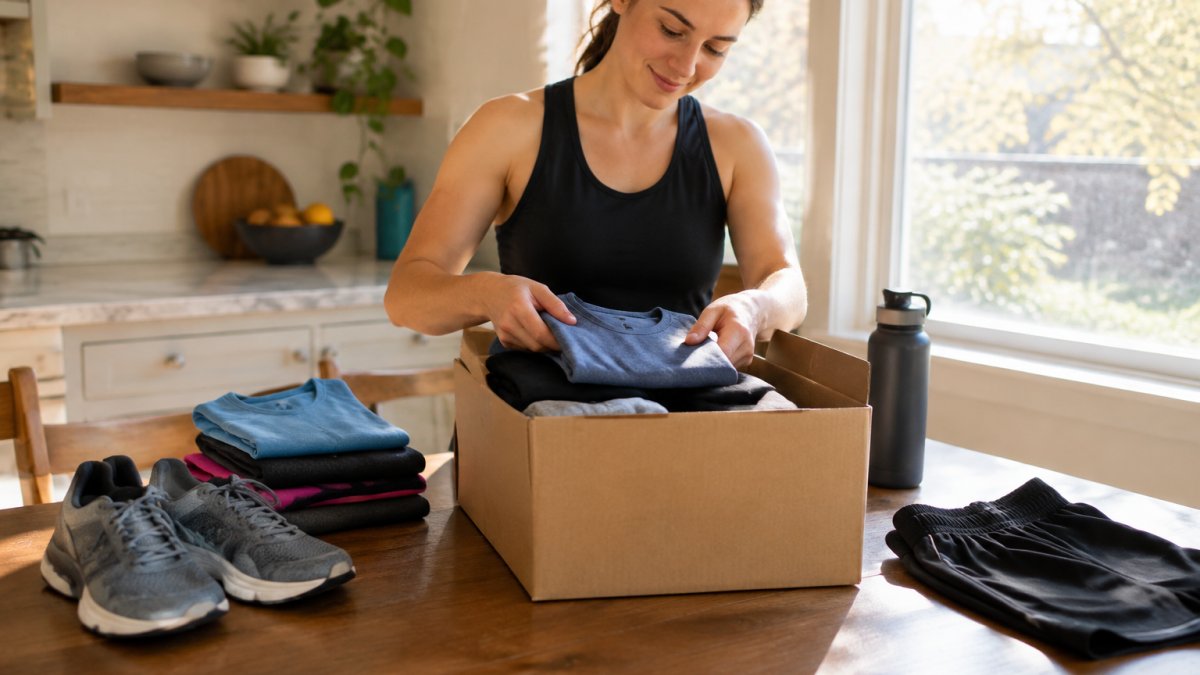
Before you donate athletic clothing, run this quick checklist:
- Item is clean and dry
- No rips, holes, or heavy staining
- Zippers, buttons, and straps work
Where should donated gear go? Good options include local shelters, community centers, school athletic programs, and nonprofit thrift stores. Call ahead and ask what they accept.
Where to Donate Used Sports Equipment in Your Area
Finding a home for used sports equipment takes a little legwork, but the payoff is real. Start local, then widen your search.
Try these sources:
- Youth sports leagues: Many collect gently used cleats, balls, and pads for kids who can't afford new gear.
- Community centers and YMCAs: Often accept equipment for their programs.
- School athletic departments: Call the front office and ask about equipment drives.
Verify before you haul. Ask three questions: Do you accept this item? What condition do you require? When can I drop it off? A quick call saves a wasted trip. For hard goods like helmets, check the manufacturer's guidance on used safety gear, since some items shouldn't be passed on after impact.
What to Do With Old Sports Uniforms and Team Kits
Old uniforms are tricky. They're often personalized, numbered, or tied to a specific team, which makes them hard to donate.
First, ask the team. Many clubs and schools have a return policy or a seasonal collection for outgrown kits.
If it's yours to keep, consider these options:
- Repurpose it: Turn jerseys into cleaning rags, a quilt, or a framed keepsake.
- Sell it: Vintage and collectible kits sometimes have resale value.
- Donate with a caveat: Some thrift stores accept uniforms; others don't. Ask first.
The common mistake is dumping uniforms in a donation bin without checking. Personalized items often get pulled and tossed. A two-minute call prevents that.
How to Recycle Old Athletic Shoes the Right Way
Most old athletic shoes can't go in your curbside recycling bin. A running shoe is a sandwich of ethylene-vinyl acetate foam, rubber outsole, mesh, glue, and sometimes a plastic heel counter.
Know what each program actually does with the shoes
Shoe collection programs generally fall into a few types, and the type matters more than the label:
- Grind-and-reuse programs: Shoes are shredded and the rubber and foam become playground surfacing, running tracks, weight-room flooring, or equestrian footing. These programs usually accept any brand and any condition, including shoes with dead midsoles.
- Resale and reconditioning programs: Gently worn shoes are cleaned and resold. These programs are pickier: they typically reject heavy sole wear, odor, and stains.
- Brand-specific take-back: Some athletic brands collect their own shoes at retail stores for recycling. Acceptance rules vary by brand and store, so confirm before you bag them.
A common pattern is that the grind-and-reuse route takes the widest range of shoes, while resale routes want pairs that still have visible tread and intact uppers.
Verify a drop-off before you drive
Use this checklist to confirm a shoe program is real and worth the trip:
- Confirm the store or event is currently collecting (programs pause and restart)
- Ask whether single shoes are accepted or only pairs
- Ask whether cleats, spikes, and sandals are in scope
Watch out: some bins labeled "shoe recycling" are actually general textile bins that route unusable shoes to incineration or export. Ask the operator directly what happens to worn-out pairs.
Prep shoes so they actually get processed
- Clean and dry the pair. Mud and moisture can get a whole bag rejected.
- Tie the laces together so pairs stay matched through sorting.
- Remove inserts, orthotics, and any personal items.
If no program is nearby, hold the pair until a collection event comes through. Storing a bag of old shoes for a few months beats sending them to the landfill, and many retail collection drives run seasonally.
When shoes are too far gone
Shoes with crumbling midsoles, separated soles, or heavy odor are poor candidates for resale but fine for grind-and-reuse programs. If no program accepts them, treat them as textile waste through your local textile collection rather than the regular trash, and check your municipal waste guidance for the current rule.
Shoe collection programs fall into a few types, and the type matters more than the label.
| Program type | What happens to the shoes | What it accepts |
|---|---|---|
| Grind-and-reuse | Shredded; rubber and foam become playground surfacing, tracks, flooring | Any brand, any condition, including dead midsoles |
| Resale and reconditioning | Gently worn shoes cleaned and resold | Rejects heavy sole wear, odor, and stains |
| Brand-specific take-back | Brands collect their own shoes at retail stores | Rules vary by brand and store; confirm first |
Repair and Repurpose Gear Before You Toss It
Repair is the step most people skip, and it's often the cheapest, greenest choice. A broken zipper or a small tear doesn't mean the end.
Try these fixes before giving up on a piece:
- Tears and seams: A basic needle-and-thread repair or a patch extends life for years.
- Zippers: A zipper repair kit or a tailor can rescue a jacket.
- Laces and straps: Swap in new laces or hardware.
Our step-by-step guide on how to repair damaged athletic apparel walks through the common fixes. When repair isn't possible, repurpose. Old t-shirts become gym rags, worn towels become garage cloths, and sturdy fabric can be cut into patches or totes.
Dispose of Worn-Out Equipment Responsibly
Some gear is genuinely finished, and that's okay. The goal is responsible disposal, not guilt. The complication is that "athletic gear" covers everything from a cotton t-shirt to a 300-pound treadmill, and each material stream has different rules. Treat disposal as an item-by-item decision, not a single bag by the door.
Match the item to the right stream
- Synthetic clothing and worn textiles: Route to textile recycling. Many communities have drop-off bins, and some curbside programs accept bagged textiles separately. Check your local waste management guidance first, because acceptance rules vary by hauler.
- Cotton and natural-fiber items: Often accepted by textile recyclers and some thrift stores even when torn, since they can be cut into wiping cloths or fiber.
- Balls: Deflated balls take less space, but most curbside programs won't take them. Some youth programs accept used balls; otherwise they go to general waste unless a local sports collection exists.
Why mixed-material gear is hard to recycle
Technical fabrics blend polyester, spandex, and nylon, sometimes with membranes and coatings. Once blended, the fibers are difficult to separate economically, so most textile recycling downcycles them into insulation, wiping cloths, or filler rather than new apparel. That's the key distinction: material recycling turns gear into lower-grade products, while resale, donation, and reuse keep the item in service. Reuse almost always beats recycling on environmental impact, which is why the earlier sorting steps matter more than the disposal step.
Prepare bulky equipment before pickup
Treadmills, ellipticals, and weight benches need planning, not a curb drop.
- Disassemble what you can. Remove the console, handrails, and deck if the manual shows how. Smaller pieces are easier to move and easier to recycle separately.
- Pull the electronics and batteries. Consoles, motors, and battery packs don't belong in regular trash. Route them to an e-waste program so components get recovered safely.
- Check for refrigerant or fluids. Some machines contain sealed fluid systems; ask the hauler how to handle them.
Compare disposal channels for large machines
- Municipal bulky-item pickup: Many cities offer scheduled pickup. Confirm whether exercise equipment is eligible and whether there is a fee.
- Scrap metal recyclers: Metal frames, flywheels, and weight stacks often have recycling value. Call ahead with dimensions.
- Retailer haul-away: Some sellers remove old equipment when delivering new. Confirm the service covers your item and location.
Watch out: leaving a treadmill at the curb without a scheduled pickup can trigger a municipal citation in many jurisdictions. Confirm the rule before you move it.
Keep a small disposal log
Before you haul anything, note what you're disposing of, where it went, and the date. If a program asks for proof of proper disposal, or if you want to track how much gear you've kept out of the landfill, the log takes a minute and saves the guesswork later.
Build a Giving-Back Habit With Your Next Gear Haul
Recycling old athletic gear works best as a habit, not a one-time purge. Set a simple rhythm: when new gear comes in, old gear goes out the same week.
A few habits that stick:
- Seasonal swap: Sort gear at the start of each season.
- Donate with purpose: Pick one local program and support it consistently.
- Verify your giving: If you donate to a charity, confirm how donations are used. Our guide on how to verify charity apparel donations shows what to check.
That last point is where Burrow Athletic fits. You can learn more about the Be Good Foundation and how giving back is part of the mission.
The gear you clear out this season can outfit a kid, surface a playground, or stay out of a landfill.
Frequently Asked Questions
Can old athletic shoes be recycled?
Yes, but only through dedicated take-back programs, not your curbside bin. Athletic shoes are made of mixed materials like rubber, foam and synthetic fabric that standard recycling facilities cannot separate. Look for shoe collection drives, running store drop-offs or mail-in programs that grind soles into playground surfaces and running tracks. Tie pairs together, clean off loose mud and confirm the program accepts worn soles before you drop them off.
Where can I donate used sports equipment?
Start with local youth sports leagues, school athletic departments and community recreation centers, which often accept bats, balls, pads and rackets in working condition. Local thrift stores take some gear but usually reject helmets and safety equipment. Call ahead to confirm acceptance guidelines, ask whether they need volunteers to sort, and keep a receipt if you plan to claim a charitable deduction on your taxes.
What should I do with damaged sports equipment?
Assess the damage first. Small rips, loose stitching and worn grips can often be repaired at a local tailor or shoe repair shop for less than replacement cost. Items with cracked shells, compromised straps or broken frames are unsafe to donate and should go to your municipal waste management or bulky item pickup. Metal components like dumbbells and bike frames can sometimes go to a scrap metal recycler instead of the landfill.
Which items are usually rejected for donation?
Most donation centers reject helmets, used undergarments, heavily stained or torn clothing, and any equipment with safety certifications that may be expired. Exercise equipment like treadmills and weight benches is often refused because of liability and space. Call ahead, check the organization's acceptance guidelines online, and separate usable items from worn-out gear so your donation does not create extra sorting work for volunteers.
