
Last Updated: November 18, 2026
Quick Summary
To recycle workout clothes properly, first sort each item by condition: donate wearable pieces and send torn, stretched or stained gear to textile recycling. Wash everything, check the care tag and sort by fiber, since stretchy blends and spandex are rejected by most programs. Then use a municipal drop-off, retail take-back counter or mail-in program, and upcycle or repair items that still have life left.
- Donate only items with no holes, working elastic and no permanent stains.
- Spandex and elastane are hard to break down, so many recyclers reject high-stretch pieces.
- Wash items in cold water on a gentle cycle and skip fabric softener before drop-off.
- Call ahead to confirm a program accepts stretchy blends and whether there is a fee.
- Cut leggings with holes into shorts, rags or hair ties instead of trashing them.
Table of Contents
- Step 1: Check Garment Condition Before You Recycle Workout Clothes
- Step 2: Identify Fabric Types to Know What Can Be Recycled
- Step 3: Wash and Sort Activewear Before Donation or Drop-Off
- Step 4: Find Textile Recycling Near Me: Drop-Off and Mail-In Options
- Step 5: How to Dispose of Old Unusable Clothes Without the Landfill
- Step 6: Upcycle Leggings Ideas for Wearable and Damaged Pairs
- Step 7: What to Do With Leggings With Holes: Repair, Repurpose, or Recycle
- Build a Reuse Habit That Matches Your Values
- Frequently Asked Questions
Step 1: Check Garment Condition Before You Recycle Workout Clothes
The first rule of responsible disposal is simple: don't recycle what someone can still wear. Before you recycle workout clothes, sort every piece into one of two piles. Wearable items go to donation or resale. Unwearable items go to textile recycling.
Gear built to last stays out of the waste stream longer, but every garment reaches a fork in the road eventually.
Here is how to judge condition honestly.
Donation-Ready vs. Textile-Recycling-Ready Checklist
Use this checklist on each item:
Donation-ready:
- No holes, tears, or split seams
- Elastic still snaps back (waistbands, sports bra bands)
- Zippers and drawstrings work
- No permanent stains or heavy pilling
- Freshly washed and dry
Textile-recycling-ready:
- Holes, thin patches, or blown seams
- Stretched-out elastic that no longer holds
- Stains that won't lift
- Fabric so worn it's see-through
If you're unsure whether old gear is worth keeping, it helps to know what durable construction looks like so you judge condition fairly rather than tossing good gear too early.
Step 2: Identify Fabric Types to Know What Can Be Recycled
Fabric composition decides what happens next. Textile recycling is the process of turning used fabric back into fiber or new products, and not every fiber survives that trip. Most curbside programs and mail-in take-back services sort by material before anything else, so reading the care tag is the single most useful thing you can do before bagging a garment.
Check the care tag and sort by material:
- Natural fibers (cotton, wool, linen): easier to recycle mechanically into rags, insulation, or new yarn. Cotton breaks down well in mechanical shredding, but dyed or blended cotton loses value.
- Synthetic fibers (polyester, nylon): recyclable in principle, but fewer programs accept them. Polyester can be melted and re-pelletized, yet most municipal programs lack the equipment, so synthetics often travel to specialized recyclers or get downcycled.
- Spandex and elastane: the sticking point. Even small amounts make a garment hard to break down, so many recyclers reject high-stretch pieces. Elastane cannot be separated mechanically from blends, and heat-based processes degrade it.
- Blends: the hardest category. Mixed fibers are costly to separate, so most curbside and mail-in programs won't take them. A 90/10 polyester-spandex blend is functionally unrecyclable in most systems.
A common mistake is assuming the recycling bin takes everything. In practice, stretchy blends are the least recyclable items in your drawer. Here is how specific features affect acceptance:
- Trims and zippers: metal zippers, plastic snaps, and drawstring aglets must often be removed before mechanical recycling. Some programs ask you to cut them out; others reject the item outright.
- Contamination: sweat, deodorant residue, and detergent buildup can ruin a batch. Wash items first, and never send heavily soiled gear to a fiber-recovery program.
- Fiber length: fabrics that have already been recycled once have shorter fibers and lower value, so a worn-out recycled-polyester shirt is less likely to be accepted than a virgin-fiber garment.
If you want to understand which sustainable materials and blends actually hold up, our guide to sustainable gym clothes that perform breaks down the trade-offs.
Fabric composition decides what happens next, so here is how the main fiber types stack up for recycling.
| Fiber type | Recyclability | Key note |
|---|---|---|
| Natural fibers (cotton, wool, linen) | Easier to recycle mechanically | Become rags, insulation, or new yarn |
| Synthetic fibers (polyester, nylon) | Recyclable in principle | Fewer programs accept them |
| Spandex and elastane | Hard to break down | Many recyclers reject high-stretch pieces |
| Blends | Hardest category | Most curbside and mail-in programs won't take them |
Step 3: Wash and Sort Activewear Before Donation or Drop-Off
Wash everything first. Worn activewear carries sweat, deodorant, and bacteria, and most donation centers and recyclers require clean items.
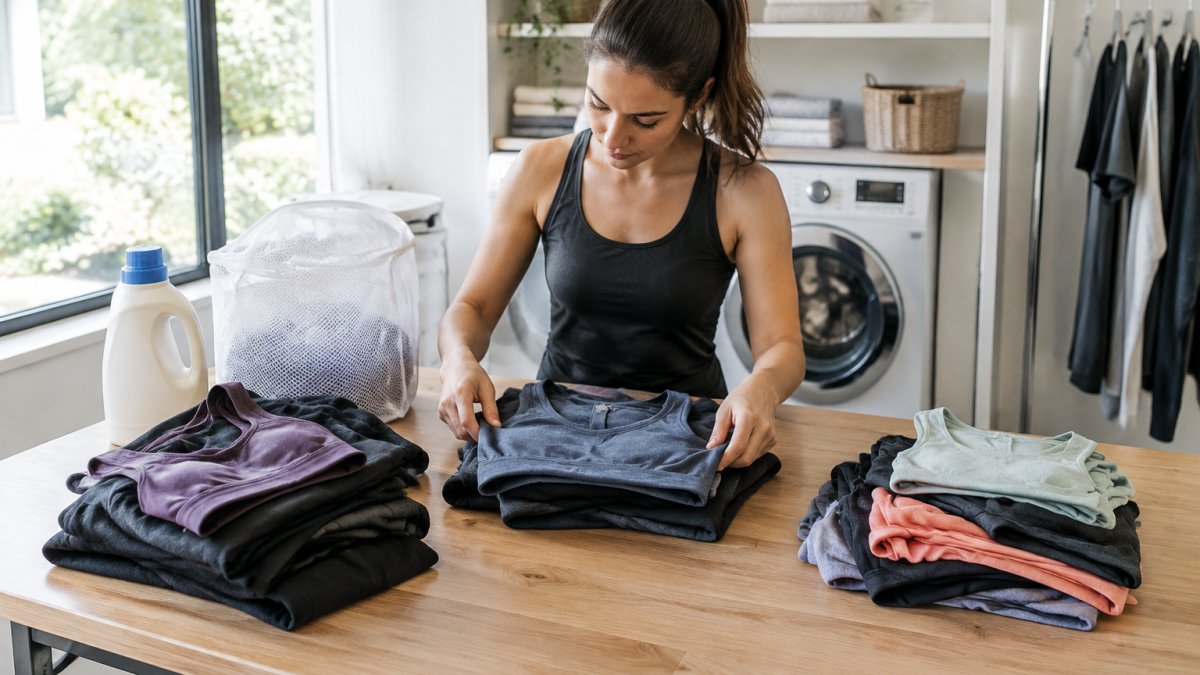
Follow these steps:
- Wash in cold water on a gentle cycle.
- Skip fabric softener, which coats performance fabrics.
- Air-dry or tumble on low.
- Sort into donation and recycling piles using the checklist above.
- Bag each pile separately and label them.
Proper washing keeps items in resalable or recyclable condition. If you're unsure about heat settings or detergent, our step-by-step guide to washing performance gear covers the details that protect fabric.
Step 4: Find Textile Recycling Near Me: Drop-Off and Mail-In Options
The fastest way to find a textile recycling near me option is to check three sources: your local solid waste authority, national mail-in programs, and retail take-back counters. Textile recycling near me searches often return generic lists, so verify each location accepts activewear before you drive.
Where to look:
- Municipal waste and recycling pages list drop-off sites and household hazardous waste days, which sometimes accept textiles. Search your city or county waste authority site for "textile drop-off" or "clothing recycling."
- Retail take-back programs at athletic brands accept worn gear, often any brand. These programs typically have a bin near the entrance and may offer a small coupon in return, though acceptance rules vary by location.
- Mail-in programs send you a prepaid or flat-rate label; you box the items and ship them. Some require a minimum weight, and some charge for the label.
- Charity drop boxes accept wearable items, not rags.
Call ahead and ask two questions: do you accept stretchy blends, and is there a fee? Some mail-in programs charge shipping, so confirm the cost before boxing anything up.
Watch out: donation boxes are not recycling bins. Bagging torn, stained gear for a charity box means it gets landfilled at the charity's expense.
What Happens After Collection
Understanding the sorting chain helps you judge whether a program is genuinely circular. Most collected textiles go through a grader who sorts by fiber, condition, and market demand. Wearable items are resold domestically or exported. Damaged items are sold to fiber recovery or downcycling operations, where they become insulation, wiping rags, or carpet padding. Residual waste, items with no market, is landfilled or incinerated. A program that publishes its sorting and end-market details is more trustworthy than one that only promises to "recycle."
Program Eligibility and Logistics Checklist
Before you commit to a program, confirm:
- Accepted items: activewear only, or all textiles?
- Condition rules: do they take stained or torn items, or only wearable?
- Fees and postage: is the label prepaid, flat-rate, or charged to you?
- Minimum quantities: some mail-in programs require a full box or a minimum weight.
- Geographic limits: some drop-off sites are restricted to residents of a specific county or city.
- Preparation requirements: must items be washed, bagged, or have trims removed?
A location-based directory of verified textile recyclers and take-back programs would make this easier, but until one exists, calling ahead and asking these questions is the most reliable way to avoid a wasted trip.
Step 5: How to Dispose of Old Unusable Clothes Without the Landfill
Learning how to dispose of old unusable clothes responsibly comes down to one principle: keep fabric in circulation, even when the garment can't be worn. Textile waste is a growing share of landfill volume, and synthetic performance fabrics don't break down quickly.
Your options, ranked:
- Textile recyclers that accept damaged goods for fiber recovery.
- Retail take-back programs that accept any condition.
- Animal shelters and repair shops that want rags and scrap fabric.
- Municipal textile events in your area.
Avoid the trash can unless every other route is closed. One bag of rags in a landfill is a small loss; a drawer of it is a habit.
Step 6: Upcycle Leggings Ideas for Wearable and Damaged Pairs
Some of the best upcycle leggings ideas turn a single worn pair into something you'll actually use. Upcycling means giving fabric a second life without breaking it down first.
Try these:
- Leggings to shorts: cut above the knee and hem the edge.
- Sports bra to headband: cut the band into strips.
- Fabric to cleaning rags: cut into squares for gym bags and cars.
- Leggings to hair ties: slice thin loops from the legs.
- Old tees to a gym towel: cut and hem the fabric.
Damaged pairs work too. A hole in the knee doesn't ruin the rest of the fabric. Cut around it and use what's left.
Step 7: What to Do With Leggings With Holes: Repair, Repurpose, or Recycle
Deciding what to do with leggings with holes depends on where the damage sits and how much fabric is left. Repair first when the hole is small and the fabric is strong. Repurpose when the damage is in one spot but the rest is sound.
Repair is often the smartest move. A patch or a simple stitch can add months of wear. If you want step-by-step repair instructions before giving up on a pair, our guide on how to repair damaged athletic apparel walks through each fix.
If repair isn't worth it, cut the leggings into rags or send them to a textile recycler. Just don't toss them in the trash while a better option exists.
Build a Reuse Habit That Matches Your Values
The real shift isn't one clean-out. It's a habit. Keep a donation bag in your closet, wash and sort gear the moment it retires, and know your nearest drop-off before you need it. Small routines keep activewear out of landfills year after year.
If giving back motivates you, ways to support charities through shopping shows how everyday clothing choices can fund causes you care about.
Recycling old workout clothes properly takes a few honest decisions and a little planning. Burrow Athletic builds performance-driven gear rooted in character and resilience, designed for movement. Every purchase supports The Be Good Foundation. Explore our GOAT headwear and join a community built on compassion, kindness, and purpose.
Frequently Asked Questions
Can workout clothes be recycled if they are made of polyester and spandex?
Yes, but with limits. Synthetic performance fabrics like polyester, nylon, and spandex can go to textile recyclers that accept fiber blends, though many mechanical recyclers struggle to separate elastane from polyester. Programs that accept damaged activewear often downcycle it into insulation, wiping cloths, or carpet padding rather than new clothing. Check a program's accepted fiber list before you drop off, and wash items first so they meet hygiene rules.
What is the 3-3-3 rule for clothes, and does it apply to gym wear?
The 3-3-3 rule is a decluttering guideline: if you have not worn an item in three months, three seasons, or three years, it is a candidate to donate, resell, or recycle. For gym wear, three months is a useful trigger because workout clothes get heavy use and lose stretch. Apply it to leggings, base layers, and t-shirts, then check condition before deciding between donation and textile recycling.
Where can I find textile recycling near me that accepts activewear?
Search your city or county waste department's website for textile recycling drop-off locations, then confirm the site accepts clothing and shoes. Retail take-back programs and mail-in textile recyclers are alternatives when no local drop-off exists. Call ahead to ask about fiber blends, hygiene requirements, and whether damaged items are accepted, since eligibility rules vary by program and location.
How do I dispose of old unusable clothes that cannot be worn or donated?
Send them to a textile recycler rather than the trash. Cut items into rags for household cleaning, use them as stuffing for pet beds, or drop them at a collection bin that accepts damaged clothing. Remove buttons and zippers only if a program asks. Never put textiles in curbside recycling bins, because they tangle sorting equipment and are not accepted in most municipal programs.
