

Last Updated: October 29, 2026
Quick Summary
Marathon runners need a small, tested kit covering four areas: fitted running shoes, moisture-wicking apparel and running socks, hydration gear matched to long-run distance, and a running watch or app for pace data. Test every piece on training runs before race day, because nothing new belongs on race day.
- Fix the base layer of socks and shorts first, since that's where blisters and chafing start.
- Dress for a temperature about 15-20°F warmer than the actual reading during cold-weather runs.
- A hydration vest suits long runs and race day, but a handheld covers many shorter training runs.
- Run at least 10 miles with your filled hydration setup to check for bounce and rub points.
- Buy race-day shoes early and break them in on several training runs, never the week of the marathon.
Table of Contents
- Why Marathon Runners Need a Gear Plan, Not a Shopping Spree
- The Marathon Training Gear Checklist: What Actually Earns Its Place
- Finding the Best Running Shoes for Marathon Training
- Hydration Gear for Long Runs: Carry Only What You'll Drink
- Running Gear for Cold Weather That You Can Actually Layer
- Apparel That Prevents Chafing and Blisters
- Testing Your Kit Before Race Day
- Build Your Kit Around How You Show Up
- Frequently Asked Questions
Why Marathon Runners Need a Gear Plan, Not a Shopping Spree
Most marathon training mistakes aren't made on the road. They're made at the register.
Essential training gear for marathon runners is a small, tested kit, not a closet. A good gear plan starts with what you'll actually use, then builds from there.
They treat every category as mandatory. It isn't. A first-time marathoner and a veteran chasing a personal best need very different kits, and knowing the difference saves you money and misery.
The Marathon Training Gear Checklist: What Actually Earns Its Place
A marathon training gear checklist should cover four things: what goes on your feet, what touches your skin, what you carry, and what you track. Everything else is optional.
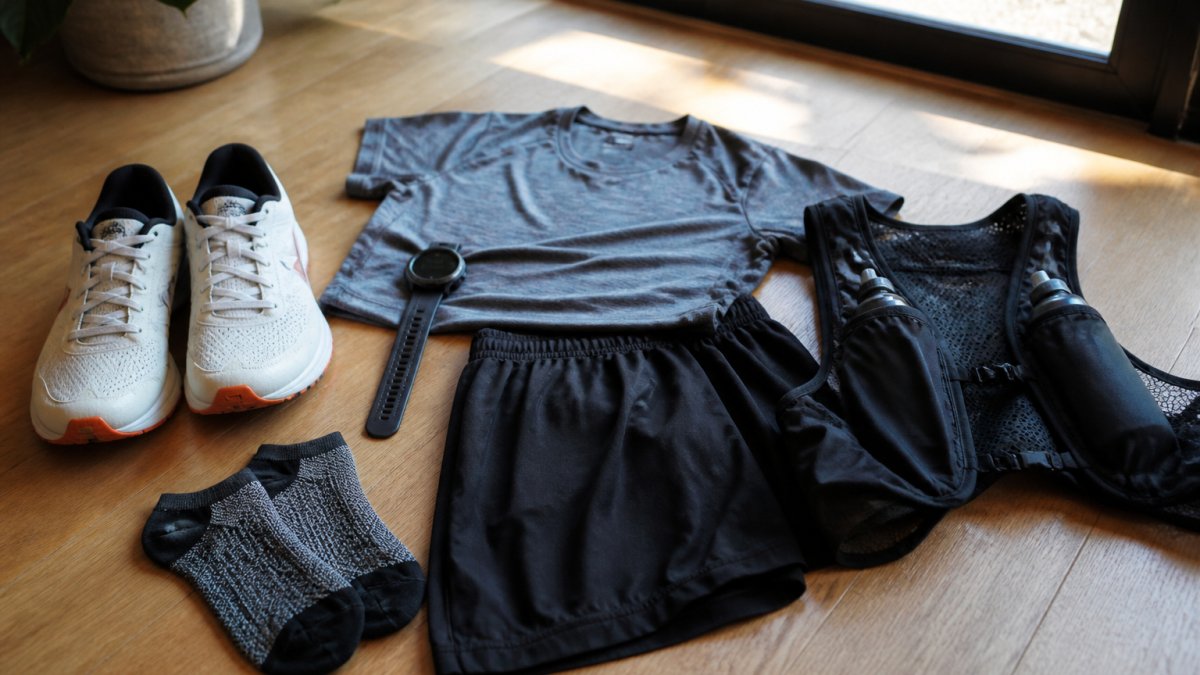
Here's the short version of the kit:
- Running shoes, fitted and broken in before long runs
- A moisture-wicking shirt and shorts or tights that don't ride up
- Running socks designed for the distance
The Four Layers of a Training Kit
Think of your kit in layers, from base to outer. The base layer is socks and shorts, the layer that touches skin and causes the most blisters and chafing when it's wrong.
Most runners over-invest in the top layer and under-invest in the base. A common mistake is spending on a flashy jacket while wearing cotton socks on a 16-mile run.
Finding the Best Running Shoes for Marathon Training
The best running shoes for marathon training are the ones that fit your foot shape and running form, not the ones with the biggest marketing budget. Fit beats hype every time.
Shoe shopping is where budgets go to die. For help getting consistent sizing right the first time, see this fit guide for online sizing. Carbon-fiber-plated shoes get a lot of attention, and they can help on race day, but they're a race-day tool, not a daily trainer.
Fit Checks Before You Buy
Run through these before you commit:
- There's a thumb's width of space between your longest toe and the shoe's end
- Your heel stays locked without slipping
- The widest part of your foot matches the shoe's widest point
Watch out: buying race-day shoes the week of the marathon is the classic blunder. Break them in on at least a few training runs first.
Hydration Gear for Long Runs: Carry Only What You'll Drink
Hydration gear should match how much you actually drink and how far you're going, not how much a vest can hold. Overloading a pack adds weight and bounce that wears you down, and carrying more than you need is one of the most common ways runners waste money on gear they don't use.
Match the Carry Option to the Run
There are four common ways to carry fluid, and each fits a different kind of run:
- Handheld bottle: best for short to medium runs and runners who don't want anything on their back. A handheld with a strap and a small pocket for keys or a gel is enough for many training runs. The trade-off is that your arm carries the weight, which some runners find tiring over long distances.
- Hydration belt: holds one or two small bottles and a few gels around the waist. It's lighter than a vest and keeps your hands free, but a belt that isn't fitted well can bounce or ride up.
- Hydration vest: the most versatile option for long runs and race day. A vest distributes weight across the shoulders and back, carries fluid plus nutrition and a phone, and stays close to the body when fitted correctly. The trade-off is cost and the need to get the fit right, a loose vest bounces and rubs.
How Much to Carry
There's no universal number, because sweat rate varies widely with heat, humidity, effort, and the individual (9 Facts About Hydration & Electrolytes). A practical approach is to start with a small carry option, note how much you drink on a given distance and temperature, and size up only when you consistently run out. Many runners find a handheld or a small vest covers most training runs, and reserve the larger capacity for the longest efforts and race day.
Test the Setup Before You Rely On It
A vest that bounces at mile 12 will ruin the back half of your race, and a belt that rubs will leave a mark for days. Test your hydration setup on a long run before race day:
- Fill the pack to the level you plan to carry and run at least 10 miles with it
- Check for bounce, rub points at the shoulders and chest, and pressure from the straps
- Practice drinking on the move so you know how the bottle or bladder behaves
Where to Save and Where to Spend
Hydration is a category where lower-cost options often work fine. A basic handheld bottle and a simple belt cover many training runs at a fraction of the cost of a premium vest.
If you're building out the rest of your kit, our breakdown of athletic gear choices that prevent injuries covers how carry gear interacts with fit and comfort.
Each carry option suits a different kind of run, so match the setup to the distance and how much you actually drink.
| Carry option | Best for | Key trade-off |
|---|---|---|
| Handheld bottle | Short to medium runs; runners who want nothing on their back | Arm carries the weight, which some find tiring |
| Hydration belt | One or two small bottles and a few gels around the waist | Can bounce or ride up if not fitted well |
| Hydration vest | Long runs and race day; carries fluid, nutrition and phone | Cost and need to get the fit right |
| Large hydration pack | Longest efforts, unsupported runs, hot conditions | More capacity than most marathon training requires |
Running Gear for Cold Weather That You Can Actually Layer
Most gear guides give you one cold-weather paragraph and move on. That's a mistake, because the gear that works at 45°F is wrong at 25°F, and the gear that works in dry cold is wrong in wind-driven rain. The stronger approach is to build a layering system you can adapt to the conditions on the day, not a single outfit you hope covers everything.
The Three-Layer System, With Actual Temperature Guidance
Think in three layers: a base layer that moves sweat off your skin, a mid-layer that traps warmth, and a shell that blocks wind and rain. You add and remove layers as the temperature and your effort change.
A common pattern among experienced runners is to dress for a temperature about 15-20°F warmer than the actual reading, because you'll heat up within the first mile (What to Wear Running: Your Guide to Dressing for Every Season). That means:
- Below 20°F: base layer, insulating mid-layer, windproof shell, gloves or mittens, a hat or headband that covers the ears, and tights instead of shorts.
- 20-35°F: base layer, a lighter mid-layer, and a shell you can unzip or tie around your waist; gloves and a headband.
- 35-50°F: a long-sleeve base layer or a light jacket over a short-sleeve top; shorts or light tights; gloves optional once you're warm.
Match the Layer to the Weather, Not Just the Temperature
Cold is only one variable. Wind and rain change the equation more than the thermometer does.
- Wind: a wind-resistant shell matters more than extra insulation. Wind strips heat from exposed skin, so a thin windproof layer over a mid-layer often feels warmer than a thicker soft layer alone. Cover exposed skin at the wrists, neck, and ears.
- Rain: a waterproof shell beats a water-resistant one once the rain is steady, but breathability matters, a shell that traps sweat leaves you wet and cold from the inside. A cap with a brim keeps rain off your face.
- Heat: the layering logic flips. Choose light colors, loose fits, and moisture-wicking fabric, and carry hydration rather than wearing extra layers. A visor or breathable cap and sunglasses protect against sun and glare.
What to Spend On and What to Skip
You don't need a different outfit for every temperature. A small, versatile set covers most training:
- One moisture-wicking base layer in short sleeve and one in long sleeve
- One insulating mid-layer (a light fleece or technical long-sleeve)
- One wind-resistant, water-resistant shell
That kit handles most conditions from the 20s to the 60s by adding or removing pieces. Specialty items, heavy insulated jackets, waterproof pants, heated gloves, are upgrades for specific climates, not essentials for most runners.
For runners who want to go deeper on fabric and fit, our guide on layering performance gear for winter covers the specifics.
Apparel That Prevents Chafing and Blisters
Anti-chafing starts with fabric and fit. Moisture-wicking technical apparel, seamless construction, and flat seams can reduce chafing.
Blisters come from moisture and friction, so running socks that manage sweat and fit snugly are your best defense. If you're prone to hot spots, apply anti-chafing protection before long runs, not after. Our breakdown of athletic gear choices that prevent injuries covers the specifics.
Testing Your Kit Before Race Day
Test every piece of gear on a training run before race day. Nothing new on race day, ever.
Build a race-day checklist and rehearse it: shoes, socks, top, shorts, hydration, nutrition, watch, and any anti-chafing protection. If you use compression gear for recovery between runs, understand what compression gear actually does for muscle recovery so you use it correctly. And after testing, learn how to wash performance gear so it keeps working for the next cycle.
Build Your Kit Around How You Show Up
The right kit isn't the biggest one. It's the one you've tested, trust, and can rely on when the miles get hard. Start with fit, add layers as your training demands, and rehearse everything before race day.
Burrow Athletic builds performance-driven gear for people who show up with character and resilience, and every purchase supports The Be Good Foundation. If you're rounding out your kit, you can explore Burrow's GOAT headwear at the brand's website for current options and prices.
Frequently Asked Questions
What gear do you need to train for a marathon?
Start with a well-fitted pair of running shoes, a moisture-wicking shirt, running shorts or tights, and running socks. Add a hydration pack or handheld bottle for long runs, a running watch if you track pace or heart rate, and anti-chafing balm. Cold-weather runners need layers, a hat, and gloves. Build the kit gradually and test each item on shorter runs before relying on it during marathon training.
How many pairs of running shoes do marathon runners need?
Most marathon runners rotate two pairs: one everyday trainer for most mileage and a second pair for long runs or race day. Rotating shoes lets the foam recover between runs and helps you compare fit and comfort. If you are new to marathon training, one well-fitted pair is enough to start. Replace shoes when the midsole feels flat or you notice new aches, not on a fixed calendar.
What should I carry on long training runs?
Carry water or an electrolyte drink, a small amount of fuel if your run exceeds about 90 minutes, and a phone for safety. A hydration vest or handheld bottle keeps water accessible without disrupting your running form. Test your carrying setup on shorter long runs first, and check that pockets do not bounce or rub. Leave valuables at home and tell someone your route.
How should I dress for running in cold or rainy weather?
Dress in layers you can remove: a moisture-wicking base layer, an insulating midlayer for cold days, and a wind- or water-resistant outer shell for rain. Wear a hat and gloves because extremities cool first. Avoid cotton, which holds moisture. Test your cold-weather running gear on shorter runs so you know how the layers feel at pace before race day.
