

Last Updated: November 16, 2026
Quick Summary
To build a capsule workout wardrobe, map your real training week first, then fill only four core categories: bottoms, sports bras, tops, and shoes. Most people land on 12 to 15 total pieces for a three-to-four day training week, which covers about one week of workouts plus a laundry buffer.
- Count your active days per week and list each activity type before shopping for anything.
- Start with one pair of black or neutral leggings that pairs with every top you own.
- A supportive sports bra that fits well matters more than any other piece in the capsule.
- Add one extra bra if you sweat heavily or train on back-to-back days.
- Empty your drawer first and sort items into keep, repair, and retire piles before buying.
Table of Contents
- What a Capsule Workout Wardrobe Actually Is
- Start With Your Week, Not Your Shopping Cart
- Gym Capsule Wardrobe Essentials: The Core Categories
- How Many Pieces Do You Actually Need?
- A Running Capsule Wardrobe That Handles Mileage and Weather
- Summer Athleisure Capsule Wardrobe: Heat, Sweat, and Laundry
- Fabric, Fit, and Care: What Makes Pieces Last
- Your Next Step: Audit, Then Shop With Purpose
- Frequently Asked Questions
What a Capsule Workout Wardrobe Actually Is
A capsule workout wardrobe is a small, fixed set of workout clothes that mix and match, so every piece earns its place and you stop deciding what to wear at 6 a.m.
The idea borrows from the wider capsule wardrobe concept, where a person keeps a compact set of versatile pieces instead of a packed closet. Applied to activewear, it means fewer leggings, fewer tees, and far more outfit combinations.
How It Differs From a Regular Activewear Drawer
Most gym clothes collections grow by accident. You buy a race-day tee, a sale sports bra, a pair of shorts that only work for one activity.
A capsule flips that. Every item pairs with at least two others. Nothing sits unworn. And laundry day stops being a crisis.
The difference comes down to intent:
- Regular drawer: bought on impulse, organized by nothing
- Capsule: planned around your actual week, organized by function
That planning step is where most people skip ahead. Don't.
Start With Your Week, Not Your Shopping Cart
The biggest mistake we see is shopping before counting. A capsule only works if it fits your real schedule, so map your week first.
Grab a notebook and list every workout you did in the last two weeks. Include walks, gym sessions, runs, classes, and any floor work at home. Then note how many days per week you actually train, not how many you hope to.
Here's the simple method:
- Count your active days per week. Write the number down.
- List each activity type next to the day.
- Note which sessions make you sweat heavily and which stay light.
- Flag any back-to-back training days.
That list tells you how many pieces you need and which ones. Two gym days and one run per week calls for a very different set than five training days plus weekend hiking.
This is the needs-based approach most guides skip. It beats copying someone else's item list, because their week isn't yours.
Gym Capsule Wardrobe Essentials: The Core Categories
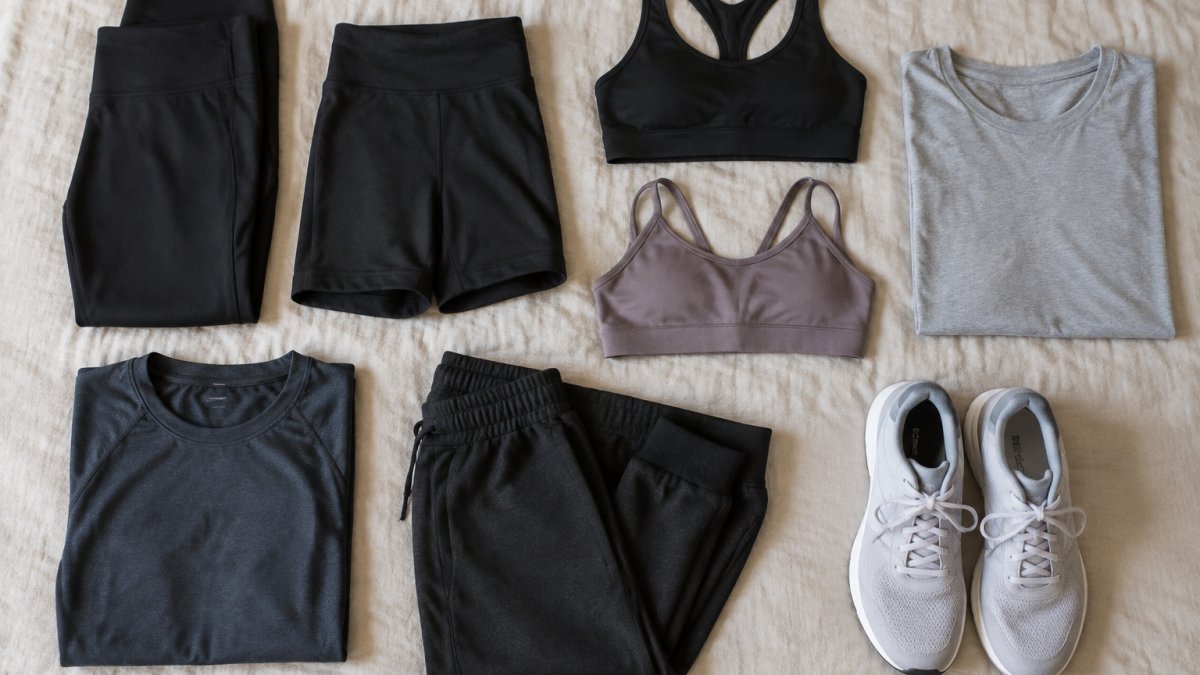
A gym capsule wardrobe essentials list comes down to four groups: bottoms, support, tops, and shoes. Build one or two solid options in each before adding anything else.
Everything else is a bonus. Get these right and you can train all week without thinking about it.
Bottoms: Leggings, Biker Shorts, and Joggers
Bottoms do the heaviest lifting in any capsule. Start with one pair of black or neutral leggings, since they pair with every top you own.
A common mistake is buying three pairs of leggings in different colors. Two neutral pairs you rotate beat three that only match one top each.
Look for a waistband that stays put during floor work and a fabric that doesn't go see-through when you squat.
Support and Tops: Sports Bras, Tech Tops, and Relaxed Tees
Support is not the place to cut corners. A supportive sports bra that fits well matters more than any other piece, because the wrong one ruins the whole session.
Pair it with two or three tops: a tech top for sweaty training and a relaxed tee for lighter days. Neutral colors keep the mix-and-match options open.
Fit check before you commit:
- Band sits flat and doesn't ride up
- Straps stay put through a test reach
- No gaping at the neckline during a forward fold
How Many Pieces Do You Actually Need?
Most people land on 12 to 15 total pieces for a three-to-four day training week. That covers roughly one week of workouts plus a laundry buffer.
Here's a starting framework you can adjust:
| Training days per week | Bottoms | Bras | Tops | Outer layer | Total |
|---|---|---|---|---|---|
| 2-3 | 2 | 2 | 2 | 1 | 7-9 |
| 3-4 | 3 | 3 | 3 | 1 | 10-12 |
| 5+ | 4 | 4 | 4 | 1 | 13-15 |
Add one extra bra if you sweat heavily or train back-to-back days. The number of pieces matters less than the laundry rotation behind it. If you wash twice a week, you can run a smaller set.
A Running Capsule Wardrobe That Handles Mileage and Weather
Running places different demands on a capsule than gym training. Mileage means repetitive friction, exposure to weather, and a need for layering systems that adapt to changing conditions. A running capsule should handle temperature swings, precipitation, and varying intensity without requiring a separate wardrobe for every season.
The core running pieces
Start with these categories and build one or two solid options in each:
- Bottoms: One pair of running shorts for warm weather and one pair of tights or half-tights for cold. Look for flat seams and a liner that doesn't chafe. Biker shorts work well for runners who prefer thigh coverage without bulk.
- Tops: One short-sleeve moisture-wicking tee and one long-sleeve base layer.
- Outer layer: A lightweight, packable windbreaker or a water-resistant shell. This is the piece that extends your capsule across seasons.
Layering for temperature swings
The key to a running capsule that works year-round is a layering system, not a separate wardrobe for each season. A common pattern is to dress for conditions 15 to 20 degrees warmer than the actual temperature, because your body heats up within the first mile (What to Wear Running: Your Guide to Dressing for Every Season).
- Mild weather (50-65°F): Short-sleeve tee and shorts. Add a lightweight vest if there's wind.
- Cool weather (35-50°F): Long-sleeve base layer, tights or shorts with a liner, and light gloves. Add the windbreaker if it's windy or wet.
- Cold weather (below 35°F): Merino base layer, insulated tights or tights with wind-blocking panels, a warmer jacket, gloves, and a hat or headband. Avoid overdressing; you should feel slightly cool when you step out the door.
Handling rain and wet conditions
A water-resistant shell is the single most versatile piece for wet weather. Look for a jacket with taped seams and a DWR (durable water repellent) finish. These finishes wear off over time but can be restored with a spray-on treatment. Avoid fully waterproof, non-breathable jackets for running; they trap heat and moisture from the inside, leaving you wetter than if you'd worn nothing.
Keeping the running set separate
Where possible, keep your running pieces separate from your gym set. A sweaty run leaves a top and shorts unavailable for the next day, and mixing sets means you're always short a piece.
Watch out: cotton socks and cotton tees hold moisture against the skin and cause chafing on long runs. For practical fixes, see this step-by-step guide on how to prevent chafing on long runs.
A realistic running capsule for three runs per week
- 2 pairs of running shorts or 1 pair of shorts and 1 pair of tights
- 2 short-sleeve tees and 1 long-sleeve base layer
- 1 windbreaker or water-resistant shell
That's roughly 10 to 12 pieces that cover most conditions and let you rotate through a week of training without running out of clean gear. If you're unsure what else earns a spot, this rundown of what gear marathon runners actually need helps you decide.
Summer Athleisure Capsule Wardrobe: Heat, Sweat, and Laundry
Heat changes the math. A summer athleisure capsule wardrobe needs lighter fabrics, more breathability, and a faster laundry cycle.
In hot weather you'll sweat through pieces faster, so plan for more frequent washing.
Our breathable gym wear rules for hot weather break down which fabrics actually breathe and which trap heat.
One insider tip: buy lighter colors for summer tops, not because they look better, but because they hide sweat marks and dry faster in the sun.
Fabric, Fit, and Care: What Makes Pieces Last
A capsule only works if the pieces survive repeated washing and wear. Most activewear fails not because of bad seams but because the fabric loses its stretch, opacity, or moisture management after a few dozen cycles. Understanding why fabrics fail helps you choose pieces that last and care for them correctly.
What to look for in performance fabrics
Four properties matter most for workout clothing:
- Moisture management: Look for fabrics that pull sweat away from the skin and dry quickly. A simple test: wet a small corner of the fabric in the store and see how fast it dries compared to a cotton tee.
- Breathability: Dense, tightly woven fabrics block airflow. Look for knit structures with visible airflow channels or mesh panels in high-sweat zones. If the fabric feels plasticky and doesn't let air through when you hold it to your mouth and breathe, it will trap heat.
- Opacity: Squat, lunge, and bend in the fitting room under bright light. Thin leggings that go sheer under stretch are a common failure point. A fabric with a higher denier (fiber thickness) and a tighter knit resists see-through better than a lightweight, brushed fabric.
Fit checks that prevent premature wear
Fit affects longevity as much as fabric does. A sports bra that's too loose shifts during movement and stretches out faster. Leggings that are too tight strain the waistband elastic and seams. Before you commit:
- Do a deep squat and a forward fold. Check for transparency and waistband roll.
- Raise your arms overhead. The top should stay down and the bra band should stay put.
- Jog in place for 30 seconds. Anything that rides up, twists, or chafes will only get worse over time.
Care practices that extend lifespan
Heat is the enemy of stretch fibers. Wash cold, skip the dryer when possible, and air dry flat or hanging. Fabric softener coats technical fabrics and reduces their ability to wick sweat, so skip it entirely on activewear.
Watch out: zippers, hook-and-loop closures, and velcro can snag and pill stretch fabrics in the wash. Close all fasteners and wash those items separately or in a mesh bag.
When to repair and when to replace
A split seam or a loose hem is usually repairable. This step-by-step guide to how to repair damaged athletic apparel walks you through extending the life of your gear. A fabric that has lost its stretch, gone see-through, or developed permanent odor is not. Signs it's time to replace a piece:
- The waistband no longer stays up during movement.
- The fabric feels thin or looks sheer in areas that were once opaque.
- Elastic in bras or waistbands has lost rebound and stays stretched out.
A realistic rotation helps you spot wear early. If you wash twice a week and rotate three bottoms, each pair gets roughly 100 washes per year.
Your Next Step: Audit, Then Shop With Purpose
Before you buy a single new piece, empty your drawer and sort every item into three piles: keep, repair, and retire. Most people find they already own half a capsule.
Then fill only the gaps your weekly plan revealed.
If durability is your priority, our guide to durable gym clothes built to last covers what holds up to frequent wear.
Burrow Athletic provides performance-driven gear, and every purchase supports The Be Good Foundation. You can give back through the foundation.
Building a capsule takes one honest audit and a little planning.
Frequently Asked Questions
What is the 3-3-3 rule for a capsule workout wardrobe?
The 3-3-3 rule is a planning shortcut: three tops, three bottoms, and three support pieces, which gives you 27 outfit combinations before laundry day. It works well as a starter framework if you train three to four times a week. If you sweat heavily or work out daily, add a second rotation of each category. Treat the numbers as a starting point, then adjust based on how often you actually do laundry.
How many pieces do I need in a workout capsule wardrobe?
Most people land between 15 and 25 pieces. Count your weekly sessions, then add one extra set per category for laundry buffer. A five-day trainee usually needs five to six tops, three to four bottoms, three sports bras, and one light outer layer. If you run and lift, add a second pair of shoes so each pair dries fully between sessions.
Can I use the 3-3-3 rule to plan a running capsule wardrobe?
Yes, but adjust for weather. Runners need a light outer layer and moisture-wicking socks that gym-only capsules skip. Start with three running tops, three bottoms (shorts for warm days, tights for cold), and three sports bras, then add a packable jacket and a second pair of shoes. In summer, swap tights for biker shorts and choose lighter colors that hide sweat less obviously.
How often should I wash and rotate workout clothes?
Wash tops, sports bras, and socks after every session. Leggings and shorts can usually go two to three wears if you air them out between workouts and they pass the sniff test. Rotate pieces so each item gets a full day to dry, which slows odor buildup and fabric breakdown. Keep two laundry cycles per week in mind when you decide how many pieces to own.
